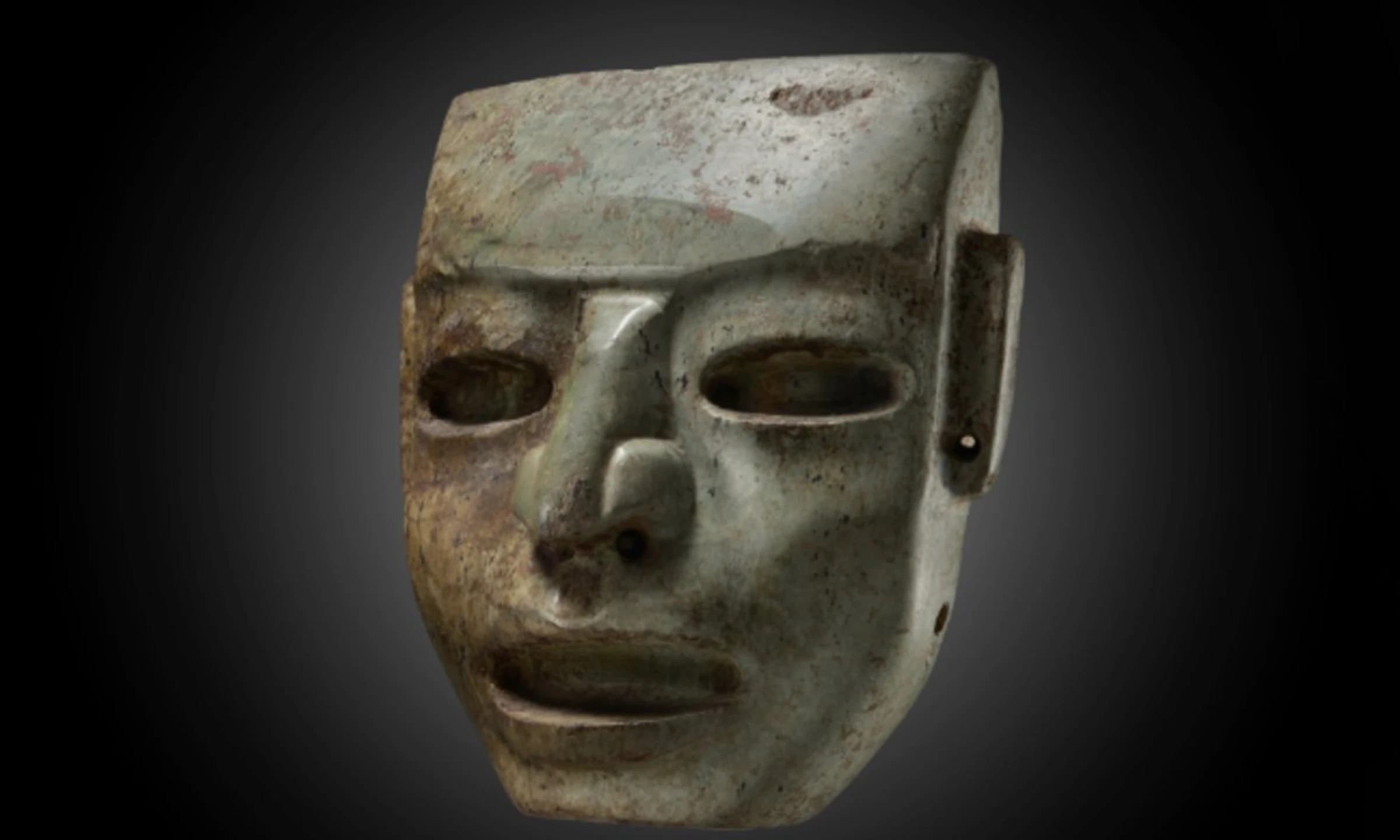
Mexico Tries Again to Stop Sotheby's Pre-Columbian Sale
Mexico has demanded Sotheby's withdraw two pre-Columbian lots, exposing the gap between cultural-heritage claims and the auction market's provenance defense
Mexico challenges Sotheby's, but the real target is the market's legitimacy story
Mexico has called on Sotheby's New York to withdraw two pre-Columbian artefacts from its Art of Africa, Oceania and the Americas sale, reviving a conflict that has become painfully familiar in the antiquities trade. As The Art Newspaper reported, the disputed lots include a Teotihuacán stone mask and a ceramic figure from Veracruz, both identified by Mexican authorities as part of the nation's cultural heritage. Sotheby's says it has reviewed the provenance and sees no basis for the claim. That standoff is the story: a state asserts historical ownership and moral obligation, while the auction house answers with documentary sufficiency.
No one should pretend this is a narrow dispute over two objects. Cases like this are really tests of which standard will govern the global trade in ancient material. Source countries argue that objects removed through colonial extraction, weak regulation, opaque dealing networks or outright looting remain part of a collective patrimony. Auction houses, dealers and buyers generally lean on a different threshold. If paperwork exists, if prior ownership chains can be narrated, and if no enforceable claim blocks a sale in time, the lot proceeds. That gap between cultural meaning and market procedure is where most restitution battles now live.
The provenance trail shows why these sales remain so contested
The provenance histories attached to the two lots make the dispute more than symbolic. One object reportedly passed through Everett Rassiga, a dealer whose name has long attracted scrutiny in discussions of looted pre-Columbian material. The ceramic figure also moved through networks tied to galleries and collectors that repeatedly surface in museum files, auction catalogues and private collection records. None of that automatically proves illegality. But it does show how much of the pre-Columbian market was built during decades when the appetite for ancient objects far outpaced ethical discipline.
This is why auction-house statements about rigorous due diligence often ring thinner than they are meant to. Due diligence can be serious and still fail to answer the central question. A cleanly assembled chain of Western ownership does not tell us much about the conditions under which an object left its archaeological and cultural context in the first place. The market tends to reward continuity of possession; source nations tend to emphasize continuity of meaning. Those are not the same thing, and the difference is not accidental. It is the architecture that made the trade possible.
Mexico has fought versions of this battle before with Sotheby's, Christie's, Bonhams and the Paris house Millon. The outcomes have rarely favored full restitution in real time. Auction catalogues arrive late, legal standards vary by jurisdiction, and governments often face a brutal clock when trying to assemble evidence before a sale date. The market knows this. Time pressure is part of its defense system.
Why source-country pressure keeps rising anyway
Yet these interventions are not futile, even when sales proceed. Each public objection chips away at the old fiction that provenance files alone settle the matter. Source countries have become more assertive, more media savvy and more willing to frame antiquities disputes as questions of sovereignty rather than specialist legal quarrels. That shift changes the reputational environment for auction houses and museums alike. Collectors who once treated pre-Columbian objects as neutral trophies now buy into a field where ownership can become a public relations liability overnight.
Recent restitution debates across the art world reinforce that change. Claims involving Nazi-looted art, colonial collections and ethnographic holdings have made it harder for market actors to insist that technical legality ends the conversation. artworld.today has tracked this pressure in other contexts, including Spain's Civil War era art returns and India's own antiquities recovery efforts. The legal structures differ, but the basic dynamic is similar: institutions that once relied on inertia now face publics who expect active repair.
There is also a broader political backdrop. Cultural ministries increasingly understand restitution claims as part of nation-branding, diplomatic posture and domestic legitimacy. Recovering heritage is not only about the object. It is about showing citizens that the state will contest the extraction of historical value. In that respect Mexico's statement is directed as much at the public sphere as at Sotheby's legal team.
What this sale reveals about the limits of ethical self-regulation
The uncomfortable truth is that the antiquities market still depends heavily on self-description. Auction houses publish their due-diligence language, cite consultations, and assure buyers that they have reviewed the evidence carefully. Sometimes that work is substantial. But the system remains one in which the seller, the intermediary and the buyer all benefit when uncertainty is manageable rather than disqualifying. That creates a structural temptation to equate plausibility with cleanliness.
If Sotheby's proceeds with the sale, it will be acting within a familiar industry script. If it withdraws the lots, it will not solve the larger problem either. The issue is not one catalogue but the persistent mismatch between archaeological ethics and market incentives. Mexico's intervention makes that mismatch visible again, and that is precisely why the case matters. The market can keep insisting on paperwork. Governments can keep insisting on patrimony. Until those standards are forced into closer alignment, each contested lot will remain what it has long been: a small object carrying an enormous argument about who gets to own the past.
The auction market likes to describe these disputes as exceptions, but their repetition suggests the opposite. Pre-Columbian material has been circulating for decades through a system built on fragmentary records, private dealing and collector confidence. Each new objection forces the same uncomfortable recognition: the market matured before its ethical standards did. That is why restitution battles feel endless. They are not interruptions to business as usual. They are corrections to what business as usual was.
Collectors should pay attention here, even if they assume the legal risk is low. The reputational risk is no longer low. Museums have become more cautious about accepting gifts with problematic histories, scholars are more willing to challenge established provenance narratives, and source-country officials understand that public pressure can outlast a single sale date. An object bought today may spend years under a cloud tomorrow. In a market that sells connoisseurship and prestige, that matters.
There is a practical policy issue as well. Source countries are often asked to prove too much too quickly, especially when auction catalogues appear only weeks before a sale. If the international trade were serious about ethical transparency, it would create longer notice periods, clearer documentation standards and independent review channels for contested lots. Instead, disputes are still forced into compressed windows where speed favors the consignor and the house. That imbalance is not accidental. It is part of the market's operating design.
For museums and collectors watching from the sidelines, the broader lesson is simple: provenance is not only a checklist but a historical argument. When that argument depends on names repeatedly associated with extraction or on ownership histories that begin only after removal, caution should intensify rather than relax. artworld.today has examined similar pressures in the Wellcome Collection's manuscript return and our guide to reading provenance claims in real time. Mexico's latest challenge is another reminder that the burden of proof in the art trade is moving, slowly but unmistakably, away from market comfort and toward historical accountability.
That shift will not eliminate conflict. It may even increase it, because once governments and the public see reputational leverage working, they use it more often. But that is not evidence of dysfunction. It is evidence that the old equilibrium, in which auction catalogues quietly converted ancient objects into saleable assets, is breaking down. Sotheby's may win this round on process. Mexico may lose it on timing. The larger change is that neither side gets to treat the dispute as obscure anymore.
Seen from that angle, Mexico's intervention is not simply an attempt to claw back two objects at the last minute. It is part of a longer campaign to rewrite expectations around what auction houses owe the public when they monetize ancient material. Even failed interventions accumulate pressure. They create a searchable record of objection, they warn future buyers, and they make it harder for the market to pretend contested objects arrive in the saleroom untouched by politics. That accumulation of pressure may prove more important than the fate of any single lot.
The significance of the case, then, lies partly in repetition. The same arguments return because the underlying market structure has not changed enough. Governments object, houses cite diligence, sales proceed, and everyone claims principle. What is changing is the audience for the dispute. Heritage battles once lived in specialist legal corners. Now they sit in public view, where collectors, museums and ministries are all forced to explain themselves more clearly than before.
For buyers, that means caution is no longer just a legal strategy but a cultural one. Owning a contested antiquity can place a collector on the wrong side of a public argument that keeps growing more legible and more emotionally charged. Houses may still clear the paperwork threshold. The harder threshold now is whether the story surrounding an object can withstand scrutiny once the sale room is gone and the headlines remain. That is a tougher test, and the market has not fully adjusted to it yet.