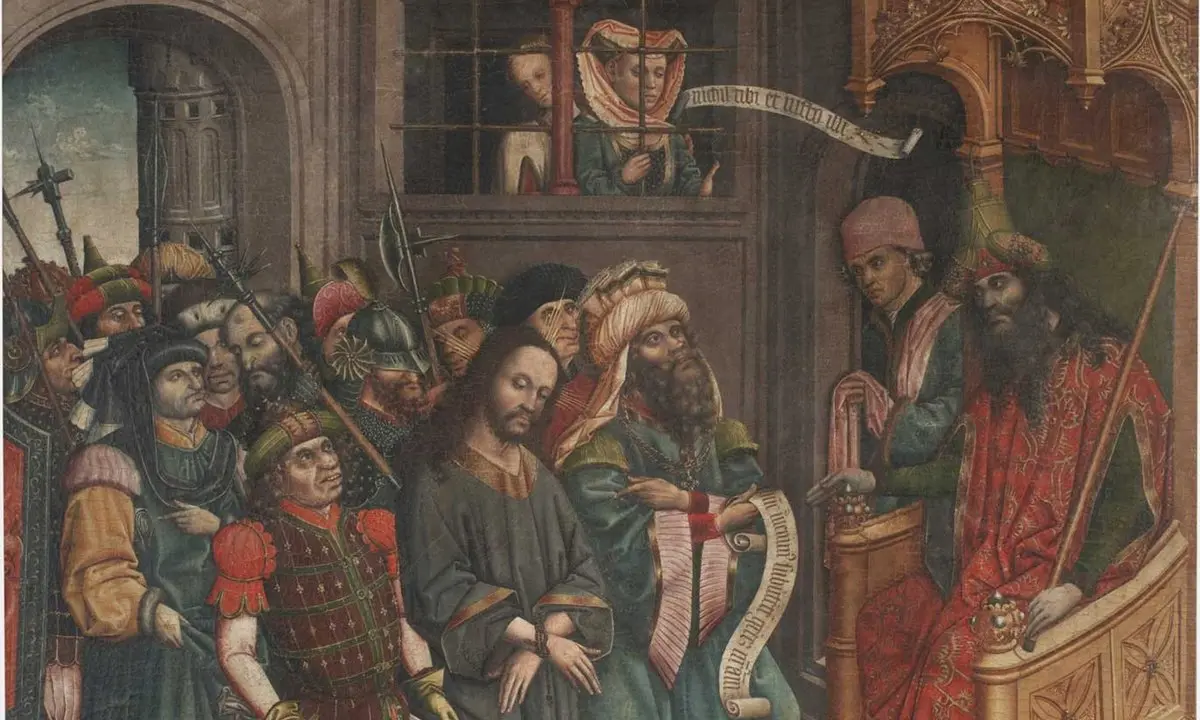
Spain Begins Returning Art Seized During the Civil War
Spain is finally returning artworks seized during the Civil War and Franco era, exposing how long democratic memory can take to become museum practice.
Spain Is Finally Confronting a Museum Problem It Deferred for Half a Century
Spain's new wave of restitutions for art seized during the Civil War and the Franco dictatorship is overdue by any honest standard. That is what gives the story its force. As The Art Newspaper reported, the Museo del Prado has identified 166 confiscated artworks in its collection and has begun returning works to former owners and parishes. The immediate facts are concrete: panel paintings once seized in 1938 have been handed back, and larger inventories are being built across public collections. But the real significance lies in the timing. More than fifty years after Franco's death, democratic Spain is only now turning confiscation history into systematic museum action.
That lag is not accidental. It reveals how states can celebrate democratic transition while leaving difficult property histories to rot in storage, catalogues and administrative fog. Spain knew it had a memory problem long before it had a restitution framework. What it lacked was political will, legal pressure and institutional incentives strong enough to force museums and ministries to expose what they held. The 2022 Democratic Memory Law changed the terrain by ordering investigations into seized artworks, but even now the law does not provide a fully developed restitution mechanism. The system has moved from silence to inquiry faster than it has moved from inquiry to justice.
That is why this moment deserves more attention than the standard headline about historical redress. Restitution is not only an ethical act. It is an audit of the state itself. Once a museum starts identifying works that entered public collections through confiscation, it becomes harder to maintain the comforting fiction that difficult objects arrived by neutral bureaucratic drift. They were taken, reassigned, absorbed and normalized. Cataloguing them is the first step in reversing that normalization.
The Scale of the Seizures Exposes the Depth of the Francoist Afterlife
Arturo Colorado Castellary's research, cited in The Art Newspaper, is the backbone of the story. He has identified more than 26,000 confiscated objects, with around a third never returned and more than 3,300 still missing. Those numbers matter because they reveal that the issue is not a handful of contested masterpieces. It is a broad administrative landscape involving museums, churches, ministries, universities and private collections. In other words, the Francoist afterlife is not stored in one notorious cache. It is distributed through the cultural infrastructure of modern Spain.
The Prado's role is therefore especially significant. National museums often describe themselves as places of scholarship and preservation, not as engines of political repair. Here the Prado has done something more useful. It has treated provenance work as a live public obligation. The museum's publication of an inventory and its willingness to return works such as Christ before Pilate show what institutional seriousness looks like when the collection itself is historically compromised. That does not erase the decades of delay, but it does create a model for other Spanish institutions that have been slower to act.
Readers should notice, though, that the emerging process still depends heavily on individual persistence. Heirs learned of claims through research. Lawyers had to navigate a field with little precedent. Museum teams had to decide whether to cooperate beyond what the law clearly required. This means the current system is better described as a breakthrough through improvisation than as a mature national settlement. Goodwill has mattered. Goodwill is not the same thing as structure.
The administrative sprawl also helps explain why silence lasted so long. Once confiscated works are scattered across museums, churches and government offices, responsibility fragments with them. Each institution can pretend its own holdings are marginal, inherited or too difficult to untangle. The result is a national history diluted into local excuses. That is why inventories matter so much. They reverse the convenience of dispersion by turning thousands of separate holdings back into one political fact.
Restitution Here Is About Political Persecution, Not Only Museum Ethics
One reason the Spanish case carries particular weight is that confiscation was not merely collateral disorder from wartime chaos. It became part of political punishment under Franco. The collection of Pedro Rico, the Republican mayor of Madrid, was stripped from a family forced into exile. Recovering those works is therefore not only a museum transaction. It is a partial undoing of state persecution. The returned paintings reconnect descendants with a family history that was intentionally broken.
That personal dimension can get flattened when restitution stories are framed too abstractly. The art world is comfortable discussing provenance, inventories and legal frameworks. It is less comfortable sitting with the fact that museums can become long-term storage sites for the spoils of political violence. Spain's returns should be read through that harder lens. These are not objects with incomplete paperwork. They are pieces of interrupted civic and familial life that were folded into public collections under authoritarian rule.
The distinction matters because it changes how success should be measured. A museum can comply formally with an investigation mandate and still fail to reckon with the human meaning of what it discovers. The strongest passages in the reporting come from the heirs who describe looking at the recovered paintings every day and feeling newly bonded to their grandfather. That is the actual endpoint restitution should aim toward: not just legal transfer, but the reattachment of history to the people from whom it was severed.
That is also why the current process should be understood as democratic self-examination, not simply museum housekeeping. States that inherit authoritarian collections inherit authoritarian administrative habits as well: delay, opacity and the quiet assumption that possession will eventually become legitimacy. Spain is beginning to challenge that assumption, but only by admitting how durable it was. The significance of the current returns lies partly in the objects themselves and partly in the collapse of that old bureaucratic comfort.
Spain's Progress Is Real, But It Also Shows How Much Remains Unfinished
The Ministry of Culture has reportedly identified more than 7,000 confiscated objects in its possession. That is encouraging and sobering at once. Encouraging, because the state is no longer pretending the problem is unknowable. Sobering, because the number makes clear how enormous the unfinished work remains. Every new inventory line raises the next question: who owned this, how did it move, and what would repair now require? Without a firmer restitution framework, the risk is that research outruns remedy.
Spain is hardly alone here. Across Europe, provenance work tied to war, dictatorship and colonial extraction has moved unevenly, often responding to external pressure rather than internal conviction. The Spanish case belongs in that wider conversation, but it has a particular resonance because it concerns a dictatorship within living memory and a democratic state that long chose not to press the issue. In that sense it sits alongside other debates over institutional inheritance, including our recent reporting on the politics of historical memory in museums. Different regimes, different conditions, same underlying question: what happens when power tries to rewrite what institutions are allowed to remember?
The fact that some restitutions are now happening through cooperation rather than full legal combat is a good sign. It suggests that parts of the museum sector understand the symbolic value of acting before being compelled. But that should not become a reason for self-congratulation. The current moment is positive because it has begun, not because it has finished. Colorado Castellary's phrase is exact on that point.
There is a further art-historical stake here. Once confiscated works are returned, they can be studied in relation to the families, churches and political histories from which they were taken, rather than solely through the categories imposed by national museums. Restitution changes scholarship as well as ownership. It restores context to objects that public institutions had learned to read too narrowly, and it reminds historians that provenance is not a footnote to meaning. In cases like these, provenance is part of the work's subject.
What comes next should be judged by three standards. First, whether more institutions publish usable inventories. Second, whether the state creates a clearer pathway for claims and returns. Third, whether museums treat this work as central to public trust rather than as a side project of democratic cleanup. If those steps do not follow, the danger is obvious. Spain will celebrate a few high-profile restitutions while thousands of lesser-known objects remain trapped in the half-light between acknowledgement and action.
Even so, something important has shifted. The confiscated artwork in Spanish public collections is no longer a whispered specialist topic. It is now a visible test of whether democratic memory can alter museum practice in material ways. That is a meaningful threshold. The task for Spain now is to prove that the threshold leads somewhere larger than symbolic repair. If it does, these returns will mark the beginning of a new museum ethic. If it does not, they will become another moving story about justice deferred almost to disappearance.
If Spain follows through, this process could become one of the most important museum-history corrections in Europe in years. If it stalls, the current returns will still have done something valuable by making concealment harder. Either way, the issue has crossed into public visibility. That is often the decisive threshold in long-suppressed provenance disputes. Once holdings are named, counted and attached to specific stories of seizure, institutions have a much harder time retreating into the old language of uncertainty and passive inheritance.