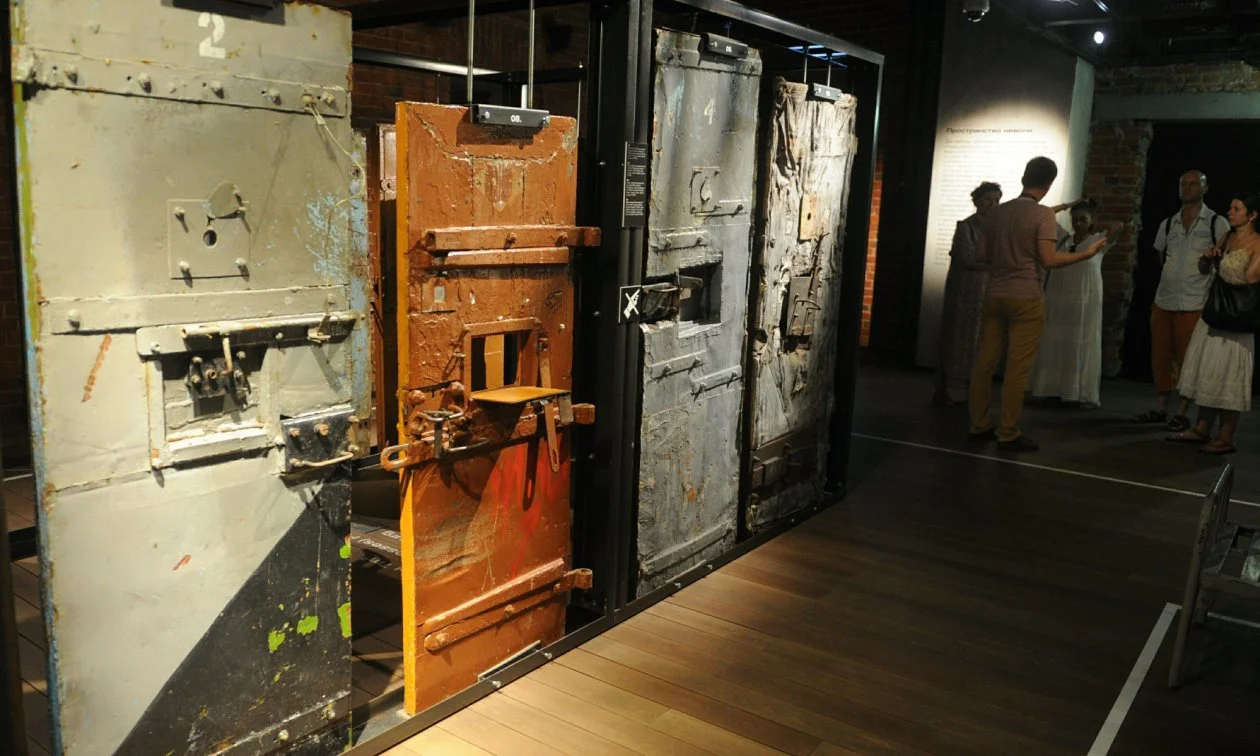
Russia Recasts the Gulag Museum to Erase Stalinist Memory
Moscow's remaking of the Gulag Museum into a war-memory institution shows how state power is narrowing which histories can still be publicly told.
Moscow's rebranding of the Gulag Museum into a new institution devoted to Nazi crimes is not a routine curatorial adjustment. It is a public signal about which parts of Russian history are permitted to remain visible and which are being pushed out of civic life. According to The Art Newspaper's reporting, the museum's prior web content vanished in February and was replaced with a minimal statement describing a future Museum of Memory focused on the genocide of Soviet people during the Second World War. That shift matters because the Gulag Museum had served as one of the few state-linked spaces where the violence of Stalinist repression could still be narrated in public without euphemism.
This is why the story deserves to be read as a cultural governance event rather than a narrow museum story. When an authoritarian state decides to edit its own institutions of memory, it is not simply revising labels. It is redefining what younger audiences, school groups, visiting researchers, and civil servants will encounter as official history. The question at stake is blunt: can a society still speak openly about state terror if the museum built to hold that memory is repurposed into a patriotic war narrative?
The answer increasingly looks bleak. The attack on the Gulag Museum follows years of pressure on Memorial and its related networks, which devoted decades to documenting Soviet repression and preserving testimony from victims and their families. It also follows wider pressure on the Yeltsin Center, one of the few major institutions in Russia associated with a more open account of the late Soviet and post-Soviet past. Read together, these cases show a familiar pattern: independent archives are marginalized, liberal memory institutions are disciplined, and state-approved hero narratives expand into the space they leave behind.
Why the Gulag Museum mattered beyond Moscow
The Gulag Museum was never just another history venue. It occupied a rare position inside Russia's cultural landscape because it joined exhibition making, archival work, oral history, and public pedagogy around one of the central crimes of the Soviet twentieth century. That made it valuable not only for descendants of the repressed, but also for scholars, educators, artists, and ordinary visitors who needed a public vocabulary for thinking about state violence.
Such institutions matter because repression becomes abstract when it is not materialized through documents, objects, photographs, and testimony. A museum can hold prison clothing, letters, bureaucratic forms, maps of camp systems, and traces of everyday life under coercion in ways that force the viewer to confront scale and mechanism. It can turn moral language into evidence. Once that framework is dismantled, memory does not disappear overnight, but it becomes easier to isolate, privatize, and deny.
The Kremlin has long understood this. Vladimir Putin has at times gestured toward acknowledgment of Stalinist crimes, especially when such gestures could be contained within a broad patriotic narrative of national suffering and endurance. What is changing now is not simply tone. It is the narrowing of tolerated complexity. The new emphasis on Nazi atrocities does not by itself constitute historical falsehood; those crimes were real and catastrophic. The problem is the substitution. One history is being made to crowd out another because the second creates uncomfortable parallels with the present.
The mechanism is familiar to anyone who studies memory politics. A state does not need to ban every inconvenient fact if it can overwhelm public space with a preferred narrative. The Great Patriotic War has long functioned as Russia's master story of sacrifice, victory, and civilizational mission. By moving resources, institutional authority, and visual attention toward that framework, the government can place Stalinist repression in a smaller and smaller box without ever having to debate the evidence seriously.
How museums become tools of present-day power
Museums are often discussed as soft-power instruments, but in a case like this they act more like governance infrastructure. They shape school visits, diplomatic exchanges, grant decisions, public ceremonies, and televised symbolism. A change in museum mandate therefore radiates well beyond the gallery wall. It alters how the state presents moral legitimacy to its own citizens and to outside observers.
The replacement of Gulag memory with a war-centered frame is especially significant because the vocabulary of anti-fascism and de-Nazification has been central to the Kremlin's justification of its war against Ukraine. When official museums repeat that language, they are not neutrally commemorating the past. They are stabilizing a political worldview in which external enemies define history and internal repression drops from view. This is why the museum's rebranding should be understood as part of a live ideological campaign.
The personnel story reinforces the point. The leadership changes reported around the museum's closure and relaunch suggest that the state wants administrators aligned with the current patriotic line, not figures associated with human-rights memory work. That distinction matters in practice. Directors control exhibition priorities, staffing, acquisition of oral histories, and the terms of collaboration with schools and partners. Institutional change happens through people before it appears in wall texts.
There is also a digital dimension. Once a museum website is stripped and rebuilt, years of carefully framed interpretive content can vanish from public reach. Catalog essays disappear. Educational pages disappear. Search visibility disappears. Unless third parties preserve copies, a memory institution can be functionally erased online before its building is fully repurposed on the ground. This is why off-site archiving and translation work now matter so much for anyone trying to preserve access to this history.
What the international museum field should do now
Foreign institutions cannot reverse Russian memory policy, but they can stop pretending such changes are ideologically neutral. Partnerships with Russian state institutions should be assessed with the same rigor used for provenance disputes or sanctions risk. The question is not whether exchange is always impossible. The question is whether exchange under current conditions legitimizes a curated forgetting of documented political crimes.
Museums, universities, and funders outside Russia should invest more heavily in independent archives, exile scholarship, and translation of primary material. Oral histories, scans of documents, curatorial records, and research databases need durable homes beyond the reach of the state. Support should also flow to organizations preserving testimony from victims of repression and to scholars tracing how official memory regimes change over time.
Curators should treat the Gulag Museum story as a warning about the fragility of institutional mission. Museums do not become trustworthy merely because they once hosted serious work. They remain trustworthy only as long as their governance, staffing, archives, and public mandate can resist political capture. When those conditions collapse, the institution may continue to exist in name while doing the opposite of its original civic job.
The larger lesson is brutal and simple. Historical memory is not lost only through censorship from above or through ignorance below. It is also lost through administrative redesign, website replacement, board pressure, and the careful redirection of public emotion. Russia's recasting of the Gulag Museum shows how a state can empty out a difficult past without openly admitting that this is what it is doing. For the global art world, the right response is clarity. A museum that no longer makes repression legible has ceased to perform one of the most important functions memory institutions can serve.
There is also a lesson here for institutions in democracies that assume mission drift will always announce itself dramatically. Often it does not. It begins with small compromises around language, partner choice, board comfort, and the handling of difficult archives. A collection remains on view, a name remains on the building, and yet the institution's intellectual center has shifted. The Russian case is extreme, but it exposes a universal weakness in museums: they can preserve objects while surrendering interpretation.
That is why archival redundancy and curatorial independence deserve to be treated as infrastructure. When documents exist only in one system, when oral histories depend on one institution, and when leadership cannot withstand political pressure, memory is fragile even before formal repression arrives. International organizations, university libraries, and independent researchers should be thinking in backup terms now. What needs to be mirrored, translated, catalogued, and circulated so that it cannot be quietly buried later?
It is also worth asking what visitors inside Russia are being trained to see when they enter officially sanctioned cultural spaces. If repression is removed from view and wartime suffering is reframed through a single patriotic script, the museum teaches not only history but historical method. It teaches that the past exists to confirm present power. That may be the most damaging consequence of all, because it reaches beyond one building into the habits of public reasoning, civic argument, and generational memory.
Readers tracking how institutions handle historical accountability may also want to compare this story with artworld.today's coverage of Zurich's transfer of Benin objects to Nigeria, where museums moved in the opposite direction by widening rather than narrowing the ethical frame around contested history. The contrast is useful because it shows how governance choices can either thicken historical truth or thin it out over time globally everywhere.