Uffizi Rehang Turns Botticelli Into a Set Piece Again
The Uffizi has rehung Botticelli's two best-known paintings face to face, using display design and context to reactivate old-master spectacle
The Uffizi stages Botticelli as a confrontation, not a backdrop
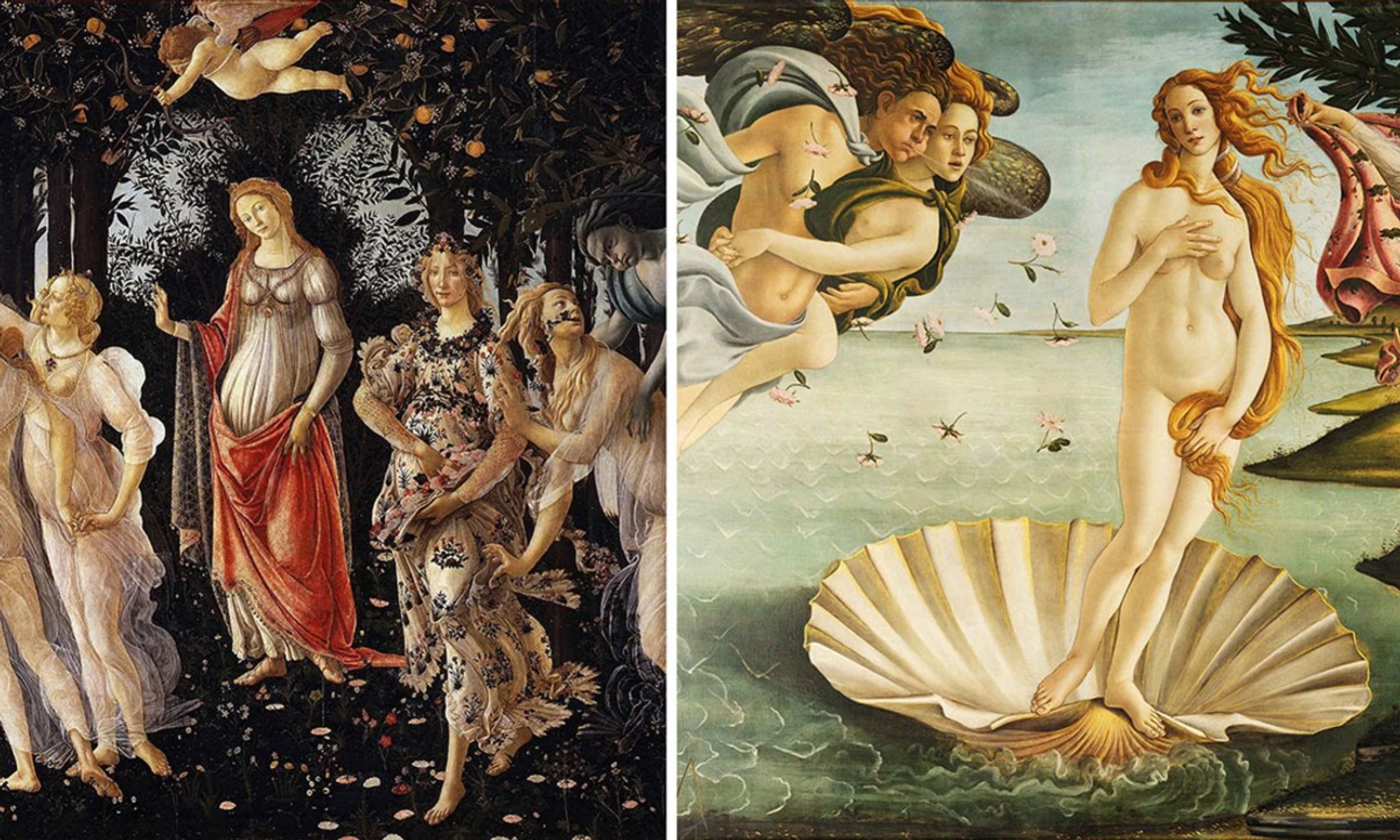
The Uffizi Galleries have rehung Sandro Botticelli's Primavera and The Birth of Venus opposite one another for the first time, a move that sounds obvious until you consider how carefully major museums ration spectacle. According to The Art Newspaper, the refurbished Botticelli Rooms also include new gray walls modeled on Renaissance interiors, upgraded lighting, explanatory digital screens and revised placements for related works. Visitors can trace the museum's wider context through the Uffizi Galleries overview and its public-facing events and exhibitions listings. This is not just a facilities update. It is a decision about how Florence wants one of its most bankable artists to function inside the museum in 2026.
For years, the Uffizi has carried the burden of being both a world-class research institution and one of the most overdetermined tourist destinations on earth. Everybody arrives already knowing the headline works. The museum therefore faces a familiar problem: how do you preserve the aura of masterpieces that have been flattened into permanent cultural wallpaper? Putting the two paintings face to face is an answer rooted in choreography. Rather than letting visitors collect a selfie and move on, the rehang forces a relation between the pictures. Each work becomes a lens on the other, and the room itself becomes part of the argument.
Why the Botticelli rooms matter beyond crowd management
The details of the refurbishment show that the Uffizi understands this as more than a traffic problem. By replacing older protective glass with airtight display cases that allow a clearer view, the museum is adjusting not only conservation standards but also the emotional pitch of encounter. A masterpiece behind visibly cumbersome protection can look like an object under quarantine. A masterpiece presented with cleaner sightlines regains some of its force as painting. The new installation also places The Birth of Venus in relation to Botticelli's circular Madonnas, underlining a theological and iconographic thread that has often been weakened by blockbuster familiarity.
That matters because Botticelli is one of those artists whose reputation is perpetually split between art history and mass recognition. His paintings circulate on tote bags, dorm posters and tourism campaigns so relentlessly that museums can end up preserving fame instead of interpretation. The revised room attempts to reverse that drift by tightening context. Visitors are invited to see how allegory, devotion, Medici patronage and idealized beauty cross through a single ensemble of works. In that sense the Uffizi is not merely refreshing a famous gallery. It is defending the museum's right to mediate images that the culture thinks it already owns.
The broader reorganization under director Simone Verde points in the same direction. Since 2023 the museum has been reopening renovated spaces and revisiting how signature rooms speak to one another. The Niobe Room, reopened in 2024, already signaled a preference for high-definition display strategies rather than dusty reverence. This Botticelli project extends that logic to the museum's most mythologized holdings, where every design decision is immediately legible to a public far beyond Florence. A wall color is never just a wall color when the room contains pictures that function almost like civic emblems.
The museum is selling clarity, and that is a political choice
There is an institutional politics to this kind of rehang. Renaissance museums are under constant pressure to balance scholarship, visitor demand, conservation, branding and national prestige. When the Uffizi describes itself as reuniting Medici heritage, it is doing more than marketing. It is reaffirming a version of Florentine cultural identity in which the museum serves as steward of an inherited civilizational narrative. That can be powerful, and it can also be limiting. Rehangs of famous rooms often risk turning interpretation into a ceremony of confirmation, where every label tells visitors they are in the presence of greatness and little else.
What makes the current move stronger is that it has a concrete visual thesis. To place Primavera opposite The Birth of Venus is to say that looking should involve comparison, tension and sequence. One painting projects a dense social and allegorical field; the other stages an iconic figure with impossible calm. Seen together, they sharpen each other's eccentricities. They also remind viewers that Botticelli's afterlife has been edited by reproduction. The paintings are famous, but they are not interchangeable. The rehang insists on that difference.
There is also a practical museum lesson here. Digital screens and refreshed display cases do not automatically trivialize old-master presentation, despite lazy complaints that technology cheapens aura. The real issue is whether technology clarifies attention or clutters it. If the screens help visitors understand chronology, iconography and patronage without replacing close looking, they are doing their job. Museums that refuse these tools on principle often confuse austerity with seriousness.
What comes next for Uffizi's high-stakes display strategy
The Uffizi has not disclosed the cost of the Botticelli project, and that omission is not trivial. Major reinstallations are expensive, especially when they combine conservation infrastructure with architectural revision and visitor-facing media. As European museums continue to retool flagship galleries, questions about financing and long-term maintenance will only become sharper. Still, the absence of a public budget does not obscure the strategic logic. The museum wants to make its most famous rooms newly persuasive to repeat visitors, scholars and first-time tourists alike.
That is a smart move, because reputation alone no longer guarantees authority. Every major museum now competes with infinite reproduction, accelerated tourism and shrinking patience. The answer cannot be to protect masterpieces behind managerial caution until they go dead on the wall. Florence has chosen a harder route: restage the canon so it becomes legible again. If the Botticelli rooms succeed, it will be because the Uffizi remembered something basic. Masterpieces do not stay alive by being celebrated. They stay alive when institutions build conditions in which looking still feels consequential.
Another overlooked aspect of the project is what it says about the economics of attention inside a museum whose most famous works can easily cannibalize the rest of the building. Signature rooms are necessary, but they are also dangerous. They teach visitors to hunt highlights instead of constructing an itinerary. By tightening the internal dialogue among related Botticelli works, the Uffizi is trying to turn a trophy stop into a chapter. That is a subtle but meaningful distinction, one other museums with blockbuster rooms should study.
The rehang also speaks to a larger question about old-master museums in the age of crowd photography. Paintings now compete not only with neighboring objects but with the pressure to be documented instantly. A room built for optical force can fail if its logic disappears in the visitor's phone. Better lighting, clearer glass and stronger sequencing are not cosmetic fixes under those conditions. They are ways of reclaiming the act of looking from the habits of capture. Museums often complain about distracted audiences while designing displays that do little to reward sustained attention. The new Botticelli rooms look like an effort to correct that contradiction.
Florence is hardly alone in this problem. The Prado, the Louvre and the National Gallery all wrestle with how to present canonical paintings without reducing them to queue management exercises. The Uffizi's answer is refreshingly concrete. It does not pretend the solution lies in pure scholarship or pure entertainment. It lies in display intelligence: giving visitors enough framing to make comparison meaningful without over-directing what they should feel. That balance is difficult, but when it works it restores the museum's claim to be more than a warehouse of famous pictures.
The institutional timing matters too. Major European museums are entering a cycle of gallery renovation, climate upgrades and interpretive overhaul, often while facing scrutiny over budgets and public purpose. A successful Botticelli reinstall offers a model that trustees and culture ministries can understand quickly because the outcome is visible. If attendance holds and visitor response is strong, expect more high-profile rooms to be rethought with similar precision. For a related example of how display changes reshape audience expectations, see artworld.today's report on Getty Center renovations.
One final point is worth stressing. The Uffizi did not choose obscure material for this gamble. It chose two of the most reproduced paintings in Western art. That makes the project a test of whether museums can still surprise the public using objects everyone thinks they already know. If the answer is yes, then the lesson reaches far beyond Florence. It suggests the canon is not exhausted. It is often just badly staged.
There is a deeper institutional wager beneath all this. When a museum retools its most famous room, it is implicitly admitting that prestige cannot coast forever on inherited fame. The objects remain extraordinary, but the conditions for seeing them change with every generation. The Uffizi has chosen to intervene rather than drift. That alone makes the project significant. Too many museums let canonical galleries harden into ritual. Florence is treating ritual as something that needs active design if it is to remain alive.
That is why this rehang should be read as a strategic act of interpretation rather than as luxury maintenance. It reasserts that museums still matter at the level of framing, sequence and intellectual pressure. Even the most familiar masterpieces can change shape when institutions stop treating fame as self-explanatory. The Uffizi is betting that visitors will notice the difference, and that scholarship can be felt spatially rather than only read in a catalogue. That is a worthwhile wager, and one other old-master museums should watch closely.