Van Abbemuseum Rebuilds the Museum Visit Around Access
Eindhoven's Van Abbemuseum is redesigning galleries and visitor tools around neurodivergent access, pressing museums to rethink who the white cube serves
Van Abbemuseum turns accessibility into a curatorial method
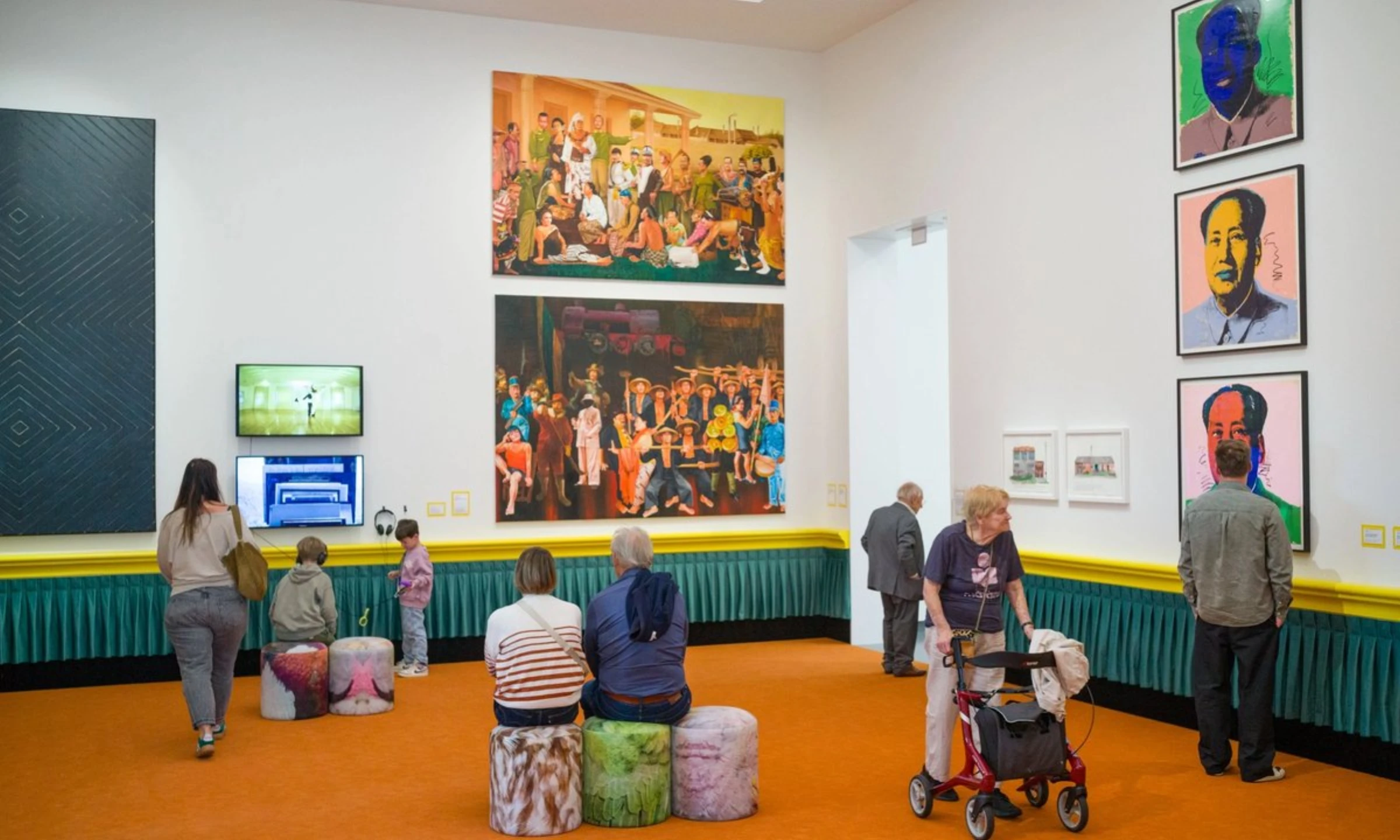
The Van Abbemuseum in Eindhoven has unveiled a redesign that treats accessibility not as a side service but as a structural argument about what a contemporary museum should be. As reported by The Art Newspaper, the Dutch museum has introduced sensory maps, fidget-based locker keys, varied light and sound conditions, and a broader rehang of more than 250 works under the title Collection as Cosmos. The point is not to make the museum feel softer or more agreeable. It is to reject the default assumption that a serious museum experience must be quiet, linear, visually dominant and physically neutral.
That matters because museums have spent years talking about inclusion while leaving their underlying scripts almost untouched. They add a ramp, a caption, a family day, then return to the same white-cube etiquette that quietly tells visitors how to behave. The Van Abbemuseum is trying something more ambitious. Under director Defne Ayas, who took the role in 2025, the institution is asking what happens if access shapes design from the beginning rather than being layered on after the exhibition is done. That shift moves the discussion away from compliance and toward authorship. Who gets to define a valid museum encounter? Whose sensory needs count as normal? Which kinds of attention are rewarded inside the gallery?
Defne Ayas and ADEZIV challenge the white cube consensus
The redesign draws heavily on collaboration with the Eindhoven-based neurodivergent design network ADEZIV and on a longer museum initiative called System Thinkers. That framing is important. By embedding artists and researchers in the museum's operational thinking, the institution is saying that the visitor experience is not separate from curatorial content. It is content. The fidget tools attached to locker keys are a small but pointed example. In a conventional museum they would register as support devices for a limited group. Here they are folded into the visitor journey as designed objects, inviting touch and self-regulation without forcing anyone to declare a diagnosis.
The sensory map works in a similar way. Instead of assuming every room offers a single ideal atmosphere, it acknowledges that buzzing sounds, bright light, narrow passages and abrupt transitions affect people differently. That is obvious if you speak to autistic visitors, visitors with ADHD, people with migraines, people with anxiety, parents juggling children, or simply anyone arriving overstimulated from the city. Yet most museums still behave as if disorientation is a sign of sophistication. Van Abbe is testing a different premise: that orientation can deepen rather than dilute a visitor's encounter with difficult work.
This is where the project becomes more interesting than a routine accessibility story. The museum is not merely making itself easier. It is making itself stranger in a more deliberate way. Curtains interrupt sightlines. Sound shifts by room. Sculptures appear at unexpected heights. The collection is reorganised non-chronologically, less as a march through style periods than as a cluster of relations. That approach aligns with longer debates across museum practice, from ICOM's contested museum-definition process to experiments in multisensory design at institutions that no longer trust the old neutral-gallery myth.
Why access has become a live institutional battleground
There is a reason museums are starting to treat access as an intellectual issue rather than a legal box. The old model has worn out. Attendance pressure is intense, public funding is unstable, and audiences have become less patient with institutions that advertise social values while preserving exclusionary habits. Accessibility redesigns also intersect with labor questions, because front-of-house staff absorb the consequences when buildings are confusing and visitor expectations go unmanaged. A clearer sensory and spatial framework can be a practical fix, but it is also an ideological admission that the museum's established norms were never universal.
The Van Abbemuseum is especially well positioned to push this debate because it has long presented itself as a laboratory rather than a shrine. Its collection includes canonical modern and contemporary names, but its reputation has often rested on how it stages arguments around them. The current rehang extends that reputation into architecture and visitor choreography. It also carries risk. Museums that talk about access can slip into therapeutic branding, treating welcome language and soft materials as substitutes for rigorous programming. Van Abbe avoids some of that trap by making the redesign inseparable from its collection display, its commissions and its curatorial rhetoric. The museum is not apologising for contemporary art's complexity. It is trying to build better conditions for encountering complexity.
There is also a sharper edge here that should not be missed. The museum has acknowledged the Nazi-looted status of Wassily Kandinsky's View of Murnau with Church and marked its restitution in the gallery rather than quietly moving on. That gesture suggests an institutional logic broader than sensory access alone. It points to a museum willing to expose the structures that sit behind display: ownership, extraction, classification, and the politics of legitimacy. Accessibility, in that reading, is not a customer-service enhancement. It is one piece of a larger critique of how museums authorize experience.
What other museums should learn from Eindhoven now
Plenty of institutions will copy the visible parts of this project. They will add sensory maps, quiet rooms, fidget tools and alternate routes. Some of that imitation will be useful. But the harder lesson is that access only becomes transformative when it changes decision-making upstream. Which designers are brought in? Which visitors are consulted before installation? How are wall colors, sound bleed, seating, labels, and navigation treated as curatorial problems rather than administrative leftovers? Those questions affect every museum that claims it wants broader publics.
For the wider field, the Van Abbemuseum redesign lands at a moment when the museum visit itself is under review. The blockbuster model is expensive, attention spans are fractured, and the authority of the white cube is thinner than it was a decade ago. Museums need reasons for people to return that go beyond the prestige of ownership. Eindhoven is betting that one answer lies in designing a visit people can inhabit rather than endure. That is a stronger proposition than inclusion rhetoric, and a more durable one. If the project works, it will not be because the museum became gentler. It will be because it became more exact about how bodies, senses and power move through a room.
There is a financial dimension here too. Accessibility redesigns are often discussed as if they belong to a separate ethical budget, detached from programming and audience development. In reality they are part of institutional survival. A museum that cannot explain how people move through space, how they manage attention, or how they recover from overload is a museum that narrows its own future audience. That is especially true in regional cities competing for international relevance. Eindhoven is not only making a moral claim. It is making an argument about why a collection museum remains worth visiting in person when so much art discourse now arrives as an image stream.
Other European museums have piloted fragments of this agenda, but usually at the level of education departments or special access days. The Van Abbemuseum is pushing the issue into exhibition design and institutional identity, which is a more uncomfortable place for it to sit. Once access becomes part of curatorial authorship, it can no longer be delegated quietly to staff with the least power. It reaches the director, the designer, the curator and the board. That is exactly why the project deserves attention beyond the Netherlands.
There is also an audience question museums rarely address honestly: many visitors who would benefit from clearer sensory design have never described themselves in disability language at all. They just know that some museums feel hostile, exhausting or coded for other people. By making tactile tools and environmental cues visible rather than hidden, Van Abbe potentially broadens the conversation past narrowly identified user groups. That can be politically useful if handled carefully. It can also flatten differences if museums start pretending every need is the same. The challenge now is whether the institution keeps the specificity of neurodivergent design while expanding the public argument.
For curators elsewhere, the larger lesson may be about criticism. A more accessible museum should not mean an uncritical museum, and a more navigable exhibition should not mean a flatter one. The best outcome would be a field that finally stops equating disorientation with depth. Contemporary art has relied on that confusion for too long. If Eindhoven helps break it, this redesign will register as more than a local refresh. It will mark a real shift in how museums imagine seriousness itself. For context on how institutions are reworking visitor expectations in other ways, see artworld.today's guide to reading museum admission policy changes.
There is a final reason this matters now. Museums across Europe are trying to prove public value while facing louder questions about elitism, subsidy and relevance. Accessibility is one of the few areas where rhetoric can be tested immediately against experience. A visitor either feels the institution has prepared for different kinds of bodies and minds, or does not. The Van Abbemuseum has made that test part of its brand and its curatorial method at the same time. That is bolder than issuing a values statement, and harder to fake over time.