New York Returns 657 Looted Antiquities to India
New York authorities returned 657 looted antiquities valued at nearly $14 million to India, sharpening pressure on collectors, auction houses, and traffickers
New York's India Repatriation Case Is a Market Story as Much as a Criminal One
New York authorities have returned 657 antiquities, valued at nearly $14m, to India after a set of investigations that again exposed how stolen objects can move from temple theft or museum disappearance into the respectable end of the art market. According to The Art Newspaper, the handover was tied to ongoing cases pursued by the Manhattan district attorney's office and involved objects linked to trafficking networks associated with Subhash Kapoor and Nancy Wiener. The scale matters, but the mechanics matter more. Every large restitution ceremony is also a map of institutional failure: porous provenance checks, willing intermediaries, and a collector culture that still treats documentary gaps as negotiable rather than disqualifying.
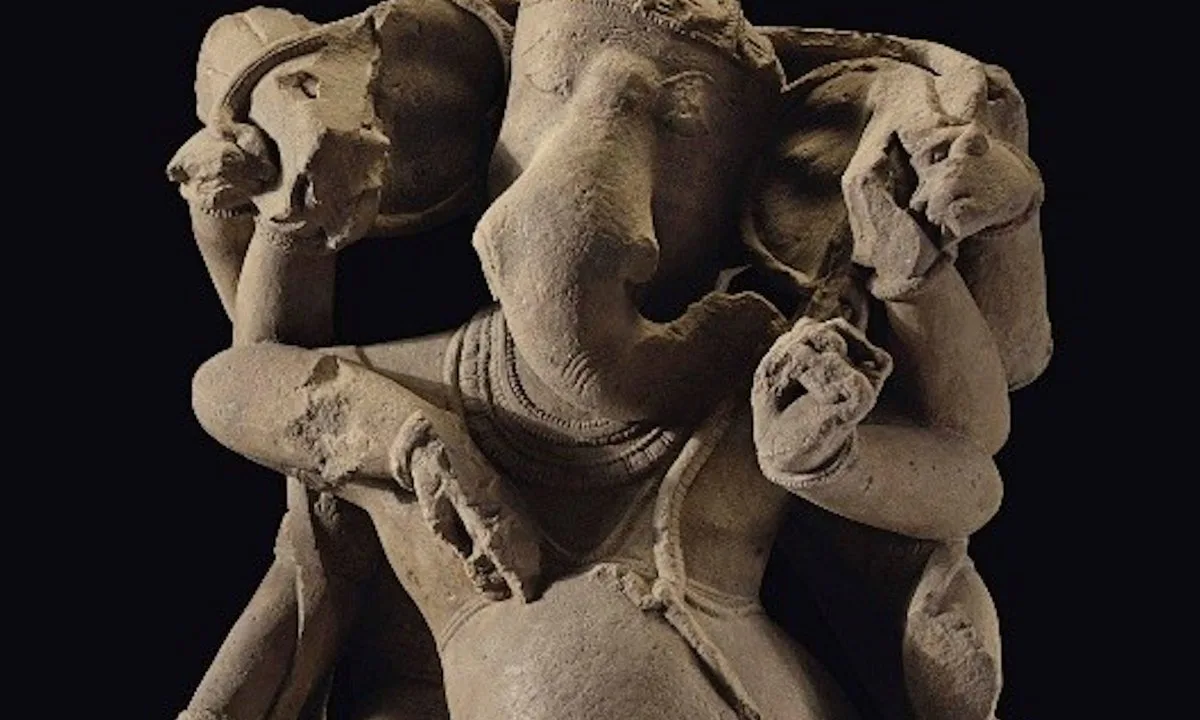
The group included a bronze Avalokiteshvara valued at $2m, a red sandstone Buddha valued at $7.5m, and a sandstone dancing Ganesha looted from a temple in Madhya Pradesh in 2000. The Ganesha case reads like a compressed history of the antiquities trade. After moving through multiple hands, the work was tied to dealer Doris Wiener, then to Nancy Wiener, who authorities say created false provenance and consigned it to Christie's, where it sold in New York in 2012 before eventually being surrendered. That chain is not just about thieves and smugglers. It is about how laundering cultural property often depends on familiar names, routine paperwork, and the market's appetite for plausible stories.
How the Kapoor and Wiener Networks Changed the Repatriation Landscape
The names in this case are not incidental. Kapoor has become shorthand for one of the most consequential antiquities trafficking scandals of the past two decades, and his network helped force museums, collectors, and auction houses to reckon with the weakness of old provenance norms. The Manhattan district attorney's Antiquities Trafficking Unit has spent years tracing how objects left South and Southeast Asia, often through theft from active religious sites or museum collections, before being furnished with export stories, dealer histories, and collector pedigrees that gave them a veneer of legitimacy. Once an object reached New York, the city's centrality to the art trade did the rest.
India has been one of the clearest examples of the long afterlife of theft. A sculpture can vanish decades before a seizure, meaning that the repatriation headline arrives after years of invisibility during which the object may have appeared in a private collection, a dealer catalogue, or a public sale. That is why the return of the Avalokiteshvara matters beyond its price tag. The bronze had entered a museum collection in Raipur by 1952, was later stolen, and was smuggled into the US by 1982 before being seized from a private New York collection in 2025. That timeline demonstrates how badly cultural property law lags the market. It also shows why source countries and investigators have had to build long memory archives rather than rely on voluntary disclosure from owners.
One underappreciated part of these cases is the role of institutional memory outside the market itself. Journalists, restitution researchers, archivists, and nonprofit groups have spent years connecting temple photographs, museum catalogues, customs records, and dealer paperwork that once sat in separate silos. Without that slow documentary work, many repatriation victories would remain impossible because trafficked objects were deliberately made to appear ordinary. The market often treats missing information as unfortunate ambiguity. Investigators treat the same gap as evidence that the story has been engineered. That difference in posture is what has made recent recoveries more effective than earlier waves of moral pressure alone.
The legal pressure has already changed institutional behavior, though not enough. Museums now review acquisitions with more caution, and auction houses increasingly publish longer provenance notes, but the trade still rewards opacity when scarcity and status are high. The same week art market observers were parsing sales performance in New York, as in our recent report on Christie's Newhouse sale, another part of the city's art economy was dealing with the consequences of objects that should never have circulated freely at all. These are not separate worlds. They overlap in collectors, lawyers, shipping routes, and assumptions about what the market can absorb.
That overlap is why repatriation cases now carry a deterrent function beyond the objects immediately seized. Every public return tells collectors that weak provenance is not merely untidy. It is an acquisition risk that may surface years later under far harsher scrutiny. Every case also tells museums that retrospective research is no longer optional housekeeping. It is part of the institution's legitimacy. The trade may still prefer to describe these developments as exceptional cleanups, but the direction of travel is plain. Restitution is becoming part of the market's normal operating environment, not an embarrassing sidebar to it.
It is also worth noticing how much the public framing has changed. A decade ago, repatriation stories were often written as diplomatic niceties or good deed headlines. Now they are read as evidence of enforcement capacity and as warnings to anyone still relying on murky ownership histories. That shift matters because markets respond to expectations as much as to law. If buyers believe problematic objects will eventually be surfaced, frozen, and publicly returned, the incentives around acquisition, donation, and resale begin to change long before every legal loophole is closed. Cultural property enforcement works partly by prosecution, but also by making the old casualness feel reckless.
Why the Return Raises the Temperature for Auction Houses and Private Collectors
The most uncomfortable lesson for the trade is that restitution cases no longer sit at the margins of the market as unfortunate exceptions. They now shape expectations for due diligence. When a work connected to a false provenance makes it to a major auction house, the issue is not merely whether staff were deceived. It is whether the system is built to detect deception before the object is normalized through cataloguing, marketing, and sale. The Ganesha example is especially damaging because it shows how an object tied to a known trafficking ecosystem could still be dressed in enough legitimacy to change hands publicly.
For private collectors, the risk is not only reputational. Surrendering an object after purchase means losing money, status, and in many cases the fiction that collecting can remain apolitical. Source countries, prosecutors, and specialist researchers have become more coordinated, and the evidentiary bar for challenging ownership has gotten stronger as digital archives, temple photographs, and dealer records are cross-referenced more aggressively. India's consular presence in New York has turned such returns into visible diplomatic events, making clear that repatriation now carries both legal and symbolic force. Public ceremony is part of the enforcement strategy. It tells future buyers that discretion is no longer a shield.
There is also a broader shift in moral language. For years, the antiquities market framed restitution as a debate about ownership disputes or paperwork irregularities. That framing is collapsing. Many of the objects at issue are not just beautiful works with uncertain histories. They are pieces removed from living religious, civic, or historical contexts. Once that is foregrounded, the question becomes less whether a collector acquired in good faith and more whether the market created a structure in which bad faith could travel easily under professional cover. That is a harder question for the trade because it cannot be solved by adding a few lines to a catalogue entry.
What Comes Next for India, New York, and the Broader Restitution Push
More returns are coming. The Manhattan district attorney's office continues to pursue trafficking cases, and the Kapoor extradition saga is still unresolved. Each new seizure generates fresh leads, because trafficked objects tend to move in clusters through repeat intermediaries. That means the 657-object return should be read not as closure but as a progress marker in a much larger unwind. Auction houses will keep tightening intake review. Museums will continue retrospective provenance research. Collectors with weak paperwork will think harder about whether to sell, donate, or quietly approach authorities before a public claim is made against them.
For India, the opportunity is not simply to celebrate a large return but to leverage it into stronger domestic documentation, museum security, and international claims infrastructure. For the trade, the warning is plain. Antiquities are no longer protected by distance, time, or market habit. If anything, those old protections are turning into liabilities because they create the appearance of deliberate blindness. New York's latest handover does not end the argument over cultural property. It sharpens it. The objects came back, but the deeper story is that the market architecture which once helped hide them is now under sustained and very public scrutiny.
That scrutiny is healthy because it moves the conversation away from sentimental celebration and toward structural reform. A return ceremony can create the impression that justice has already been done, when in fact each recovered object usually points to many more that remain untraced, undocumented, or quietly embedded in private hands. The most important outcome of cases like this is not the photo opportunity. It is the cumulative pressure they place on cataloguing standards, acquisition committees, insurers, and advisers who have long benefited from a market culture built on selective curiosity. If that culture finally starts to look untenable, this return will have mattered far beyond the 657 objects involved.