Christie's Newhouse Night Proved Trophy Demand Is Still Ruthless
Christie's $1.1 billion Newhouse and 20th century sales did more than rebound the market - they showed how little demand has softened for blue chip works.
Christie's $1.1 Billion Night Was Not a Recovery Story, It Was a Power Story
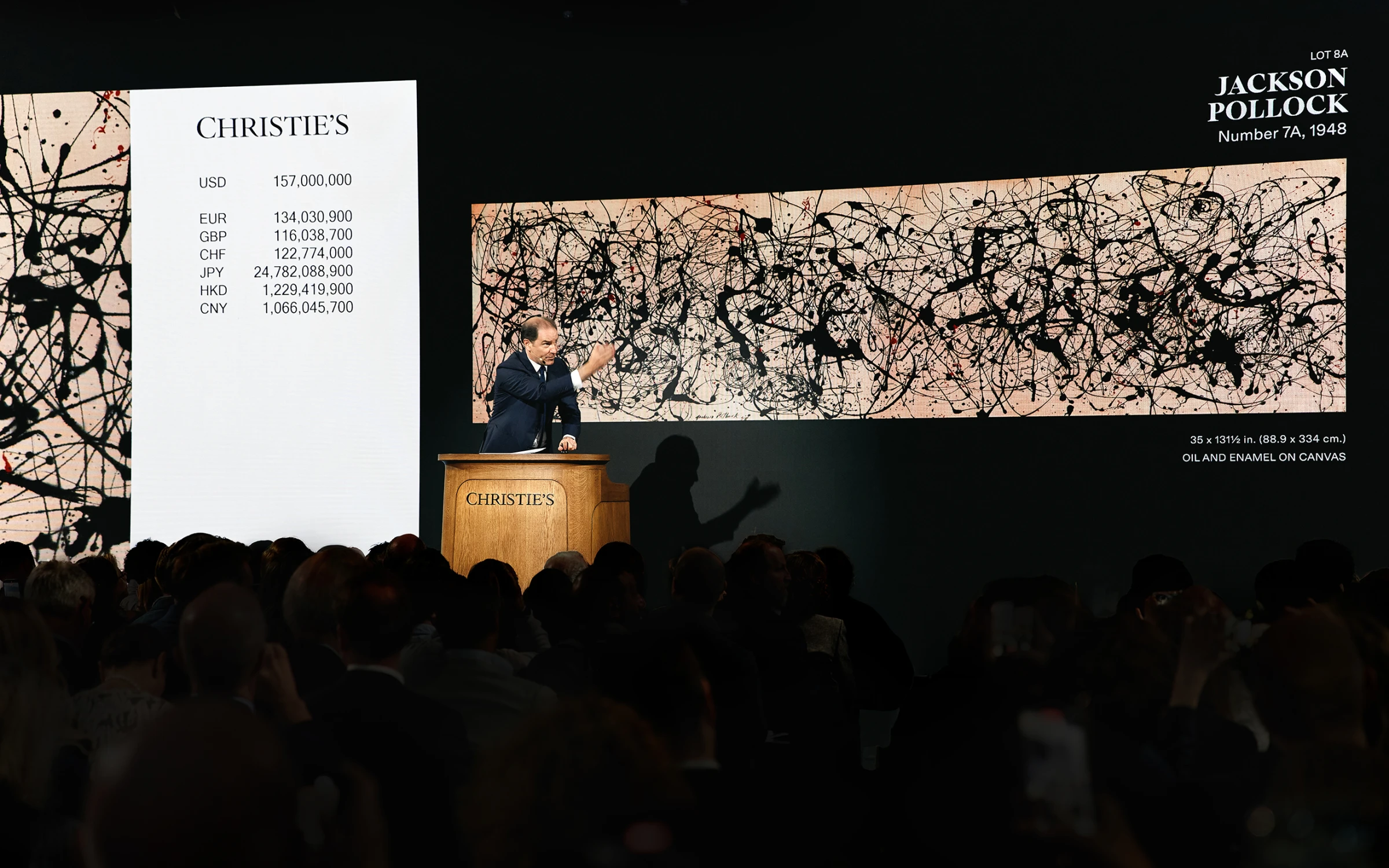
Christie's two evening sales on 18 May delivered the kind of headline the art market loves because it seems to answer every anxious question at once: $1.1 billion in a single night, a new Jackson Pollock record at $181.2 million with fees, and fresh benchmarks for Constantin Brancusi, Mark Rothko, and Alice Neel. The Artforum report captured the basic scale, but the more important takeaway is not that the market has recovered in some universal sense. It is that trophy demand for museum grade material remains brutally concentrated and brutally effective when the house controls the terms. The sale was led by property from S. I. Newhouse and anchored by works that almost no comparable owner would willingly release in the same room. Christie's did not just benefit from appetite. It weaponized rarity.
That distinction matters because weaker material elsewhere in the market can still struggle while a night like this gets sold as a broad correction. Collectors, advisers, and institutions should resist that spin. This was not evidence that all boats are rising. It was evidence that when the auction house assembles the right names, the right guarantees, and the right theater around top tier works, capital still floods in with extraordinary discipline. Pollock's eleven foot wide Number 7A had a $100 million guarantee and still drew a six bidder spectacle. Brancusi's Danaïde blew past the artist's prior record. Rothko and Neel followed. That is less a mood swing than a demonstration of what scarcity plus prestige can still command.
Why the Newhouse Collection Changed the Temperature of the Room
Single owner sales matter because they reorganize trust. Buyers are not merely bidding on objects. They are bidding on provenance, connoisseurial mythology, and the fantasy of entering a collector's historical line. Newhouse remains a particularly potent name in that regard. His holdings carried the aura of magazine era power collecting, where taste, access, and cultural authority reinforced one another. By grouping his works into a sale event rather than scattering them anonymously through the market, Christie's converted that aura into auction energy. The lots did not arrive as detached commodities. They arrived with a narrative of seriousness that the house could monetize.
That narrative also insulated the sale from the usual chatter about market caution. Buyers may negotiate harder on second tier material, but they still understand the difference between a decent Pollock and a Pollock that can reset the conversation. The same logic applied to Brancusi. A bronze and gold leaf sculpture such as Danaïde does not surface often with this combination of provenance, scale, and symbolic charge. Once it does, bidders are no longer comparing it to this season's broader market softness. They are comparing it to the possibility that they may not see another shot for years.
There is a lesson here for consignors and for observers who mistake evening sale totals for general health. When a house says the market rewards quality, what it really means is that it rewards a very narrow band of quality plus story plus confidence engineering. The Newhouse grouping provided all three. That is why the room could look exuberant even if much of the middle market remains price sensitive, thinly bid, or quietly deferred to private channels.
Record Prices Tell You as Much About Supply as About Confidence
Pollock at $181.2 million looks like a confidence number, and in part it is. But it is also a supply number. Truly first rank postwar American works are held so tightly that every major appearance distorts the field around it. Record results therefore should not be read as pure indicators of sentiment. They are symptoms of a market in which irreplaceable works have become one of the few categories capable of producing consensus urgency among globally mobile buyers. Christie's understands this and stages its evenings accordingly. The house is not chasing democratic participation. It is optimizing for a handful of people who can decide, within minutes, that $150 million is a rational response to cultural scarcity.
Brancusi's result pushes the point further. Sculpture at that level tends to carry additional museum hunger because institutions and top private collections both understand how rarely a defining example becomes available. Rothko and Neel show the same concentration at different scales. Rothko operates in the familiar stratosphere of canonical abstraction, while Neel's new record signals that figurative twentieth century painting can still see upward repricing when a work has enough quality and enough market theater behind it. None of this means buyers have become indiscriminate. It means they remain extremely selective and very willing to overperform for the few objects that satisfy every prestige condition at once.
That selectivity is why artworld.today's earlier guide to reading blockbuster auction results still applies. Totals, records, and applause are surface effects. The harder questions are about guarantees, lot mix, bidder depth, post sale private placements, and whether the sale's stars disguised softer demand elsewhere. A billion dollar headline can be true and still radically incomplete.
What This Night Means for the Rest of 2026
Christie's has now handed rivals a difficult problem. Sotheby's and Phillips can answer with strong sales of their own, but they cannot manufacture a Newhouse tranche on demand. More likely, the result will intensify the battle for estates, trophy consignments, and museum caliber single owner groups over the next two seasons. Auction houses know that in a volatile environment the safest way to project dominance is to own the rare material that creates its own market weather. Expect more aggressive courting of heirs, more financial engineering around guarantees, and more emphasis on narrative packaging that turns sales into cultural events rather than inventory disposal.
For collectors, the message is blunt. If you hold genuinely exceptional work, the top of the market still wants it and will pay a premium for the privilege of competing in public. If you hold merely expensive work, the environment is less forgiving. That two speed reality has defined the art trade for years, but Christie's just staged one of its clearest demonstrations. The house did not prove that anxiety is over. It proved that anxiety belongs mostly to everyone outside the top table.
For the wider field, including museums, the spectacle carries a different sting. When a Pollock, Brancusi, or Rothko reaches this level, public collections are effectively priced out of ownership and pushed further toward loans, philanthropy, and legacy negotiations. The billion dollar night therefore was not only a sales triumph. It was another reminder that the historical canon is being redistributed under conditions most institutions cannot meaningfully contest. Christie's made that reality look glamorous. It is still a hard reality.