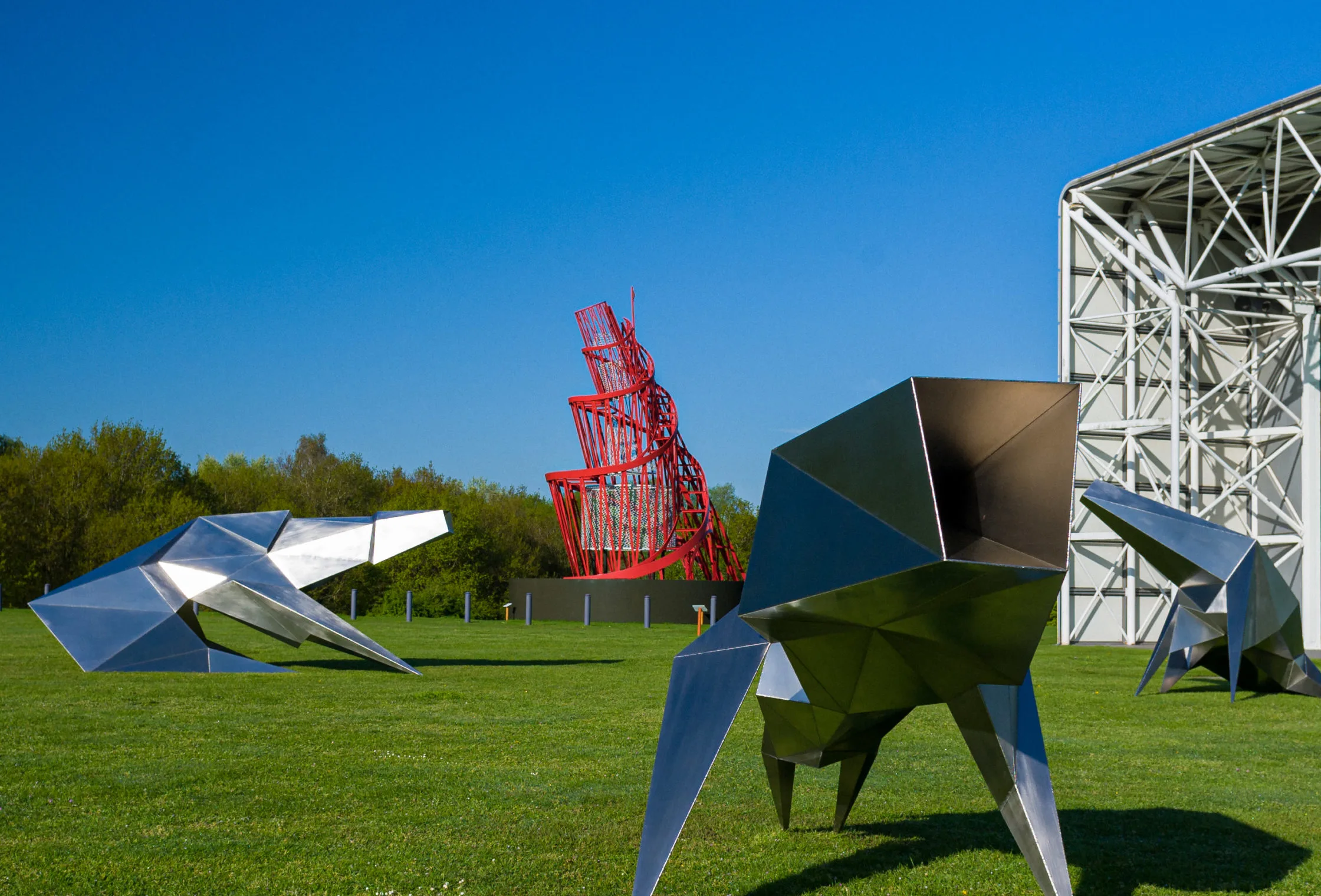
Sainsbury Centre Lands £91.2M Rebuild Gift
The Sainsbury Centre's £91.2 million gift will fund major refurbishment while testing how philanthropy and sustainability reshape museum futures
A £91.2 Million Gift Gives the Sainsbury Centre Money, Time, and a New Public Test
The Sainsbury Centre in Norwich has received a £91.2 million donation from Lord David Sainsbury, one of the largest museum gifts in recent British memory, and the scale of the figure immediately shifts the conversation from routine capital improvement to institutional strategy. According to Artforum, the money will support extensive refurbishment and the conversion of the south cafe terrace into a more sustainable space. That sounds practical, even modest, until one remembers what the Sainsbury Centre represents: a landmark Norman Foster building, a family-founded collection, and a museum that has long sold itself as unusually open, adaptable, and anti-hierarchical. A gift of this size is not merely a facilities story. It is a declaration about what kind of museum deserves long-range investment and how legacy institutions plan to survive the next generation of climate, energy, and attendance pressures.
The institution was founded through a previous Sainsbury family act of philanthropy, when Sir Robert and Lady Lisa Sainsbury donated their collection to the University of East Anglia in 1973. The building that followed, designed by Foster + Partners and opened in 1978, became a touchstone in British museum architecture: technically sophisticated, visually radical, and deliberately different from the period room logic of older museums. In that context, the new donation reads as both inheritance and correction. It continues a family role in shaping the institution while acknowledging that icons age, services decay, and the rhetoric of flexibility has to be backed by expensive physical upgrades if it is to remain credible.
The donation also changes tempo. Museums usually talk about future transformation in terms of phased aspirations, fundraising campaigns, and contingent planning. A gift at this scale compresses that timeline. It gives leadership the ability to decide, sequence, and commit in a way many peers simply cannot. That power can be used well or badly. The real editorial question is not whether the money is welcome. Of course it is. The question is whether the institution uses the freedom it has just bought to make itself more public facing and more resilient, or whether it settles for an expensive restoration of prestige.
Why Museum Philanthropy Now Has to Answer to Sustainability, Not Just Prestige
The museum says Foster + Partners was retained in 2024 to help advance a sustainability vision that includes photovoltaic panels in a new roof system and replacement of aging technology. That matters because the museum sector can no longer treat sustainability as a branding layer added on top of business as usual. Energy costs, building performance, and carbon obligations increasingly determine whether a museum can maintain public programmes without quietly sacrificing them to infrastructure overhead. A capital gift that funds environmental upgrades is therefore more consequential than a naming opportunity or exhibition endowment, because it changes the operating conditions of the institution itself.
Britain's museum estate is full of buildings that are culturally treasured and technically difficult. Climate control systems, roofing, visitor flow, insulation, and accessibility all become expensive when the structure in question is architecturally distinctive or protected. The Sainsbury Centre's Grade II* listed status means any substantial alteration has to negotiate conservation as well as innovation. That is the real challenge underneath the celebratory headline. How do you modernize a canonical building without sanding off the qualities that made it canonical in the first place? The money creates the possibility of an answer, but it does not guarantee a good one.
There is also an important distinction between sustainable programming and sustainable infrastructure. Plenty of museums host environmentally themed exhibitions while continuing to operate in energy hungry, maintenance heavy ways. The Sainsbury Centre is at least signaling that sustainability has to reach the level of roof systems, plant replacement, and daily use. That puts it in a broader international conversation about museum adaptation, one that also sits behind recent expansion and renewal stories such as our coverage of the Centre Pompidou Hanwha Seoul opening. The difference is that Seoul's story is about launching a new outpost, while Norwich is about proving that an already iconic site can be updated without becoming a heritage shell.
For visitors, sustainability can sound abstract until it shows up in comfort, access, and public use. Better climate performance can stabilize collections, but it can also reduce the background costs that quietly erode programming. Upgraded systems can mean more reliable opening hours, fewer patchwork closures, and more confidence in long term planning. That is worth saying because green language in culture often floats above ordinary visitor experience. Here, if the project works, sustainability should become visible not as a slogan but as a museum that functions better day to day.
What This Gift Reveals About Governance, Legacy, and the British Museum Funding Model
Private philanthropy has long underwritten museum ambition in Britain, but major gifts always raise governance questions alongside gratitude. When an institution has family origins and a donor with historic influence, every new infusion of money reinforces both continuity and dependency. That is not automatically a problem. Many museums would welcome the problem of having a committed donor base at all. Still, the politics of large gifts deserve scrutiny, especially when public funding is constrained and universities, local councils, and national arts bodies are all under pressure. A museum that can secure £91.2 million from one benefactor occupies a radically different planning horizon than institutions forced to patch capital needs through grant applications and deferred maintenance.
The Sainsbury Centre has tried over recent years to reframe itself as a museum of living art rather than a static shrine to a founding collection. Refurbishment money could strengthen that claim if it improves how people actually use the building, from circulation and comfort to display possibilities and civic access. But capital projects can also drift toward self-congratulation. The sector is full of glossy renderings and sustainability language that leave the visitor experience barely changed. The relevant test is not whether the project sounds visionary in fundraising copy. It is whether the museum becomes easier to inhabit, more resilient to rising costs, and more convincing as a place where collection, architecture, and public life still work together.
Norman Foster's own statement that the building was designed as a gallery without walls is revealing here. The phrase has long helped sell the Sainsbury Centre as unusually democratic, but walls are not the only things that can exclude. Underperforming systems, inaccessible circulation, and deteriorating amenities can make openness rhetorical rather than real. Refurbishment is therefore an ideological task as much as a technical one. If the museum wants to preserve its original radicalism, it has to update the building in a way that does not merely conserve a famous form but renews the social promise attached to that form.
There is a broader funding model question underneath all this. British institutions are being asked to do more educational, civic, and social work while public subsidy remains under strain. Large private gifts can rescue ambition, but they can also normalize the idea that long term cultural resilience depends on billionaire scale intervention. That may be unavoidable in practice. It should not become invisible in principle. Celebrating generosity is one thing. Pretending it is a stable system for the whole sector is another.
The Sainsbury Centre therefore has to succeed on two levels at once. It has to deliver a technically credible refurbishment, and it has to demonstrate that private generosity can translate into public value rather than donor mythology. That means being explicit about what will change for students, local audiences, school groups, researchers, and casual visitors, not just for architectural historians. If a project of this scale cannot show tangible civic payoff, critics will be right to ask whether culture in Britain is becoming better at attracting exceptional money than at building durable public consensus for funding the institutions everyone depends on.
What Comes Next in Norwich
The next phase will be less photogenic than the donation announcement but far more important. Planning, listed-building oversight, construction phasing, and public communication will determine whether the project becomes a model or just an expensive patch. The museum must explain how the work will affect access, exhibitions, and teaching while demonstrating that sustainability measures are substantive rather than decorative. If the conversion of the south cafe terrace succeeds, it could offer a useful case study for how museums integrate environmental upgrades into spaces that visitors actually notice and use.
For the British museum sector, the gift lands as both inspiration and rebuke. It shows what becomes possible when donor commitment, architectural ambition, and institutional clarity line up. It also underlines how unevenly those advantages are distributed. The Sainsbury Centre now has the resources to prove that refurbishment can be intellectually serious, environmentally credible, and publicly meaningful. If it squanders that chance on vague green language and cautious tinkering, the money will still be impressive but the result will not. The hard part starts now, after the applause, when a museum famous for challenging rules has to show it can still adapt without losing its nerve.