Berlin Gemaldegalerie Stages Five Centuries of Portraiture
Masterpieces from Botticelli to Lempicka paired across five centuries reveal how portraiture shaped identity, power and intimacy in European art
What the Exhibition Brings Together
The Gemaldegalerie in Berlin has opened a sweeping survey of portraiture spanning five centuries, from Botticelli to Tamara de Lempicka, bringing together approximately 90 masterpieces that have never been displayed alongside one another. Titled "Portraits! Surprising Encounters from Botticelli to Lempicka," the exhibition draws on the Gemaldegalerie's outstanding international collection of portraits, supplemented by loans from the Alte Nationalgalerie, the Neue Nationalgalerie, the Agyptisches Museum, and the Skulpturensammlung. Works by Petrus Christus, Mino da Fiesole, Botticelli, Giorgione, Albrecht Durer, Lucas Cranach the Elder, Hans Holbein the Younger, Titian, Sofonisba Anguissola, Rembrandt, Francisco de Zurbaran, Anna Dorothea Therbusch, and Lempicka cover the full range of portraiture's diverse functions, from grand rulers to intimate scenes of friendship. The exhibition runs at the Gemaldegalerie, Staatliche Museen zu Berlin.
The premise is straightforward but ambitious: by placing portraits from different regions and eras side by side, the exhibition reveals striking similarities that transcend time and geography. Clothing, posture, and accessories function as codes for social, political, and gender affiliation. Visitors can trace how ideals of beauty, dignity, and authority evolved over the centuries, and how artistic decisions about composition, pose, and color served as visual strategies for self-presentation. The exhibition argues that these strategies, though developed in a pre-photographic age, remain embedded in how we present ourselves visually today.
What makes this exhibition different from a standard collection display is its curatorial method. Rather than arranging portraits chronologically or by national school, the curators have paired works that share visual strategies across centuries. A Renaissance profile by Botticelli might hang near a 20th-century portrait that uses the same pose for similar reasons. The result is a series of encounters that invite comparison and discovery, rewarding sustained looking rather than a quick walk through the galleries. Visitors familiar with the Gemaldegalerie's collection will see well-known works in unfamiliar contexts, juxtaposed with paintings they may never have encountered before.
How the Exhibition Is Organized
Curators Sven Jakstat and Stephan Kemperdick, with assistance from Marie-Luise Hugler, have organized the exhibition into four thematic sections that move from the formal to the personal. The prologue highlights the remarkable continuity of mimetic portrait art across centuries and traces the genre's European roots. This opening section establishes the fundamental vocabulary of portraiture: the profile, the three-quarter view, the full-face portrait, and the various ways artists used pose and setting to communicate information about the sitter's identity and social position. By showing how these conventions persisted across centuries, the prologue provides a framework for understanding the more specific arguments of the sections that follow.
The first section, "Portrait Types North and South of the Alps," explores the development of portraiture in Renaissance Italy and Northern Europe, examining prototypes like Rogier van der Weyden's northern three-quarter profile and Filippo Lippi's strict profile, and how naturalism and idealization cross-pollinated between traditions. The Italian profile, derived from ancient Roman coins, emphasized lineage and civic identity, while the northern three-quarter view, developed by Flemish painters, allowed for greater psychological engagement. The exchange between these traditions, as Italian artists adopted northern poses and northern artists absorbed Italian ideals, produced the rich vocabulary of European portraiture that would persist for centuries. The section demonstrates how what seems like a simple choice of pose was actually a statement about cultural allegiance and artistic intention.
The second section, "Self-Representation of the Elite," examines portraits as instruments of social power. Anthonis Mor's knee-length portrait of Duchess Margaret of Parma, with her regal gaze, carries the same visual authority as Giambattista Moroni's portrait of the nobleman Don Gabriel de la Cueva. The scale, pose, and clothing of these works announce status with a precision that contemporary viewers would have read instantly. This section demonstrates how portraiture functioned as a form of political communication long before the modern era, encoding information about rank, wealth, and political allegiance in every detail from the cut of a collar to the presence of a particular order of chivalry. The relationship between portrait and power is one that continues to shape official imagery today, from diplomatic photographs to corporate headshots.
Family, Friendship, and the Private Portrait
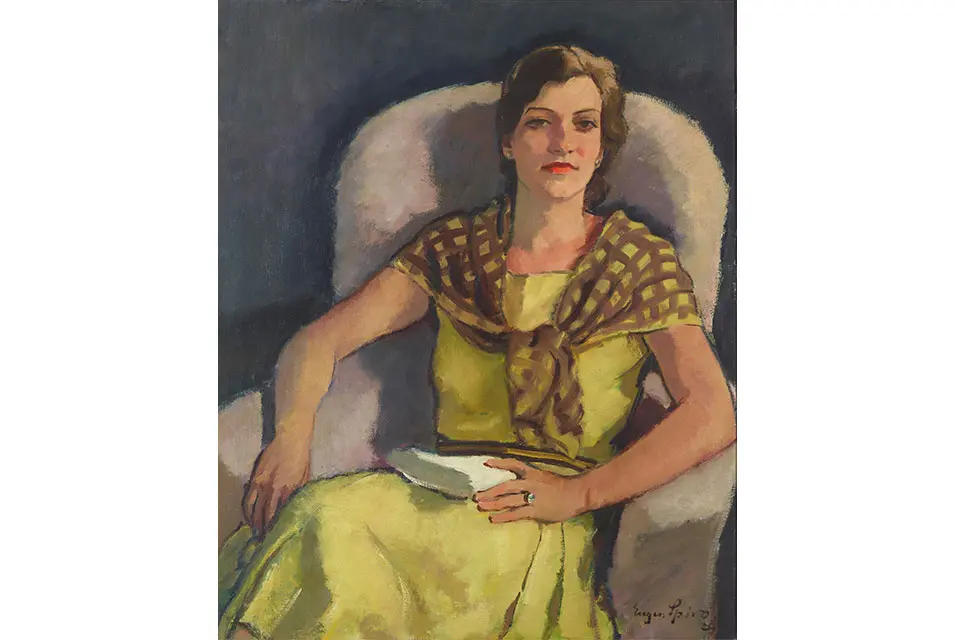
The third section, "Family, Friendship and Intimacy," shifts to the private dimensions of portraiture. Sofonisba Anguissola's mother, Bianca, is captured engaging with her daughter while she paints, a scene that echoes across centuries when compared to Eugen Spiro's portrait of his wife from 1929. These works served as personal mementos rather than public statements, and they reveal a tradition of portraiture that valued psychological truth over social performance. The section also includes portraits of the deceased, offering a final glimpse of those who had passed, a function that gave portraiture a role in mourning and remembrance that photography would later inherit.
The contrast between the public and private portrait traditions is one of the exhibition's most illuminating insights. The same artists who produced grand state portraits for rulers also painted intimate scenes of family life, and the difference lay not in skill but in purpose. A portrait of a mother by her daughter operates under different rules than a portrait of a duchess by a court painter. The scale is smaller, the pose more informal, the setting more domestic, and the result is a work that communicates emotional connection rather than political authority. By placing these traditions in the same exhibition, the curators show how portraiture has always operated on multiple registers simultaneously.
The fourth and final section, "Portraits of Art Collectors and Artists," focuses on self-portraits as tools of self-exploration and professional positioning. Therbusch presents herself as an intellectual, while Nicolas Poussin and Anton Raphael Mengs use their self-portraits to reflect on artistic fame and legacy. Self-portraiture, the exhibition argues, is where the conventions of portraiture are most clearly visible, because the artist is simultaneously the maker and the subject, navigating the same codes of pose, setting, and accessory that they would use for any commission. For a deeper look at self-portraiture traditions, the guide to Van Gogh's signatures on artworld.today explores how one artist used self-portraiture as a form of ongoing self-examination.
Why Portraiture Still Matters in the Age of Selfies
The exhibition explicitly connects historical portraiture to contemporary image culture. In the age of selfies and social media, the questions the exhibition raises are as relevant as they were in the 15th century: How do we construct our identity? How do we read faces? What does our view of others reveal about ourselves? The curators argue that the visual strategies developed over centuries of portrait painting continue to shape how people present themselves today, from the carefully angled selfie to the professional headshot. A richly illustrated catalogue published by Michael Imhof-Verlag provides further analysis of the works and their relationships.
This connection between past and present is what makes the exhibition more than a historical exercise. The Staatliche Museen zu Berlin has positioned the show as both an art-historical survey and a reflection on contemporary image culture. By tracing how artists like Holbein and Rembrandt made decisions about pose, costume, and expression, the exhibition provides a framework for understanding the visual choices people make every day when they frame themselves for an audience. The Brancusi exhibition recently on view at the Neue Nationalgalerie demonstrated how modern sculptors approached similar questions of self-representation through abstraction rather than likeness.
What Makes This Exhibition Distinctive
Berlin's Gemaldegalerie holds one of the finest collections of European painting from the 13th to 18th centuries, and this exhibition leverages that collection to create juxtapositions that would be impossible at most other institutions. The inclusion of loans from the Neue Nationalgalerie extends the timeline into the 20th century, allowing visitors to see how Lempicka's Art Deco portraits echo the strategies of Renaissance court painters, and how modern self-portraiture by artists like Therbusch and Spiro draws on traditions established centuries earlier. The exhibition is not a comprehensive history of portraiture but a curated argument about how portraits work, and it makes that argument through carefully selected encounters rather than through exhaustive display.
The exhibition also makes a case for portraiture as a genre that has always been about more than likeness. The works on view demonstrate that portraits are negotiations between artist and sitter, shaped by social expectations, artistic conventions, and personal intention. Whether it is Botticelli's idealized profiles or Anguissola's intimate family scenes, each portrait reveals as much about the culture that produced it as about the individual it depicts. This is an exhibition that rewards close looking and challenges viewers to see the old masters with fresh eyes, recognizing in their carefully constructed images the same impulses that drive our own acts of self-presentation today. For those interested in how portraiture intersects with national identity and institutional power, the recent controversy over the Kennedy Center naming demonstrated how the politics of portraiture extends well beyond the museum walls, into the public institutions that shape cultural memory and civic identity. The exhibition catalogue, published by Michael Imhof-Verlag, offers scholarly essays that expand on the curatorial arguments with detailed analysis of individual works and their historical contexts. Public programs including guided tours and lectures provide additional context for the thematic sections, reflecting the Gemaldegalerie's broader institutional effort to engage audiences with the full depth of its holdings, which span from the early Renaissance to the late 18th century.