How to Read Artist Legacy News
Use this guide to read obituaries, memorials, and legacy stories with sharper attention to institutions, markets, archives, and public afterlife.
Start by distrusting the word “legacy”
Artist legacy stories arrive in many forms: obituaries, estate announcements, memorial commissions, rediscoveries, scholarship campaigns, and late-market surges that claim to prove enduring relevance. The art world loves this language because it feels elevated while hiding the machinery underneath. Legacy sounds inevitable, like the natural afterglow of talent. It is nothing of the sort. Legacy is built through institutions, prices, archives, critics, foundations, heirs, dealers, and public agencies that decide what gets repeated until it feels permanent. If you want to read artist legacy news seriously, begin by stripping away the tribute tone and asking who is doing the building.
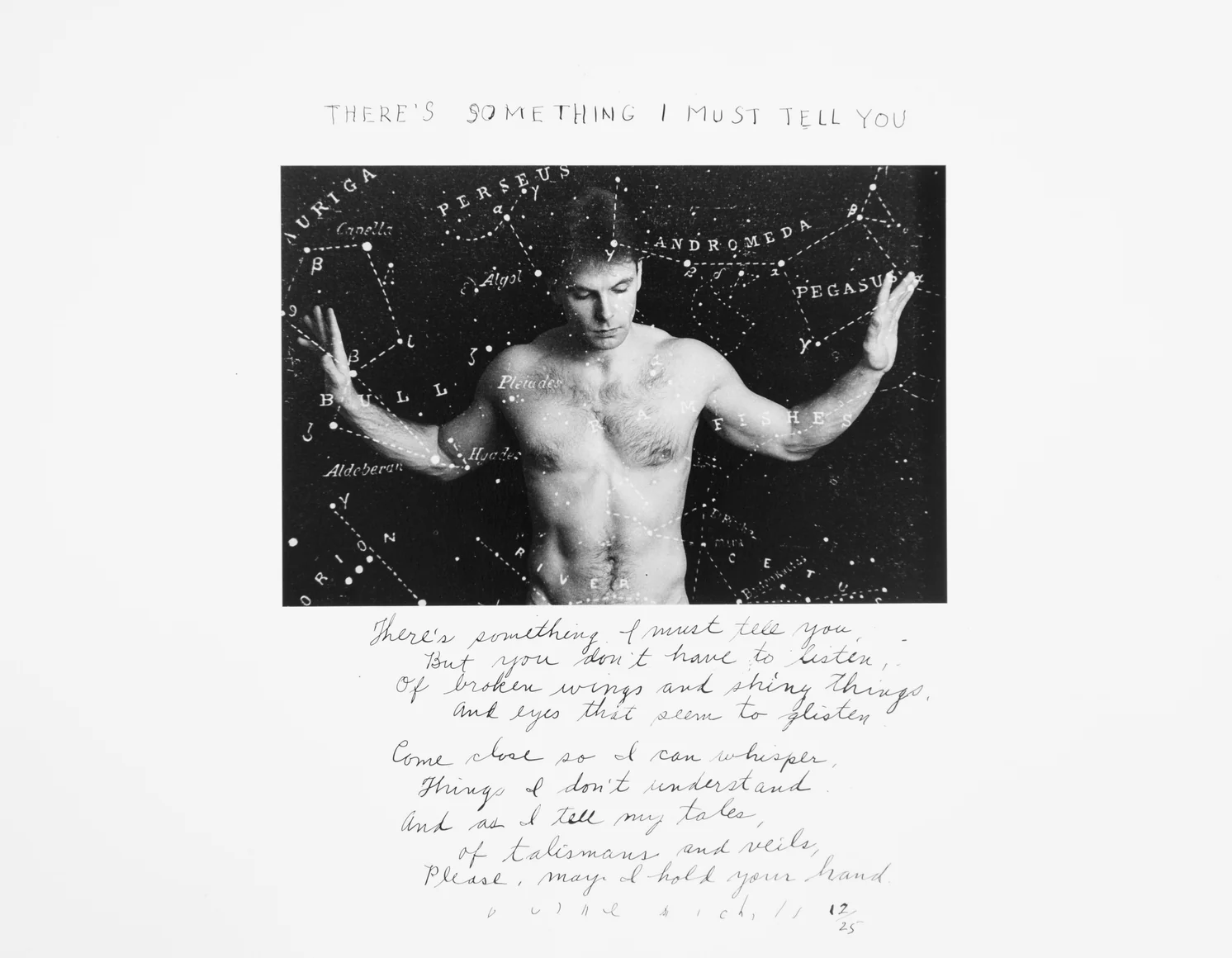
This week supplied an unusually dense set of examples. There was the death of Duane Michals, an artist whose influence on photography is now so absorbed that it risks being flattened into a list of innovations. There was the New York City AIDS Memorial’s Oscar Tuazon commission honoring Scott Burton, which turns legacy into a question of salvaged public form. And there was the continuing wave of attention after David Hockney’s death, where grief, market positioning, and canon maintenance began moving at the same speed. Read together, these stories show why legacy coverage is rarely about the past alone. It is about who gets to control the future tense.
Ask what exactly is being preserved
The first serious question in any legacy story is brutally simple: what is the thing that institutions are trying to preserve? Sometimes it is a body of objects. Sometimes it is a narrative about an artist’s innovation. Sometimes it is a moral authority that can be borrowed by museums, galleries, or cities. Those are not the same project. In Duane Michals’s case, preservation is not only about maintaining prints. It is about keeping alive a model of photography that resisted literalism and accepted text, sequence, fiction, and metaphysical unease as part of the medium. If institutions reduce him to a handful of famous images or a footnote about handwritten text, they preserve the name while shrinking the practice.
Scott Burton presents a different challenge. His public art cannot be preserved only as object because its meaning depended on use. A bench or seating sculpture that no longer functions socially is not merely damaged; it is conceptually diminished. That is what makes the Burton memorial commission so revealing. The institution recognized that the right unit of preservation was not pristine material but public activation. A salvaged fragment becomes meaningful only if it returns to common space as something people can touch, occupy, and live with. When reading legacy news, always identify the work’s real medium. If you get that wrong, every later claim about honoring the artist becomes suspect.
This is also why market-based preservation can mislead. An artist can become financially secure in the secondary market while disappearing from the forms of life that made the work matter. Auction prices preserve demand, not necessarily understanding. Museums preserve access, but often at the cost of use. Estates preserve control, but sometimes by narrowing interpretation. None of those structures is neutral, and every legacy story is really a story about which one is winning.
Separate obituary truth from obituary genre
Obituaries are useful and unreliable at the same time. They often consolidate essential biographical facts, publication quotes, institutional milestones, and a first-pass summary of a career. But they are also a genre built to smooth edges. Their function is to establish consensus quickly. That means they tend to turn difficult artists into legible pioneers, beloved personalities, or singular geniuses who marched history forward. The trouble is that artists rarely lived that neatly. When you read an obituary, pull out the specific evidence and set aside the consoling narrative.
Michals is a good example. The factual frame matters: his experiments with sequences, his insistence on handwritten text, his hostility to photographic dogma, his commercial and fine-art double life. Those details help you map his actual interventions. But the genre also risks making him sound like a charming maverick who expanded the medium and left everyone grateful. That version is too comfortable. Michals did not simply expand photography. He embarrassed its claims to purity. He exposed how thin the medium’s self-image could be when confronted with desire, memory, or the need to say something an image alone could not say. If you read only the tribute layer, you lose the antagonism that made the work matter.
Do the same with Hockney coverage. Much of it will celebrate sunlight, pools, draftsmanship, and technological curiosity. All true. But the stronger reading asks how Hockney managed to keep figurative pleasure and formal argument in motion at once, and how his popularity often caused critics to underestimate the severity of that formal argument. Obituary genre wants broad admiration. Good reading restores conflict.
Track the institutions that arrive fastest
After an artist dies or reenters the news cycle, notice which institutions speak first and which stay quiet. The first wave usually tells you where authority currently sits. Galleries rush to assert stewardship. Museums surface past exhibitions and key acquisitions. Auction houses start publishing price roundups. Foundations or heirs frame the official narrative. Each actor is trying to anchor the meaning of the artist before the field becomes noisy. That does not make the statements false, but it does mean they are strategic.
Institutional speed matters because memory hardens quickly. If one gallery controls the initial archive images, another institution controls the scholarly record, and a third controls the auction headlines, a hierarchy begins to form almost immediately. Readers should pay attention to what each player emphasizes. Is the work being framed as historically radical, emotionally beloved, nationally significant, or newly undervalued? Those are not interchangeable claims. They are bids for different kinds of future power over the artist’s name.
The Burton commission shows a more interesting version of this process because the Memorial, city agencies, and salvaging parties all participate in legacy work without claiming total ownership. That distributed authorship is healthier than the usual single-gatekeeper model, but it also requires closer reading. Shared stewardship can widen access, or it can blur accountability. Ask which institution is responsible for maintenance, interpretation, public programming, and long-term documentation. Legacy language is cheap. Maintenance schedules are not.
Follow the market, but do not confuse it with history
One of the laziest habits in art coverage is treating prices as proof of lasting significance. The market is relevant because it affects acquisitions, scholarship budgets, estate power, and what kinds of work stay visible. But price is not the same as historical seriousness. Sometimes the market catches up to art history. Sometimes it outruns it. Sometimes it simply rewards legibility, scarcity, or a fashionable narrative while leaving more difficult achievements under-described.
Our recent report on Christie’s London sale of South Asian art is useful here. Category repricing can reshape the canon by forcing institutions and collectors to revisit artists they long treated as peripheral. That can be productive. But legacy reading requires another step: ask whether the market is rewarding the most historically illuminating work or the most easily exportable version of that history. When an artist dies, expect auction houses to move fast. Their lists of top prices and star lots are not neutral educational tools. They are market scripts that tell buyers which chapters of a career deserve premium attention.
Price also changes what kind of preservation becomes possible. If a body of work becomes expensive enough, museums may be priced out while private collectors take control of access. If a market remains weak, important works may disappear through neglect. Reading legacy news well means noticing this material reality without granting it final interpretive authority.
Look for the public afterlife, not just the archive
A strong legacy survives because it remains usable in public, not merely because it is archived impeccably. Public afterlife can mean many things: works on view, scholarship in circulation, teaching relevance, city infrastructure, living performances, or simply the continued capacity of the work to structure conversation now. The Burton story is exemplary because it literalizes public afterlife. Michals does it differently. His public afterlife depends on whether younger artists, curators, and teachers continue to present his impurity as method rather than quaint eccentricity.
This is where internal linking across stories becomes genuinely useful rather than merely strategic. If a reader moves from the Hockney obituary to a guide on reading legacy, or from a memorial commission to a market story, the publication begins to model legacy as a network of active questions instead of a sealed capsule. That is also why we keep returning to earlier reporting such as our guide to authentication and rediscovery claims. Rediscovery is a form of legacy management too. It tells the public which forgotten objects are worth bringing back and under what terms.
So the next time an artist dies, or an institution announces a tribute, or a market report claims to prove enduring relevance, resist the instinct to ask only whether the artist deserves the attention. Ask instead what kind of attention this is, who benefits from its tone, and what structures will remain once the tribute cycle fades. That is where legacy stops being a soft-focus noun and becomes what it actually is: a fight over future visibility.