The Bass Names Philippe Vergne Its First Artistic Director
Miami Beach’s Bass Museum has created a new top curatorial role for Philippe Vergne as it prepares an expansion and a more ambitious Art Basel future
The Bass Has Chosen Expansion Through Curatorial Authority, Not Just Architecture
The Bass Museum of Art in Miami Beach has appointed Philippe Vergne as its inaugural artistic director and chief curator, a move that says as much about the institution’s ambitions as it does about his résumé. According to The Art Newspaper, Vergne will join the museum after seven years leading the Serralves Museum of Contemporary Art in Porto. The role itself was newly shaped for him, which is the crucial detail here. The Bass is not simply filling a vacancy. It is redesigning its leadership structure at a moment when an expansion project, a stronger curatorial profile, and the annual gravitational pull of Art Basel Miami Beach are all converging.
That choice lands at an opportune time for the museum. The Bass has long occupied an unusual position in Miami: architecturally recognizable, civically prominent, and close enough to the annual fair circus to benefit from it, yet small enough that every strategic decision matters. Vergne’s hiring suggests the museum wants a figure who can operate across administration, artist relations, programming, and longer institutional positioning. The institution’s own visitor materials still sell the public face of a beachside museum experience, but behind that calm front the Bass is preparing a more consequential chapter. Our earlier report on the market pressures surrounding destination art events argued that smaller institutions near major commercial hubs now face sharper pressure to differentiate themselves. This appointment looks like one answer to that challenge.
Why Philippe Vergne Fits the Bass’s Next Phase
Vergne is a known quantity in institutional contemporary art, but not in a stale way. His career cuts across executive and curatorial positions at the Walker Art Center, the Dia Art Foundation, the Museum of Contemporary Art in Los Angeles, the Musée d’Art Contemporain in Marseille, and most recently Serralves. That matters because the Bass does not need a curator who can only organize exhibitions, or a manager who can only supervise growth. It needs someone who understands what institutional expansion does to mission. Buildings change expectations. New galleries demand stronger collections narratives, sharper public programs, and a more coherent sense of why the institution matters beyond fair week.
In his comments to The Art Newspaper, Vergne emphasized a desire to work more directly with artists and communities. That sounds modest, but in this context it is strategic. The Bass is creating a role that merges artistic direction with chief curatorial responsibility, effectively making the museum’s future identity legible through one appointment. That kind of concentration can be risky if the person is purely managerial or purely theoretical. Vergne brings enough institutional heft to reassure donors and trustees, and enough curatorial history to signal that the museum does not want to become an event venue with exhibitions attached.
His tenure at Serralves also gives the Bass a model for thinking about architecture as an artistic tool rather than a real-estate achievement. The Art Newspaper notes that Vergne oversaw Serralves’s expansion through the Álvaro Siza Wing, opened in 2024. He is therefore arriving in Miami not as a first-time builder but as someone who has already navigated how new square footage changes an institution’s obligations. That experience matters given the Bass’s plan to transform a 22,000-square-foot parking lot into permanent collection galleries, an outdoor patio, and an event space with design by Johnston Marklee. The architecture is not incidental. It is a bet on a broader civic and curatorial identity.
The Expansion Plan Raises the Stakes for a Small Museum
The Bass is not a giant museum pretending to add one more wing. It is an institution with fewer than forty staff members that is trying to scale its mission without losing coherence. That is harder than it sounds. Small museums can gain visibility through expansion, but they can also become stretched versions of themselves, expected to produce larger programs, host more donors, maintain more complex facilities, and remain nimble enough to matter locally. Miami Beach city funding, including the municipal bond support cited in the reporting, gives the project civic weight. It also means the museum’s choices will be judged not only by collectors and visitors but by a public that has effectively invested in the outcome.
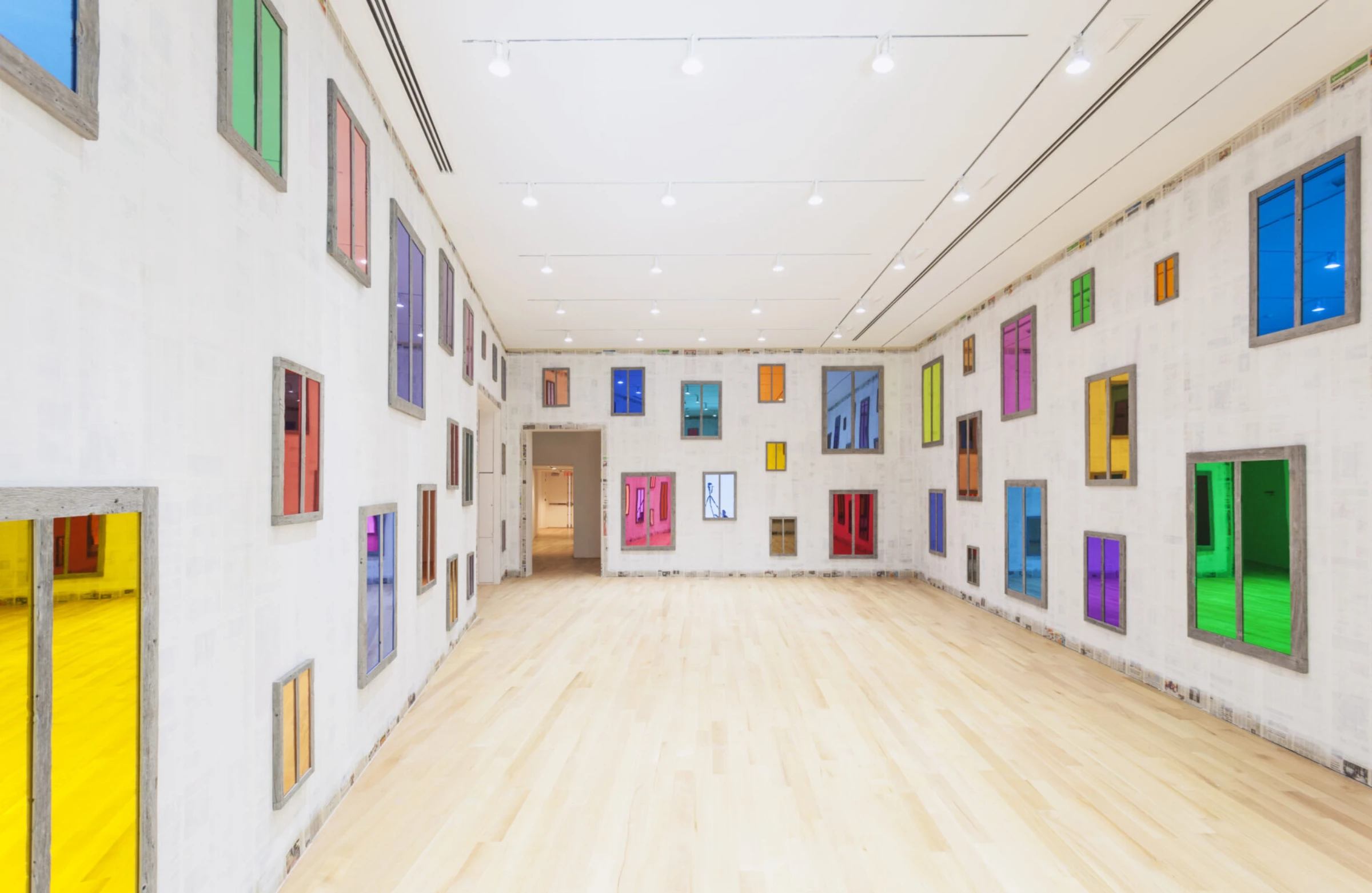
The Bass already has a history of commissions and contemporary programming that distinguishes it from more encyclopedic institutions. Its recent and current exhibitions, documented through the museum’s official site, show a program that wants to stay artist-centered even when the city around it becomes consumed by hospitality branding and fair-week metrics. Vergne’s challenge will be to build on that record without smoothing it into generic ambition. Miami does not need another institution that mistakes visibility for substance. The city has plenty of spectacle. What it needs are museums willing to define a point of view that survives December.
There is also a timing advantage. Vergne starts on 1 October, just weeks before the city begins its annual transition into Art Basel mode. That gives him little time to transform programming, but enough time to become a visible interpretive figure at a moment when the museum’s peers, patrons, and competitors are all in town. If handled well, the first Basel season of the Vergne era could be less about immediate overhaul than about tone setting: who the museum wants to talk to, which artists it centers, and how aggressively it uses the new title of artistic director to shape public expectation.
The museum’s opportunity is not simply to become busier. It is to become clearer. Miami’s institutional field often gets narrated through the fair calendar, luxury development, and the movement of collectors through the city each winter. A stronger Bass could interrupt that pattern by insisting that a museum near the market does not have to mirror the market’s tempo. Vergne’s background in commissioning, historical framing, and expansion projects gives the museum a chance to articulate why a smaller institution can still shape international conversation if it is precise about artists, publics, and architecture. That would be a more durable achievement than merely becoming a required stop for fair visitors.
There is an internal labor dimension as well. Institutions with under forty staff members feel strategic change intimately. New leadership can energize a museum, but it can also stretch teams that are already balancing fundraising, programming, education, visitor services, and capital planning. If the Bass wants this appointment to matter beyond headlines, it will need to convert ambition into workable priorities. The museum cannot do everything at once, and the smartest version of growth may involve choosing a few areas where Vergne’s influence can be immediately visible rather than promising total transformation before the new pavilion even opens.
For Miami audiences, the more useful comparison may not be with giant encyclopedic museums but with institutions that have managed to convert scale limits into curatorial sharpness. Our earlier Venice Biennale verdicts report made a similar point from another angle: institutions matter when they know how to shape experience, not when they simply accumulate visibility. If Vergne can help the Bass define a stronger rhythm between local audiences, visiting international publics, and a still-growing collection story, the museum’s small size may become a strategic asset rather than a handicap.
What the Appointment Says About Miami’s Institutional Landscape
The Bass’s decision reflects a broader shift in American museum culture, where institutions outside the largest coastal giants are increasingly defining themselves through sharper leadership identities. The old aspiration was often scale for its own sake: build, expand, hire, and hope the institution begins to feel major through accumulation. The better contemporary strategy is closer to authorship. If a museum can articulate why its exhibitions, commissions, and civic role are distinct, it can matter above its size. A figure like Vergne helps the Bass attempt that jump because he arrives with credibility across both boardrooms and artist studios.
Still, prestige hires can disappoint when they function as branding exercises rather than operational commitments. The true test will be whether the Bass gives Vergne the room to shape collecting priorities, commission structures, and public-facing curatorial language, or whether the title simply serves as a decorative layer on top of preexisting development logic. The museum’s leadership has said the role emerged organically from conversations with executive director Silvia Karman Cubiñá. That phrasing is encouraging if it means trust; less so if it means strategic vagueness. A museum cannot afford ambiguity when growth is expensive and scrutiny is high.
Another reason this hire matters is that Miami Beach institutions are increasingly judged on whether they can sustain attention outside the annual compression of December. The Bass has an opening to define a year-round identity that is neither purely civic nor merely adjacent to the market. A stronger curatorial spine could help it do that through commissions, collection displays, and partnerships that make sense in local time rather than just fair time. That challenge echoes a broader issue we touched on in our report on museum audience-building experiments: institutions gain resilience when programming and public purpose reinforce each other instead of pulling apart.
What comes next is straightforward but demanding. Vergne must translate a high-profile appointment into a durable program before the expansion turns from promise into pressure. The Bass must prove that new architecture will deepen, not dilute, its artistic seriousness. And Miami’s wider art audience should resist reading this as just another fair-season chess move. If the institution gets it right, the appointment could mark the moment the Bass stopped acting like a charming adjunct to the city’s market theater and started insisting on its own curatorial authority.