Cardiff Museum Makes the Case for Under-Fives in Art Galleries
National Museum Cardiff is using play, language and repeated visits to argue that toddlers belong in galleries long before schools formalize art education
National Museum Cardiff is pushing back against the idea that galleries start at school age
The sharpest argument in favor of early childhood art education is often made by a child pointing at the wrong thing for the right reason. In the Guardian's new report from National Museum Cardiff, a three-year-old looks at a Turner seascape and sees a fish. That answer is not a failure of interpretation. It is interpretation starting in public. The museum is building programming around exactly that premise, treating toddlers not as future audiences to be managed later, but as present visitors capable of looking, comparing, naming and returning. In a sector that still too often treats family access as a soft add-on, Cardiff's approach is useful because it joins hospitality to a concrete theory of learning.
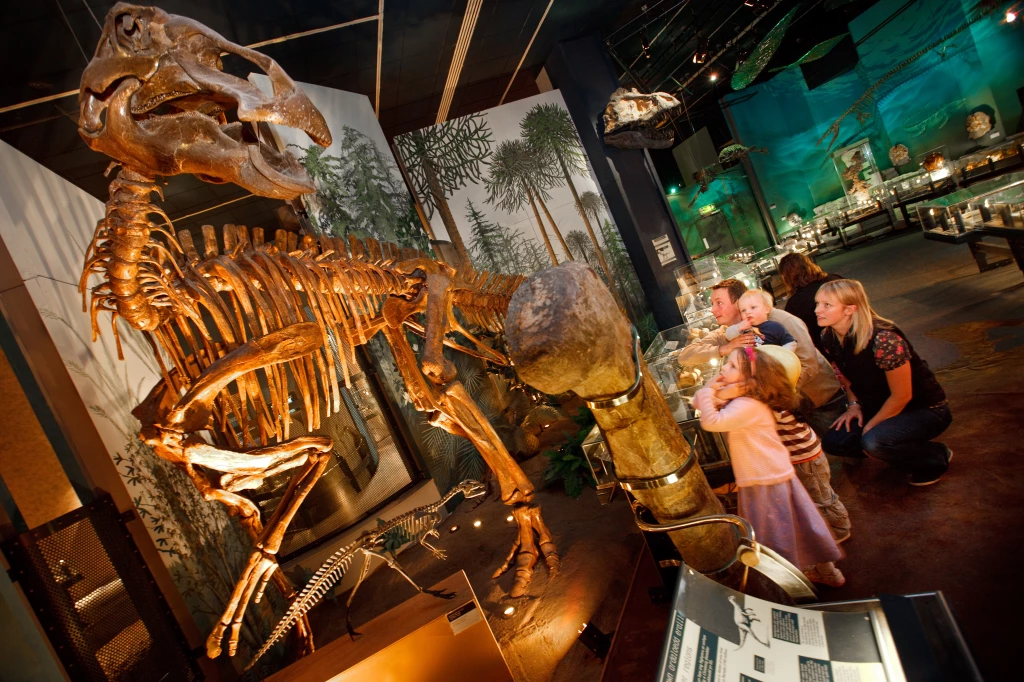
The institution is part of Museum Wales and already carries the advantages of scale: natural-history attractions, a large learning center and a broad public identity that does not force art to carry the whole building. That mixed ecology matters. Parents in the article describe a pattern that will be familiar to museums everywhere: children arrive for the dinosaurs or the mammoth, then gradually move upstairs to the quieter galleries. The transition from noise to concentration becomes part of the visit itself. Rather than seeing that journey as a distraction from art, museum staff appear to treat it as the route by which art becomes imaginable for very young visitors.
Mini Wonders turns repetition and comfort into a cultural policy argument
The key program in the report is Mini Wonders, an eight-week course for families with children aged two to four developed through a partnership with Art Fund and Nesta. That detail matters because it shifts the conversation from sentiment to structure. Repeated visits, funded access and a designed pathway into the museum are very different from a one-off family day photographed for an annual report. Cardiff is using recurrence to build familiarity, and familiarity is what turns cultural institutions from intimidating civic monuments into places people actually use.
Each child in the program receives a digital camera and leaves with a scrapbook, which could sound cute if it were not also strategically smart. The device gives children an authorial role inside the museum. They are not simply shepherded toward approved objects and told to behave. They record, select and remember. That kind of participation matters especially for families who may not yet experience the museum as theirs. Rowlands's insistence that every engagement is a learning engagement is persuasive because it does not reduce learning to lecture. It includes naming colors, noticing dogs in paintings, whispering in a quieter room and recognizing that different spaces ask for different kinds of attention.
That is not a small policy point. Many museums still frame young children as future visitors whose serious relationship to art will begin later, once schools, labels and orderly behavior can do more of the work. Cardiff is arguing the opposite. The museum environment itself can help build readiness for language, comparison and emotional articulation before those capacities are formalized in a classroom. The difference is consequential because it changes how success is measured. Instead of asking whether a toddler learned a historical fact, the institution can ask whether the child learned that museums are places where looking closely and speaking tentatively are both allowed.
The bilingual dimension matters too. Museum Wales has long worked within a cultural landscape where English and Welsh coexist publicly, and early-years programming can make that coexistence tangible rather than abstract. When children encounter stories, songs and prompts across both languages, the museum becomes more than a neutral cultural container. It becomes a civic space where identity, access and imagination are practiced together. For families who may not feel equally addressed by every institution, that kind of design is not cosmetic. It shapes whether return visits feel possible or merely aspirational.
There is also a class question running through the program. The article notes that Mini Wonders is fully funded and invites families from disadvantaged backgrounds. That matters because cultural confidence is often misread as a natural trait when it is usually the product of repetition and permission. Families who can afford paid play spaces, frequent outings and flexible schedules already accumulate those permissions. A free museum program that makes repeat attendance normal can interrupt that imbalance in a modest but concrete way. It turns access from a theoretical value into a practiced habit.
Why museums need this argument now
Across Britain and elsewhere, museums face a familiar pressure: prove social value in measurable terms while maintaining enough symbolic seriousness not to look like indoor playgrounds. Programs for under-fives sit directly inside that tension. If framed badly, they can look like crowd-pleasing extras meant to pad attendance figures. If framed well, they expose a bigger institutional truth: museums shape cognitive and emotional habits long before formal art history enters the classroom. Cardiff's model works because it does not apologize for play. It treats play as the method through which observation, language and comfort with cultural space are built.
The practical design choices in the article reinforce that seriousness. Art carts stocked with pencils, bilingual books and soft toys lower the stakes of entering the gallery. Free sketching classes and music-and-storytelling events offer multiple entry points for families with different rhythms and language needs. Parents quoted by the Guardian are not pretending their children are miniature connoisseurs. They are describing something more interesting: a growing ability to attach words, feelings and repeated rituals to works of art. That is precisely how cultural literacy begins for most people, including adults who later describe themselves as naturally museum-going.
For curators and directors, the harder lesson is that under-fives programming should not be segregated from artistic seriousness. Museums often defend the importance of art in adulthood by surrounding it with hushed codes that children are expected to earn the right to understand. Cardiff is taking the more convincing route. It lets very young visitors enter through curiosity, repetition and play, then trusts that works of art can sustain that attention without being simplified into cartoons. That approach respects both the child and the object more than the false choice between reverence and entertainment ever could.
If the sector is honest, this is also about audience succession. Museums worry constantly about aging publics and thinning cultural habits, then underinvest in the ordinary conditions by which those habits form. Family days alone will not solve that. What can help is a museum rhythm that parents start to treat as part of weekly or monthly life, the way they already treat libraries, parks and supermarkets. Cardiff's example suggests that art museums do not have to wait for schools or adolescence to enter that rhythm. They can claim a place in it now, provided they design for welcome without sacrificing complexity.
The risk is not that museums become too child-friendly, but that they confuse access with depth
There is still a hard question underneath the enthusiasm. Family programming can become a substitute for rethinking the galleries themselves. A museum may install carts, hold workshops and advertise inclusivity while leaving interpretation, seating, pacing and sightlines largely designed for adults. The Guardian piece hints at this tension in the contrast between the energetic lower floors and the quieter upstairs galleries. Children adjust, sometimes beautifully, but the institution also has to keep adjusting to them. Otherwise the family offer remains concentrated in designated zones while the art spaces stay symbolically closed.
That is why Cardiff's approach is strongest when it treats the whole museum as pedagogical rather than confining learning to a classroom annex. Parents talk about moving from fossils to painting, from lunch to looking, from fun to naming. Those sequences turn the museum visit into a social script families can repeat. Once that happens, art no longer arrives as a special test of cultural confidence. It becomes one more thing a child expects to encounter in public life. Museums like National Museum Cardiff are well placed to prove that this shift does not cheapen art. It normalizes access to it.
The payoff is not immediate spectacle. A toddler who learns to spot a dog in a painting, whisper in a gallery or connect a color in a picture to a word at home is not producing the kind of evidence that politicians or donors always want. Yet those small acts accumulate into familiarity, and familiarity is what turns an intimidating institution into part of everyday civic life. Cardiff's argument is persuasive because it stays with those small acts long enough to see their long-term significance. Museums that keep ignoring them will continue mistaking access rhetoric for audience-building.
What comes next is whether other museums will build comparable programs with the same seriousness about repetition, free access and early language development. Cardiff has an advantage in scale and a public-service mandate that many institutions envy. But the broader lesson travels. If museums want future audiences, they cannot wait until children can read wall labels without help. They have to create conditions in which families feel that looking together already counts as learning. Cardiff is making that case with a calm, practical confidence that many larger institutions still lack, and the argument is convincing precisely because it begins with ordinary behavior rather than grand rhetoric.