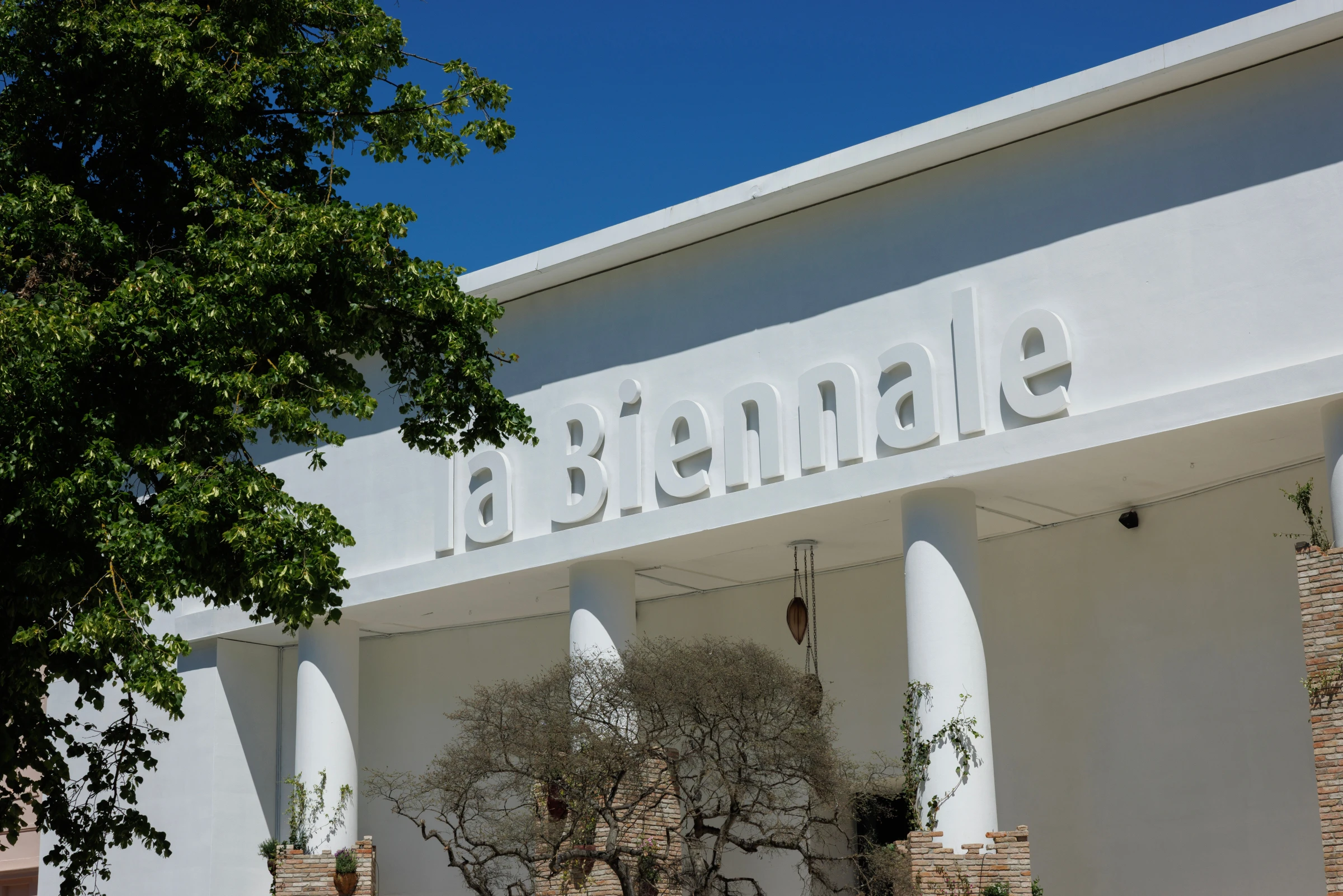
Venice 2026: Decentering the West
Art world leaders reflect on Koyo Kouoh's curation of the 61st Biennale, emphasizing the shift toward the Global South and the resonance of political protest.
The 61st Venice Biennale, curated by Koyo Kouoh under the title In Minor Keys, has emerged not merely as an exhibition, but as a profound act of institutional rebuilding. In the wake of Kouoh's passing, the exhibition serves as a final, resonant statement on the necessity of decentering the Western canon and amplifying voices from the margins of dominant art history. For many who walked the Giardini and Arsenale this year, the experience was less about the 'spectacle' of the Biennale and more about a fierce, urgent polyphony of propositions regarding the human condition in 2026.
The curatorial vision of In Minor Keys asks the viewer to shift their bodily position—to move away from the clinical distillation of art and toward a peri-spiritual engagement with the work. By utilizing a musical metaphor, Kouoh challenged the audience to listen to the 'minor keys' of history: the narratives of the Global South, the diasporas, and the marginalized, which have long been played as background noise to the dominant Western symphony.
The Architecture of the Global Majority
The layout of the main pavilion in the Giardini was a masterclass in choreography, evoking Édouard Glissant’s concept of "Tout-Monde"—a world without hierarchy. Here, the West does not come first; instead, the Global South speaks as clearly and as eloquently as any other region. The visual experience begins in a space clad in indigo fabric, radiating outward into various shades of blue, creating a conversation between artists that feels more like a chorus than a curated selection. This design explicitly rejects the geopolitical power structures that have traditionally governed the Biennale's layout.
The results are felt in the inclusion of artists who have historically been excluded or relegated to 'collateral' status. From the works of Werewere Liking to Ranti Bam, the exhibition provides a multi-generational focus on African women artists, ensuring that the project is not merely a snapshot of the present, but a bridge to the past. The presence of artists like Mohammed Joha, whose landscapes of Gaza are constructed from discarded materials, brings the immediate geopolitical trauma of the present directly into the heart of the institutional space.
This structural shift is not merely symbolic. By integrating 'schools'—artist-centric institutions—directly into the exhibition, Kouoh recognized that the production of art from the Global South often happens in collective, non-Western frameworks. To showcase these artists within a traditional pavilion structure without acknowledging their home-grown institutional support would be another form of erasure. The 2026 Biennale thus serves as a blueprint for how the world's largest art events can evolve from colonial-era showcases into genuine platforms for global exchange.
The implication of this shift is a direct challenge to the prestige economy of the Biennale. For decades, the 'success' of a pavilion was measured by its ability to reflect a national identity as seen through a Western lens. Kouoh’s approach replaces national prestige with a shared, trans-national solidarity. By focusing on the 'minor keys', the Biennale is effectively admitting that the 'major keys' of Western art history have been a project of exclusion, and that the only way to move forward is to build a new language of visibility that does not rely on the approval of the center.
Protest as the Parallel Exhibition
The official exhibition did not exist in a vacuum. The 2026 Biennale was marked by a pervasive atmosphere of political urgency, where the act of viewing art was inextricably linked to the act of protest. The largest strike in the Biennale’s history, coordinated by the Art Not Genocide Alliance (ANGA), saw twenty-seven pavilions partially or fully closed. This collective action highlighted a profound rift: the disconnect between the structural mechanisms of the art world and the ethical positions of the artists and workers who inhabit them.
The presence of the Palestinian poet Refaat Alareer’s poem "If I Must Die" at the opening of the Arsenale set a tone of mourning and resistance that permeated the entire event. The juxtaposition of luxury—such as the corporate presence of high-fashion brands—with the raw urgency of the protests served as a stark reminder that the Biennale is as much a site of conflict as it is a site of celebration. The protests were not 'interruptions' to the art; they were the most honest part of the exhibition, reflecting a refusal to separate the pleasure of aesthetic consumption from the pain of global violence.
This tension was further amplified by the resignation of the International Jury and the mass protest signs integrated directly into some of the artworks. The Biennale became a mirror reflecting the existential crisis of the art world: the struggle to maintain a space of 'neutral' artistic expression in a time of genocide and systemic collapse. For the visiting public, the message was clear: the luxury of ignoring the political reality of the art's origin is no longer available.
The an- la Biennale a space of 'safe' consumption, the 2026 edition has transformed the Giardini into a political theater. The tension between the official curation and the grassroots protests suggests that the Biennale is no longer just an art fair, but a site of active negotiation over the ethics of visibility. When artists and workers strike in the middle of the most prestigious art event in the world, they are asserting that the labor of the art world is not separate from the politics of the world.
Beyond the Pavilion: The Ripple Effects
The success of the 2026 edition is perhaps best measured by its ripple effects. Curators and artists observed a surge in 'live art' and performative practices across national pavilions, from Florentina Holzinger’s uncompromising Austrian pavilion to the sonic investigations of Lawrence Abu Hamdan. The trend reflects a move away from the static object and toward an experience of presence and mortality, which Kouoh herself championed.
Ultimately, In Minor Keys is not an exhibition that can be judged by traditional aesthetic parameters. It is a process of rimarginare—an Italian term for the healing of a wound where the margins disappear. By erasing the margins and forcing the West to recalibrate its visual culture, Koyo Kouoh has not just curated a show; she has shifted the gravity of the art world. The Biennale now stands as a testament to the failure of the West to lead and the rise of a shared, multipolar visual culture.
The legacy of the 2026 Biennale will likely be seen as the moment the 'center' finally collapsed. By proving that an exhibition could be both globally significant and fiercely critical of the systems that support it, Kouoh has opened a door that cannot be closed. The future of the Biennale will not be defined by who gets to represent a nation, but by how the art world can collectively imagine a world without hierarchy, a world where the 'minor keys' are the only ones that matter.