Venice Biennale 2026 Opens Under Protest
The 2026 Venice Biennale has opened amid strikes, walkouts, and pavilion disputes that expose the event's old nationalist machinery under new pressure
The 2026 Biennale opened with more political smoke than ceremonial polish
The Venice Biennale likes to present itself as the art world's supreme stage of international visibility. This year it opened looking more like a stressed political machine held together by habit, prestige, and denial. In her opening-week dispatch for Artforum, Rachel Wetzler describes a preview week punctuated by protest actions, worker strikes, jury resignations, and disputes over national participation that made the exhibition's usual rhetoric of global culture sound hollow. The official Biennale Arte 2026 page still lists one hundred national participations and first-time entries from several countries. That is the institutional view. The lived reality of opening week was a deep argument about whether the Biennale's structure can still carry the political contradictions it pretends to rise above.
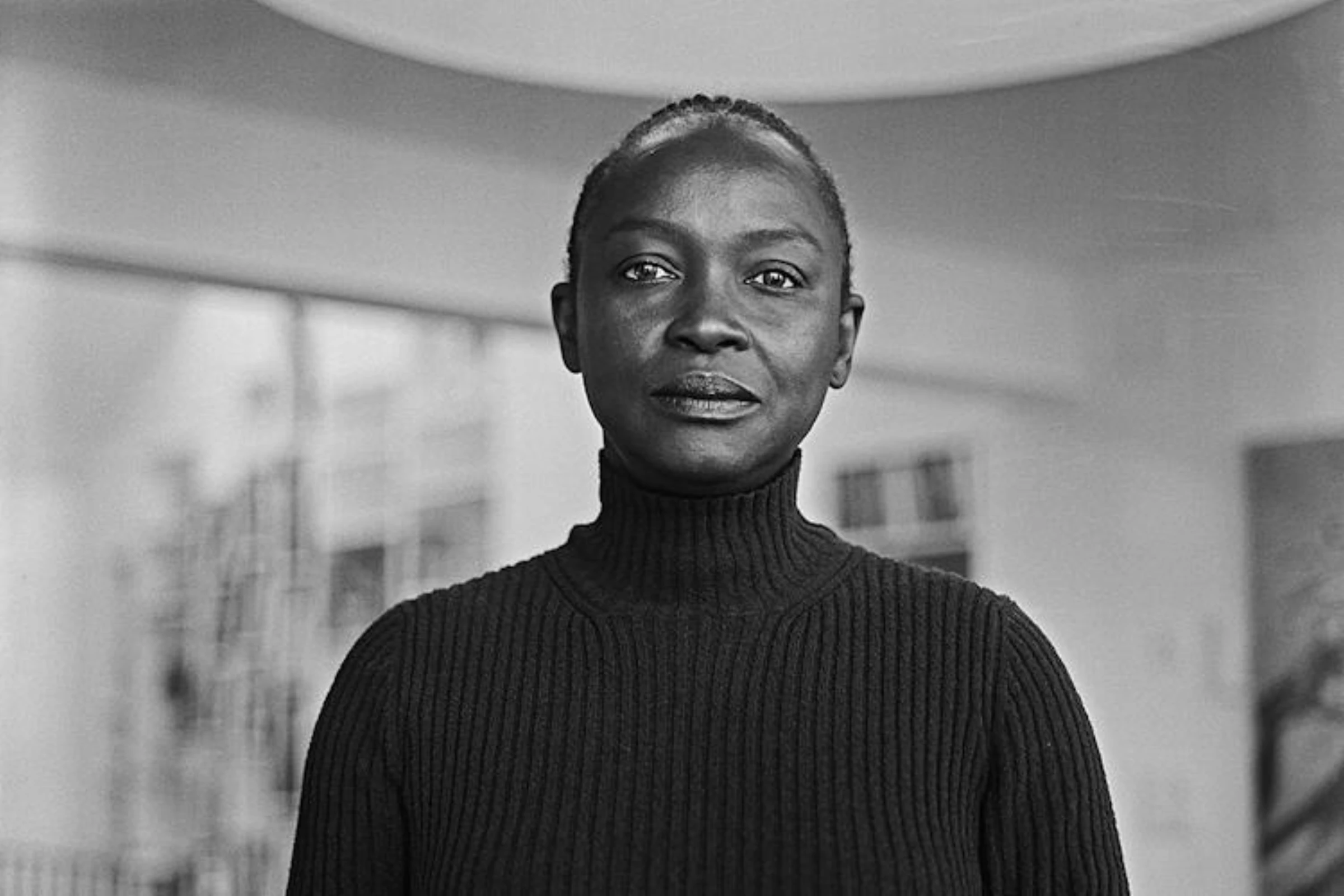
The causes of the crisis were already familiar before the previews began: the death of artistic director Koyo Kouoh during planning, controversy around the Russian pavilion's return, fallout over artist selections in national pavilions, and the resignation of the jury after organizers rejected a move to exclude countries facing crimes-against-humanity charges from Golden Lion consideration. By the final preview day, workers from roughly two dozen pavilions had reportedly gone on strike, and artists in the main exhibition were hanging Palestinian flags from their works in coordinated protest.
That sequence matters because it turns what could have been dismissed as scattered controversy into a structural story. The Biennale was not simply interrupted by politics from outside. Its own organizational logic generated the collision. The event asks nations to appear through art while insisting art remains somehow elevated above national power. In 2026, that old balancing act looks badly frayed.
Why the nationalist format no longer looks like neutral infrastructure
For decades, defenders of the Venice model have argued that the national pavilion system is an imperfect but productive format, a way to stage artistic difference within a common arena. That argument always depended on a strategic vagueness about politics. Nations could claim representation without full responsibility. Curators could say the work exceeded the state even when the state funded the building, controlled the invitation, or censored the frame. In a calmer geopolitical moment, that contradiction could be managed through style. It is much harder to manage when artists, workers, and audiences are openly contesting which forms of participation are intolerable.
Wetzler's account is useful because it keeps returning to this mismatch between institutional fantasy and present conditions. The Biennale still sells a benevolent image of internationalism: one can bounce from pavilion to pavilion and pretend that cultural exchange itself is a sufficient answer to conflict. But once some delegations walk, others protest, and jurors resign over participation rules, the machinery becomes visible. The illusion is not that art and politics overlap. Of course they do. The illusion is that a nationalist exhibition can somehow metabolize those conflicts without exposing its own complicity.
This has practical consequences for the work itself. Even strong projects are forced to operate inside a frame that is no longer stable. A pavilion can be read as an artist's statement, a ministry's signal, a curatorial dodge, or an ethical scandal depending on the week's headlines. That instability does not always weaken art. Sometimes it sharpens it. But it does make the Biennale's claim to be a neutral platform impossible to sustain.
We have seen adjacent pressures elsewhere in the field, from restitution disputes to institutional governance fights, including our recent coverage of Catalonia and Aragon's restitution battle. Venice concentrates those pressures because it remains the place where the art world most theatrically performs universality while still organizing itself through nation-state containers.
The official Biennale language still sells scale and participation as virtues in themselves. Yet scale has become part of the problem. A machine built to host one hundred national participations is structurally inclined to absorb contradiction rather than resolve it. That may have looked like pluralism in earlier decades. In 2026 it reads more like procedural cover. Once that perception takes hold, every curatorial decision becomes entangled with governance. Viewers stop asking only whether a work is strong and start asking what conditions of selection, exclusion, funding, and state endorsement made it visible. That is not a distraction from art. It is one of the main realities the event now produces.
The strongest works had to fight both spectacle and institutional drift
One reason the Biennale remains seductive is that individual works can still break through the bureaucracy. Wetzler describes Florentina Holzinger's Austrian presentation, with its deranged aquatic theatricality, as a genuine highlight of the week. She also singles out projects by Sung Tieu, Henrike Naumann, Ei Arakawa-Nash, Egle Budvytyte, and Gabrielle Goliath as examples of work that either destabilized national architecture, complicated domestic history, or made the political exclusions of the event impossible to ignore. That list matters because it shows the exhibition is not empty. The problem is that the strongest art now often succeeds by exposing the event's contradictions rather than decorating them.
The central exhibition, posthumously realized from Kouoh's plans under the title In Minor Keys, seems from this account to have suffered from the absence of a living curatorial hand able to cut, refine, and stage a thesis with force. Instead of a persuasive polyphony, Wetzler saw an overcrowded accumulation. That is a harsh judgment, but it rings true to a wider concern around mega-exhibitions: they increasingly confuse abundance with seriousness. When everything is urgent, too little becomes legible.
The irony is brutal. A show named for quiet tones and lower frequencies appears to have arrived in a moment when the loudest institutional failures overwhelmed subtler curatorial thinking. Some pavilions may benefit from that pressure by becoming sites of open dissent. Others simply vanish into the noise. Either way, the old Biennale fantasy of effortless prestige no longer seems available.
This is also why the 2026 edition should matter to people who are not in Venice. The event functions as a forecasting device for museum politics, artist-state relations, and the limits of symbolic inclusion. If the most established international exhibition in the field cannot convincingly explain its own participation rules, every smaller institution should be paying attention.
Gabrielle Goliath's independent presentation is especially revealing on this point. The work gains force not despite exclusion from the official national framework but through its exposure of that framework's limits. When one of the week's most discussed projects sits outside the sanctioned structure, the Biennale cannot simply claim that dissent has been incorporated. It has to confront the possibility that its authority now depends on art happening around it, against it, or in spite of it. That is an uncomfortable position for an institution built on ceremony, but it may be the most truthful description of its current function.
There is a labor question here too, and it should not be treated as a footnote. When workers from numerous pavilions strike during preview week, they expose the dependence of spectacle on under-acknowledged maintenance. The Biennale often appears as a seamless circuit of openings, receptions, and branded hospitality. A strike interrupts that fantasy by revealing the staffing, installation, security, and logistical labor that keeps national prestige operational. In a year already marked by conflicts over representation and governance, that labor visibility deepens the crisis. The institution is being challenged not only for whom it includes, but for how it functions day to day.
That visibility also changes how future participants will approach the exhibition. Artists, curators, and national commissioners now have fresh evidence that procedural disputes can become the story of the week as quickly as any installation. Some will respond by becoming more cautious. The better response would be the opposite: entering Venice with a clearer understanding that the frame is unstable and treating that instability as part of the work rather than an embarrassing backdrop to be ignored. The 2026 edition has made evasion harder. That may be painful for the institution, but it is clarifying for everyone else.
What the crisis means for the Biennale after opening week
The short-term outcome is obvious: more arguments over governance, more scrutiny of selection processes, and more pressure on participating artists and workers to define their ethical lines in public. The longer-term question is tougher. Can the Biennale meaningfully reform while preserving the national pavilion format that gives it brand power? Or is the prestige of that format now inseparable from the contradictions making it unstable?
There is no clean answer, but 2026 has made one thing clearer. The Biennale cannot rely on ritual alone. Not when juries resign, pavilions protest, and workers walk out. Not when artists build their most persuasive interventions by refusing the fiction that art floats above power. Institutional continuity is not itself an achievement. Sometimes it is merely inertia with better catering.
Venice will continue to matter because so much art-world capital still converges there. But this year's opening suggests the event matters less as a showcase of consensus than as a stage where consensus has failed. That is a messier role, yet perhaps a more honest one. If the Biennale wants to remain credible, it will have to accept that the old fantasy of frictionless internationalism is gone. Good riddance.