Catalonia Reopens the Sijena Restitution Fight
Catalonia is seeking €791,000 from Aragón after returning 56 Sijena works, turning a restitution battle into a new dispute over custody costs and legal leverage
Catalonia turns a settled return into a new money fight
The long and bitter dispute over the treasures of the Royal Monastery of Santa María de Sigena has entered a new phase, and this time the argument is less about possession than about who pays for decades of custody. Catalonia has formally demanded €791,000 from the government of Aragón, seeking reimbursement for the conservation and care costs associated with 56 works it was ordered to return after years of litigation. As first reported by ARTnews, the claim follows the 2017 transfer of the works and reframes an already symbolic heritage battle as an accounting fight over what restitution is supposed to cost once the objects have physically moved.
The numbers are modest by museum expansion standards and politically explosive by Spanish heritage standards. Catalonia argues that if the purchase agreements underpinning earlier possession were declared null, then the unwinding cannot stop at surrendering the art. In its reading, the law also requires reciprocal settlement for sums spent preserving the objects while they remained in Catalan institutions. Aragón, which fought for years to secure the works' return to Sijena, will read the demand very differently: as an attempt to claw back part of the moral and legal victory it won in court. What looked like a finished restitution case is now a dispute over whether stewardship under contested title produces compensable value or merely delays justice.
The 56 works carry the weight of war, rescue and competing regional narratives
The dispute cannot be understood without returning to 1936, when the works were removed from the monastery to protect them during the Spanish Civil War. Twelve ended up at the Museu Nacional d'Art de Catalunya and forty-four at the Diocesan Museum of Lleida. That emergency movement has since been folded into two incompatible narratives. One stresses rescue, conservation and the practical duties institutions assumed when religious heritage was at risk of destruction. The other stresses displacement, legal irregularity and the slow normalization of a loss that should never have become permanent.
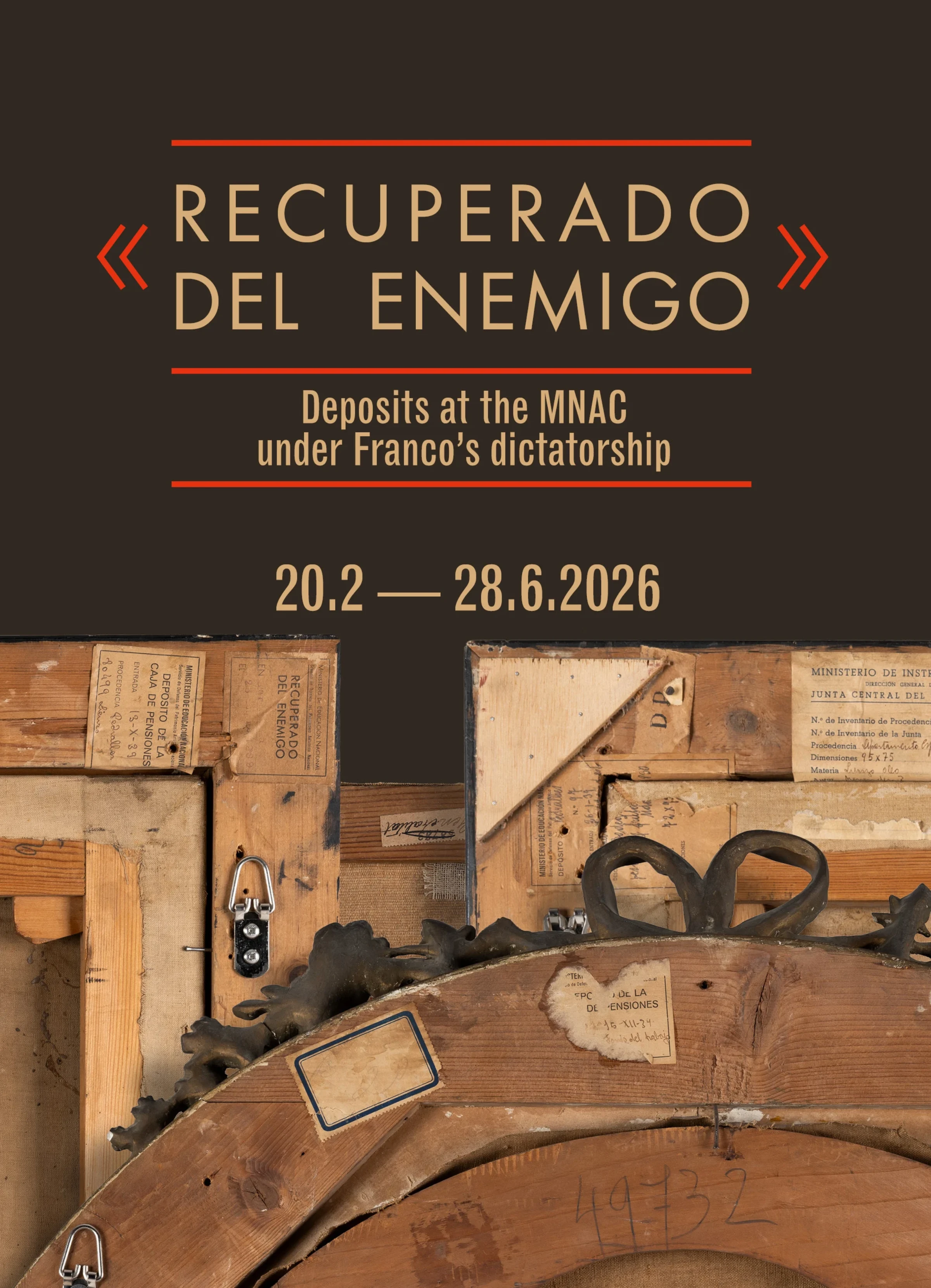
The museum context matters because the works did not simply disappear into private hands. They became part of the public-facing memory structures of Catalan institutions. The Museu Nacional is currently foregrounding that history through its exhibition "Recuperado del enemigo", which revisits how heritage was safeguarded, seized, relabeled and ideologically managed under Franco's dictatorship. That exhibition does not settle the Sijena case, but it does expose why these objects have remained politically charged. They sit at the intersection of wartime protection, postwar authoritarian inventory systems and the modern struggle over who gets to narrate regional cultural history.
For Aragón, the answer has long been straightforward: the objects belong with the monastery and the artistic ensemble from which they were separated. Courts increasingly agreed. In 2021, Spain's Supreme Court held that the items formed part of the artistic treasure of the monastery when it was declared a National Monument in 1923, extending legal protection to the broader ensemble rather than to isolated objects treated as movable inventory. That reasoning is crucial. It shifts the case away from market-style transfer logic and toward an integrity argument, where cultural patrimony is not merely owned but spatially and historically embedded.
Why the reimbursement claim matters beyond the €791,000 figure
On the surface, Catalonia's new demand is about expenses. In substance, it is about whether losing a restitution case also means being denied recognition for decades of conservation labor. Museums and regional governments often inherit ambiguous custody situations, especially in countries marked by civil war, dictatorship or abrupt changes in governance. If courts say the objects must go back, institutions still want an answer to a stubborn practical question: who funds the care that preserved them in the meantime? Catalonia is effectively testing whether a legal defeat on title can coexist with a partial victory on stewardship.
That question reaches well beyond Spain. Restitution debates across Europe increasingly collide with the economics of storage, restoration, security and display. Claimants often treat those costs as irrelevant because the objects should never have been retained. Holding institutions, by contrast, argue that preservation created real value and prevented loss. The ethical danger is obvious. A reimbursement logic can easily slide into a ransom logic, where return is accompanied by a bill. Yet the opposite position also has consequences. If all conservation costs vanish into silence, institutions may become more defensive in future disputes and more reluctant to invest in contested material.
Catalonia's thirty-day negotiation window shows that both sides understand the legal symbolism. If they compromise, they may establish a template for separating restitution from reimbursement without reopening the underlying ownership fight. If they do not, the case goes back to court and becomes another referendum on how patrimony law handles possession that was long exercised publicly, bureaucratically and in the name of protection. That is precisely why this seemingly narrow sum matters. It asks whether legal restoration of an original ensemble also erases the historical costs of preserving what remained displaced.
Spanish museums are still working through the afterlife of civil war custody
Spanish institutions have spent the past decade confronting the fact that the Civil War and Franco period did not merely damage buildings and scatter collections. They also created administrative afterlives that still shape present-day museums. The Museu Nacional's own framing of works left by the SDPAN makes that clear. Labels such as "Recovered from the enemy" did not just identify objects; they translated military victory into a heritage regime. The result was a museum landscape in which custody, legitimacy and ideology became tightly braided. The Sijena saga is one of the clearest surviving examples.
That is why this fight should not be reduced to regional score-settling between Barcelona and Zaragoza. It is really about whether democratic Spain has built a coherent language for returning cultural property shaped by war and authoritarian administration. The courts have been willing to restore objects. They have been less clear about how to account for the institutions that housed them, interpreted them and spent money preserving them over decades. Those institutions are not innocent by default, but neither are they always simple looters. Public museums often sit uncomfortably between historical wrong and present-day care.
There is also a reputational layer. Museums across Europe now advertise transparency, provenance research and historical self-scrutiny as marks of seriousness. Catalonia's claim risks being read as a contradiction of that posture, especially if it appears to monetize compliance after losing. Yet refusing to articulate the costs of stewardship would also flatten the story into a morality play that ignores how public collections actually function. The harder truth is that restitution rarely restores a pre-conflict innocence. It produces new invoices, new resentments and new precedents.
That is why this case will be watched by other institutions with wartime holdings and complicated chains of custody. Museums that now undertake provenance research often assume the end point is a yes-or-no decision about retention. The Sijena dispute shows a messier middle. Once objects have been conserved, insured, documented and folded into public narratives for generations, restitution becomes a multi-ledger event involving legal title, public legitimacy, curatorial labor and public money. No side gets to keep the moral high ground untouched. The courts may settle ownership, but they cannot make the accounting history disappear.
What happens next will shape future patrimony disputes in Spain
The immediate next step is negotiation. Catalonia says it wants a solution within thirty days before returning to the courts. Aragón must decide whether paying anything would undermine the principle it fought to establish or whether a limited settlement would finally close an exhausting chapter. If the dispute escalates, judges may be forced to answer a question that museums across Spain would rather have clarified sooner than later: when nullified transfers are unwound, are conservation and maintenance costs part of the legal ledger or merely the burden of having held what was not yours?
The broader field should pay attention. Cases involving monasteries, diocesan museums and regional collections are never just local. They shape how the state, autonomous communities and public museums distribute authority over the national past. A ruling favoring Catalonia could encourage more reimbursement claims after restitution orders. A ruling favoring Aragón could harden the principle that custodial institutions absorb all costs when title fails. Either outcome will influence future negotiations over works moved during conflict, especially where the history of removal is entangled with state violence, bureaucratic custody and the competing regional identities that continue to organize Spanish cultural politics.
The Sijena battle has already shown that cultural property disputes do not end when trucks leave a museum loading bay. Return solves one part of the story: where the objects are. It does not solve the rest: who cared for them, who gets credited for that care, and whether the law is prepared to distinguish stewardship from possession without excusing either. Spain is now being asked to decide whether restitution can be financially clean in a history that was never clean to begin with, especially when every institution involved also claims to have served the public good.