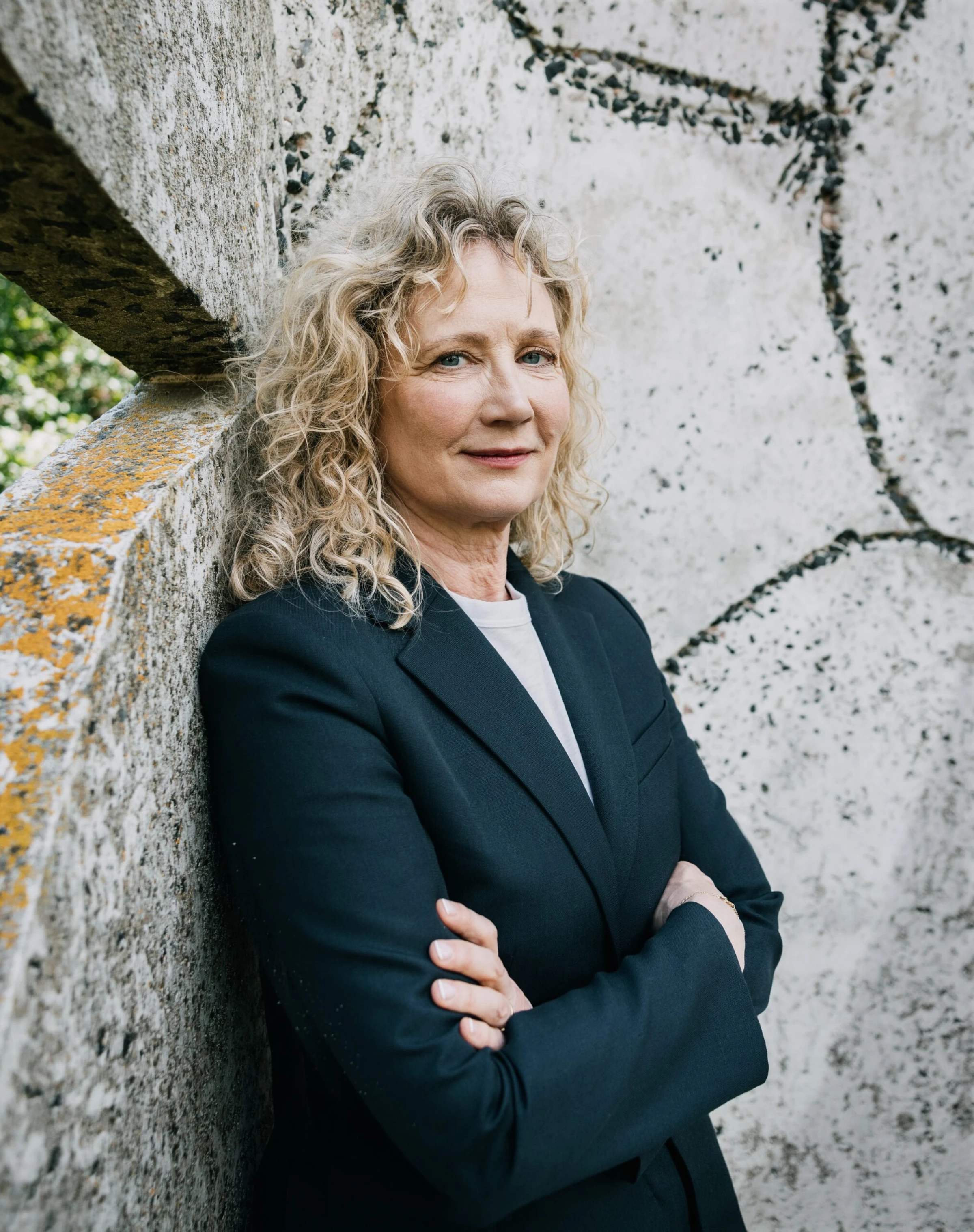
Tone Hansen Takes Moderna Museet at a Structural Turning Point
Tone Hansen takes over Moderna Museet just as Sweden merges art, architecture and public art into one agency, raising the stakes of her appointment
Moderna Museet’s New Director Arrives Mid-Restructure
Tone Hansen’s appointment as director of Moderna Museet would have counted as major museum news under any circumstances. It matters more because she is taking over one of Europe’s most influential modern art institutions at the exact moment its administrative structure is being redrawn. As Artforum reported, Sweden’s minister for culture announced on June 8 that Hansen will begin on September 1, succeeding Gitte Ørskou. Since the start of 2026, Moderna Museet, ArkDes and the Public Art Agency Sweden have been merged into a single government agency under the Moderna Museet name. That means this is not simply a curator-to-director succession story. It is a test of how a museum leader handles expanded state responsibilities, blurred disciplinary boundaries and the pressure to define a public mission that reaches beyond exhibitions alone.
Hansen comes with the kind of resume that makes ministries comfortable. She led MUNCH in Oslo from 2022 and before that headed Henie Onstad Kunstsenter, also in Norway. The official Moderna Museet announcement emphasizes strategy, museum development and the social role of art institutions. Those are not neutral buzzwords here. They point to the real political problem in front of her: how to hold together a museum collection, an architecture and design remit, and a public-art mandate without reducing each to managerial abstraction. Visitors can already see how expansive the institution’s remit has become through the museum’s public-facing Stockholm program, where collection displays, design language and audience services now sit inside the same frame.
The danger of such reorganizations is familiar. Governments talk about efficiency, synergy and national visibility. Institutions then spend years translating incompatible cultures into shared reporting structures while audiences see little except softer branding and more cautious programming. Hansen is arriving before that drift hardens. If she is serious about a “new direction,” the phrase has to mean more than composure during a transition. It has to answer what kind of institution Moderna Museet becomes when modern art no longer stands alone inside the state apparatus.
What Hansen’s Background Suggests About Her Approach
Hansen’s recent work suggests she understands the symbolic stakes of museum architecture and institutional narrative. MUNCH is not just a museum devoted to Edvard Munch; it is a loaded civic project in Oslo, where questions of audience, national identity, monumentality and programming have all been contested. Running that institution required more than collection stewardship. It meant handling a building that functions as public spectacle, tourist magnet and national brand, while still persuading serious art audiences that scholarship and experimentation had not been subordinated to visitor metrics.
Her earlier leadership at Henie Onstad Kunstsenter points in another direction: a willingness to treat museums as sites where contemporary practice, historical framing and public experience can actively reshape one another. That matters for Moderna Museet because the institution has long occupied a hybrid position. It is canonical enough to guard masterpieces, but also expected to model critical thinking about the present. With the incorporation of ArkDes and the Public Art Agency, the scope of that expectation expands. Questions of urban space, built environment and state-commissioned art now sit closer to the center of the organization rather than orbiting it as adjacent concerns.
Hansen’s public statement is careful but revealing. She speaks of a stronger, more innovative and knowledge-driven organization with art, architecture, design and audiences at its heart. That sequence is telling. It implies that integration will be one of her governing themes, but not necessarily a flattening one. If she can preserve the specific expertise of each domain while building meaningful connections across them, the merger could produce an institution with unusual intellectual reach. If not, “integration” will become one more excuse for generic programming and internal bureaucracy.
The transition also creates a regional dynamic worth watching. A Norwegian director taking over a flagship Swedish museum is hardly scandalous in a Nordic context, but it does sharpen the sense that Scandinavian institutions increasingly operate within a shared cultural labor market. That can be productive, especially where expertise circulates across public systems. It can also produce a professionalized international class of directors whose fluency in strategy outpaces their willingness to take aesthetic risks. Hansen’s record suggests more seriousness than that caricature, but the concern is not trivial.
Why the Merger Changes the Stakes for Moderna Museet
The January consolidation of Moderna Museet, ArkDes and the Public Art Agency Sweden is the real hinge in this story. Museums often talk about interdisciplinary thinking, but here interdisciplinarity has been made administrative fact by the state. That creates possibilities. A combined institution could connect collection displays to debates about housing, monuments, public commissions, design history and the politics of civic space. It could make art feel less sealed off from how citizens actually encounter culture in streets, schools and government buildings. It could also rethink what a national museum owes audiences outside the capital.
But mergers distort institutions as often as they strengthen them. Architecture and design have distinct publics, methods and temporalities. Public art has another set of obligations entirely, involving procurement, maintenance, consultation and long political timelines. A director who comes in promising innovation can quickly find herself adjudicating budget lines, human resources structures and agency identity documents. That is why leadership language deserves suspicion. The question is not whether Hansen can say the right things about transformation. It is whether she can keep the organization intellectually alive while the state asks it to become administratively coherent.
There is also a geopolitical dimension. National museums across Europe are being pressed to justify public funding not just through attendance but through social relevance, educational value and democratic symbolism. Some institutions answer by becoming blandly inclusive; others retreat into prestige. Moderna Museet sits too visibly in the European museum ecology to choose either option without consequence. Its collection, exhibition history and international profile make it a reference point. If Hansen handles the merger well, the museum could offer a persuasive model for how art, architecture and public art belong in one conversation. If she handles it badly, it will become a case study in how state rationalization hollows out curatorial specificity.
What to Watch as Hansen’s Term Begins
Hansen’s term runs through August 2032, which is long enough to do more than stabilize a handover. The first signals to watch will be concrete. Who does she elevate internally? How does the museum describe the relation between Stockholm exhibitions, design programming and public-art responsibilities? Does the institution commission projects that actually make use of the merged structure, or does it simply place three logos inside one organizational chart? Those questions are less glamorous than the appointment itself, but they will tell the story faster than ceremonial rhetoric.
Programming choices will matter too. A restructured institution often reveals its priorities through what it delays. If public art becomes a communications theme rather than a serious operational domain, that will show quickly. If architecture and design get folded into crowd-pleasing museum spectacle without preserving their analytical force, that will show too. On the other hand, if Hansen can use the merger to stage exhibitions and commissions that connect modern art history to present questions of public space and social use, Moderna Museet could become more relevant than it was in its previous form.
There is a lesson here for museum watchers outside Sweden as well. Leadership stories are often told through personality, but the more decisive issue is usually structure: which agency a museum belongs to, what public obligations it carries and how broadly it defines culture. That is why this appointment belongs alongside other recent institutional power shifts tracked by artworld.today’s reporting on museums retooling their public mission. Moderna Museet is not simply hiring a director. It is deciding whether administrative consolidation can still leave room for curatorial intelligence, historical rigor and public risk.
One underappreciated pressure will be language itself. Museums that combine multiple missions often solve conflict by speaking in a generalized tone about creativity, participation and innovation. That language protects consensus but can make institutions intellectually vague. If Hansen wants the merger to mean something, she will need to let different publics hear distinct arguments: modern art as historical inquiry, architecture as a public question, design as social form, and public art as lived civic infrastructure. The institution will be healthier if those differences stay audible instead of being buried inside a single brand voice.
That is why the first year matters more than the formal length of the term. Museums in restructuring mode often burn their opening seasons on reassurance. The better move would be to stage one or two projects that make the merged institution legible to the public without oversimplifying it. If audiences can see, in practice, how art, architecture and public space belong in one conversation, then the merger begins to justify itself. If not, the reorganization will look like an internal state exercise that happened over visitors’ heads.
For now, Hansen’s appointment reads as a bet on disciplined leadership during institutional change. The safe summary would be that an experienced museum director is stepping into a prestigious role. The sharper reading is that Sweden has handed one person the task of proving a state-driven merger can deepen cultural meaning rather than thin it out. That is a harder assignment than any succession headline suggests, and a more consequential one for the museum world watching from outside Stockholm.