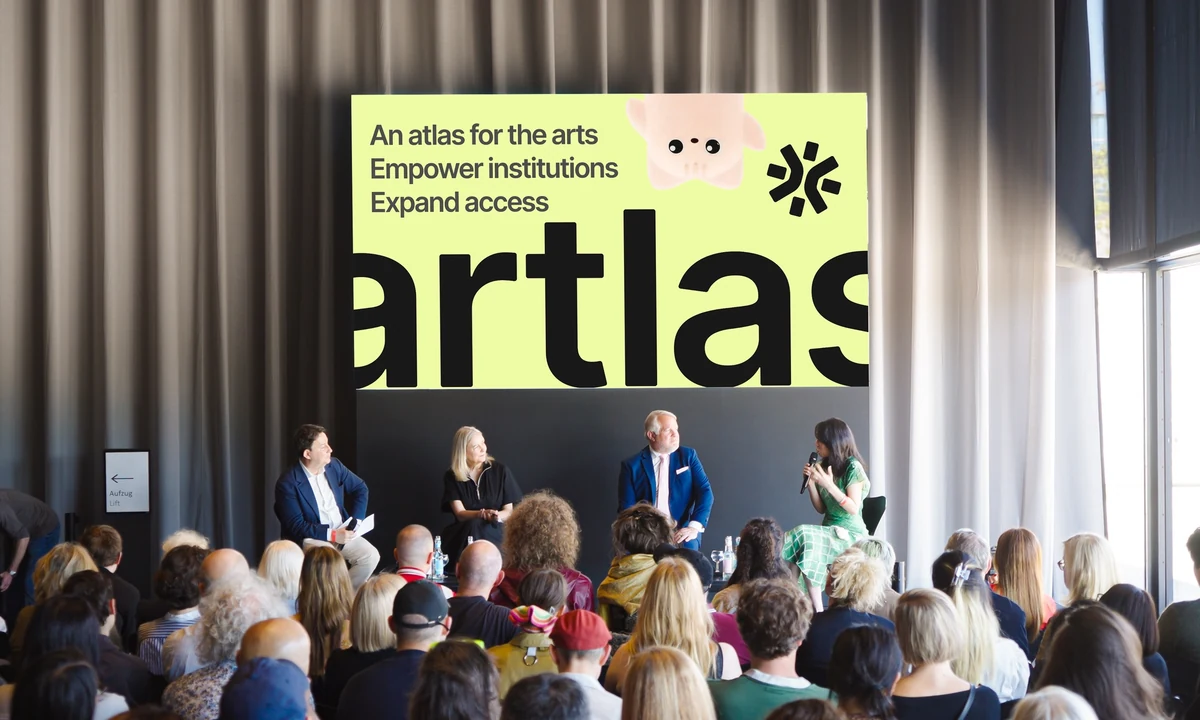
Artlas Pushes Museums to Define Their AI Terms
Artlas says visitors already bring AI into galleries, forcing museums to choose between curated interpretation and general-purpose bots.
Artlas Is Not Selling Convenience. It Is Selling Institutional Control
The most important claim in the new Artlas expansion story is not that the platform can generate audio guides in more than 20 languages or personalize explanations for different kinds of visitors. It is that museums are already losing the argument if they pretend AI is waiting outside the building. As The Art Newspaper reports, Grace Yao's company is now piloting its tools at institutions including Mori Art Museum, Dib Bangkok and ICA Miami, with more than 25,000 personalized audio guides generated since December 2025. Yao's sharper point is that visitors are already using ChatGPT, Gemini and Claude in galleries. The real decision for museums is whether interpretation happens through their own vetted materials or through generic systems with no commitment to curatorial framing.
That framing matters because it shifts the AI conversation away from gadget lust and toward governance. Museums have spent two years talking about experimentation, innovation and audience engagement in airy language. Artlas forces a harder question: who owns the interpretive layer once machine interfaces become normal visitor behavior? If a museum refuses to build one, it is not preserving purity. It is outsourcing authority by default to tools trained on uncontrolled sources and optimized for broad plausibility, not institutional accountability.
The Pilot Sites Reveal Why Museums Are Interested
The attraction is obvious. Museums want multilingual access, better navigation, more responsive interpretation and some way to meet visitors where they already are. A family with twenty minutes, a specialist wanting material detail and a first-time tourist looking for a simple entry point do not need the same script. Artlas promises to turn collection records, curatorial texts and educational materials into a conversational layer that can flex according to time, language and interest. In theory that is a real upgrade over one-size-fits-all wall text, and it answers a longstanding institutional failure: museums have too often confused equal access with identical delivery.
Seen in that light, the pilots at Mori Art Museum, Dib Bangkok and ICA Miami are not just product placements. They are case studies in what kinds of institutions think personalized mediation is worth the risk. All three operate in multilingual, internationally legible contexts where audience heterogeneity is normal rather than exceptional. That makes them useful proving grounds. If AI interpretation is going to become routine, it will likely scale first in institutions that already see visitor experience as a strategic field, not a peripheral service desk.
The Real Risk Is Not Hallucination Alone
Yao is right to insist that a museum error is not merely a wrong date. Misreading identity, colonial history, religion or artistic intention can distort the ethical terms on which artworks are encountered. But the hallucination problem, while real, may not even be the deepest issue. The deeper issue is institutional drift. If museums adopt AI layers without clear rules for approval, revision, logging and source boundaries, they will slowly normalize an interpretive voice whose authority feels official while its provenance becomes harder to inspect. That is a dangerous mix in any knowledge institution.
Artlas says it limits outputs to approved museum content and verified sources, with partner institutions reviewing and editing material. Good. That should be the floor, not the sales pitch. Museums also need documented workflows for what gets updated, who signs off, how contested subjects are handled and when the system should simply decline to answer. Standards bodies such as the American Alliance of Museums and ICOM have spent years arguing that trust is the core currency of museums. AI does not change that. It intensifies it.
Privacy and Audience Data Will Become the Next Front
The strongest institutions will also treat privacy as part of interpretation, not as a separate compliance box. An AI guide that adapts to visitor behavior is collecting signals about language, movement, interest and possibly identity-sensitive curiosity. Even when those signals seem modest, museums are not neutral consumer platforms. They are civic and cultural institutions, and visitors often arrive with expectations of intellectual freedom that differ from ordinary app usage. Yao's line that trust includes data protection and clear boundaries around how visitor information is used is exactly right. The problem is that many museums still do not have the operational maturity to audit those boundaries rigorously once vendors and analytics enter the room.
This is where procurement language matters as much as curatorial language. Museums should be asking whether visitor prompts are stored, whether data trains future models, how long logs persist, whether usage can be anonymized and what happens when staff or donors demand broader personalization metrics. If those questions are treated as secondary to user delight, institutions will eventually discover that the cost of convenience was a quieter erosion of public trust. We are not dealing with retail loyalty software. We are dealing with cultural interpretation layered onto behavioral systems.
Museums also have a chance to learn from adjacent sectors that adopted AI too casually and then spent years untangling transparency and liability problems after the fact. The cultural field likes to imagine itself as more humane than consumer tech, but institutions still rely on vendors, procurement shortcuts and staff capacity that can make weak oversight feel normal. A museum launching an AI companion should therefore publish a plain-language visitor notice, an internal escalation protocol for contested answers and a timetable for human review. Those are not bureaucratic extras. They are part of the interpretive contract. We have already seen in our coverage of museum authority under political pressure that institutions lose credibility fastest when they claim stewardship without explaining their terms.
Human Guides Are Not Being Replaced. But Their Role Is Being Repriced
One of the more honest parts of Yao's argument is her acknowledgment that great human guides bring judgment, emotion and lived experience that software cannot replicate. That is true, but it should not become a reassuring cliché. Once museums get used to AI coverage, the pressure will grow to rebalance staffing, language provision and educational labor around the assumption that software can absorb more of the front line. Institutions may not announce replacement. They may simply stop expanding the human side while presenting AI as coverage. The result would be a thinner public culture disguised as access.
The wiser path is to use AI where it is genuinely strong and to protect the human formats where museums generate their richest forms of attention. A machine can help visitors navigate, translate, revisit objects and ask basic follow-up questions. It cannot substitute for a live educator improvising around a room's energy, a curator handling nuance in public or an artist animating the conditions of their own work. Museums that forget the difference will discover that scalable interpretation and meaningful interpretation are not synonyms.
The Museums That Win This Shift Will Set Terms Early
Artlas matters because it turns abstract debate into operational choice. The institutions that benefit most from AI will not be the first to boast about innovation. They will be the ones that define boundaries early, document governance, budget for continuous editorial review and explain to visitors what the system is and is not doing. They will publish standards, not vibes. They will treat AI as a curatorial surface requiring maintenance, not as an automated feature that becomes smarter by magic.
That is why the present moment feels decisive. Museums still have time to shape the norms of AI interpretation before the market does it for them. If they hesitate too long, general-purpose assistants will become the default cultural companion, and institutions will find themselves fact-checking conversations they never designed. If they move too fast without standards, they will damage the very trust they claim to protect. Artlas is therefore useful not because it resolves the dilemma, but because it exposes it clearly. The next phase of museum AI will be defined less by what the software can say than by what institutions are disciplined enough to permit.
Visitors are already holding the future in their pockets. The question now is whether museums can build an interpretive layer with enough accuracy, humility and restraint to deserve being the one visitors choose. That is a higher bar than most product launches admit, and exactly the right one.
There is also a competitive angle museums should not ignore. The first institutions to set clear standards for AI interpretation will shape visitor expectations for everyone else, while the laggards will inherit comparison without having written the rules. That means governance can become a reputational advantage rather than a brake on experimentation. A museum that explains its sources, privacy guardrails and human review process may actually look more innovative than one offering a flashier tool with murkier boundaries. In cultural terms, credibility is part of the product. The sector has spent years worrying that caution will make it look behind the curve. The bigger danger now is that vagueness will make it look unserious about knowledge at the very moment it is delegating more of that knowledge to machines.
That is the strategic opening Artlas has identified. It is not asking museums to love AI in the abstract. It is asking whether they prefer to shape the visitor encounter themselves or leave the field to systems with no curatorial loyalty at all. That distinction should sharpen governance conversations quickly. Once trustees and directors see AI not as a novelty but as a contested interpretive border, procurement becomes inseparable from mission. The institutions that understand this earliest will not simply deploy better tools. They will defend their authority more intelligently in a visitor environment where software is already speaking before the museum has opened its mouth.