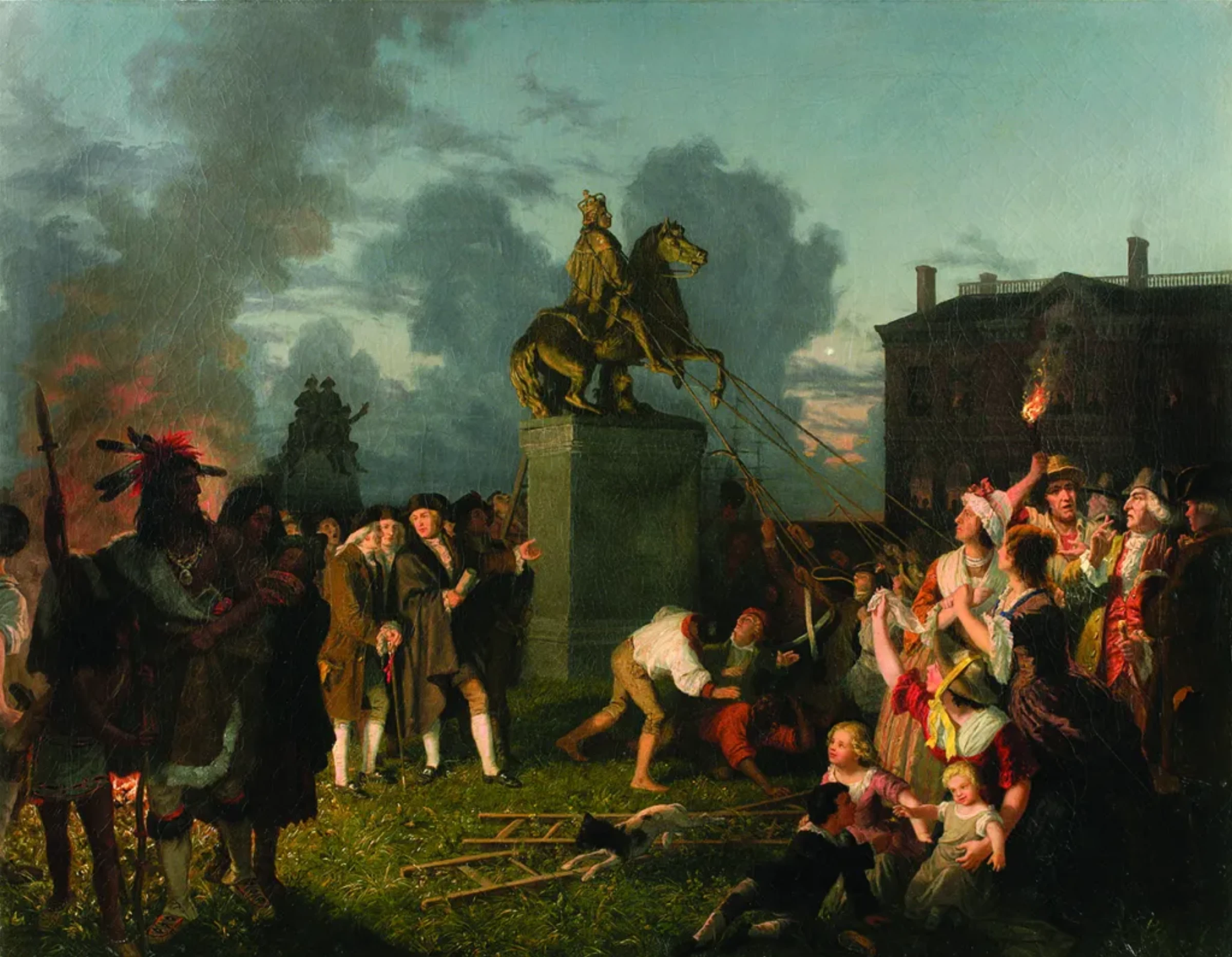
America 250 Puts U.S. Museums on the Spot
As the U.S. semiquincentennial nears, museums must choose between safe patriotic packaging and a sharper public reckoning with national history.
America 250 Has Turned Museum Caution Into a Public Liability
With the United States moving toward its 250th anniversary, museums are no longer dealing with an abstract future programming question. They are being tested in public, in real time, on whether they can address nationalism, state power and historical violence without retreating into safe pageantry. ARTnews frames the issue bluntly: while political actors shape America 250 into a spectacle of patriotic certainty, many museums still look hesitant, procedural and afraid of their own mandate. That hesitation matters because the semiquincentennial is not just another commemorative season. It is a referendum on who gets to narrate the nation, through which institutions, and with what moral clarity.
The old museum instinct was to widen the frame until controversy dissolved into complexity. That method can still produce good scholarship, but it becomes evasive when the public conversation is already saturated with distortions. A museum that responds to aggressive mythmaking with timid contextualism risks confirming the charge that it wants the authority of civic leadership without the cost of actually leading. This is why America 250 feels different from the usual anniversary cycle. The stakes are no longer limited to exhibition branding, donor optics or school-group attendance. The question is whether museums can use their collections, public trust and interpretive machinery to make national history harder, stranger and more honest than the political scripts now being written around them.
The Smithsonian Problem Is Really a Governance Problem
Federal institutions sit closest to the pressure point. When the Smithsonian is invoked in debates over national memory, the argument is never only about exhibitions. It is also about governance, vulnerability and the limits of bureaucratic speech. We have already seen how that tension can freeze action in our earlier coverage of the failed Smithsonian women's history museum vote, where public mission collided with political drag. America 250 sharpens that collision. A national museum system can say it is committed to complexity, but if its actual programming posture remains administratively defensive, audiences will read caution as acquiescence.
This is not a call for slogan-based curating. The stronger case is that museums already possess the tools required to unsettle triumphalist narratives: contested monuments, Indigenous histories, labor archives, the visual record of slavery, immigration materials and decades of critical scholarship on how memory is staged. The issue is not whether they have content. It is whether they have the institutional nerve to organize that content into programming that speaks at the scale of the present crisis. When museums avoid doing so, they leave the symbolic field open to political operatives and culture warriors who are far less shy about using spectacle. Neutrality then stops looking principled and starts looking like a failure of governance.
Why Regional Museums May Be Better Positioned Than Flagship Institutions
One of the more revealing aspects of the America 250 debate is that some regional or privately governed museums may have more room to act than the biggest national brands. Institutions with less direct federal exposure can move faster, test sharper curatorial theses and build programming around local histories that make the national myth harder to flatten. That is one reason stories such as the Crystal Bridges expansion matter beyond architecture and attendance. Museums that control more of their own pace can turn space, acquisitions and public programming into arguments about whose America gets represented.
But regional freedom is not automatically virtue. A museum outside Washington can still default to boosterism, donor-friendly Americana or the empty language of civic unity. The difference is that the excuse structure is weaker. If a regional museum has the money, curatorial depth and audience base to stage difficult work, then choosing not to do so becomes a clear editorial decision. America 250 will expose which institutions actually believe their own public-mission rhetoric and which ones prefer ceremonial relevance over interpretive risk. In that sense, the anniversary will operate like a stress test across the entire museum field, not just the flagship names that dominate press coverage.
The Exhibition Question Is Really About Form, Not Just Content
Museums often imagine that the answer lies in topic selection: mount a show on democracy, civic repair or the unfinished republic and the job is done. It is not. Form matters just as much as theme. How exhibitions sequence objects, how labels distribute authority, whether artists get to contest the archive rather than illustrate it, and how public programs create conflict instead of sanding it down all shape whether a project feels alive or pre-cleared. An anniversary show that reproduces consensus through design will not be redeemed by radical wall text. Visitors can sense when the institution wants to appear brave without surrendering any control.
There are productive models available. Artists who work through monumentality, redaction, memorial repair and public ritual have already built vocabularies for this moment. Museums can also connect anniversary programming to conservation, community archives and education departments instead of treating the exhibition floor as a sealed curatorial zone. That broader approach would allow the semiquincentennial to function less like a branding deadline and more like an institutional audit. What stories are missing from the galleries? Which acquisitions have not been activated? Which constituencies are consulted only after the thesis is set? America 250 becomes meaningful when it forces those questions into the museum's operating core.
Museums Also Have to Decide Whether Commemoration Means Comfort
The anniversary calendar creates a subtle temptation to confuse public accessibility with emotional reassurance. Large institutions know how to package civic history in a way that feels inclusive while remaining largely noncommittal. There will be pressure to produce family-friendly interpretation, donor-friendly messaging and press-ready images that can stand in for argument. Yet the most serious anniversary work may be the least flattering. It may foreground absence, dispossession, patriotic violence and the contradictions between constitutional language and lived experience. Commemoration only becomes meaningful when it risks disappointing audiences who came looking for uncomplicated affirmation.
That does not mean museums must become hectoring or doctrinaire. It means they must accept that difficult history often produces mixed emotional registers: pride, grief, anger, fascination and refusal. Institutions that are willing to host those competing responses will feel more honest than those that arrange disagreement out of the frame. The public is more capable of handling tension than museums often assume. What erodes trust is not complexity. It is the sensation that the institution is laundering complexity into civics wallpaper.
What the Next Year Will Reveal About American Museum Leadership
The most important thing to watch over the next year is not which museum announces the biggest anniversary package. It is which institutions build programs capable of surviving criticism from both directions at once: accusations of disloyalty from the nationalist right and accusations of soft liberalism from critics tired of symbolic gestures. Any museum that tries to avoid both risks will likely produce forgettable work. The field's real leaders will be the ones willing to treat history as an active site of dispute rather than a customer-service problem.
That means leadership will have to become legible in choices that are usually hidden behind planning language. Which curators are empowered. Which artists are commissioned. Which archives receive money. Which labels name violence directly. Which public conversations are designed to generate friction rather than applause. This is where America 250 stops being a calendar event and becomes an editorial test for the museum sector. The institutions that meet the moment will not be the ones that look most patriotic. They will be the ones that accept that national culture, if it is worth exhibiting at all, has to be argued over in public and with evidence.
For art audiences, that is the real opportunity. A serious museum response to 2026 could produce exhibitions that make viewers newly alert to how nationhood is staged through objects, architecture and commemorative ritual. A weak response will produce decorated civics lessons and vague language about dialogue. The distance between those outcomes is large, and museums still have time to choose. What they do not have anymore is the cover of saying they were not warned about the stakes.
Another thing to watch is whether museums use the anniversary to reshape permanent displays rather than isolating hard questions inside temporary exhibitions. Permanent galleries communicate institutional belief more clearly than a seasonal package does. If the same collection narratives remain intact while the anniversary programming performs urgency in a separate wing, visitors will notice the split. Institutions serious about America 250 should be willing to revisit canonical room sequences, acquisition priorities and interpretive language at the permanent level. That is where national memory becomes operational instead of ceremonial, and it is where museums will reveal whether this anniversary changed anything fundamental about how they see themselves.
There is a staffing dimension too. Museums that want to sound brave in 2026 will need educators, archivists, curators and community-facing staff with enough authority to challenge the soft consensus that anniversary programming often produces. If interpretive risk is concentrated only at the top, the institution will default to caution the moment controversy appears. The museums most likely to matter next year are the ones that distribute responsibility downward and allow difficult histories to shape operations, not just messaging. America 250 is therefore not only a curatorial test. It is a management test, a governance test and a credibility test all at once.