Women’s History Museum Vote Fails in House
A once-bipartisan Smithsonian museum bill collapsed after House revisions turned site approval into a fight over gender, power, and national memory
Why the House Vote on the Women’s Museum Collapsed
The House of Representatives turned what had been one of Washington’s rare bipartisan museum efforts into a culture-war casualty on 21 May, rejecting the bill that would have placed the Smithsonian American Women’s History Museum on the National Mall. The immediate facts are stark: the measure failed 216 to 204 after Republican revisions narrowed the museum’s mandate to “biological women,” barred “diversity” language, and gave President Donald Trump power to override the museum’s Mall location. The Art Newspaper’s report on the vote makes clear that this was not a quiet procedural setback. It was a public demonstration of how a museum project can become a proxy battle over gender, federal power, and national memory.
The museum itself was authorized in 2020 after years of lobbying, planning, and coalition-building. That earlier win mattered because it acknowledged a problem the Smithsonian had long been asked to fix: women’s history was scattered across departments, exhibitions, and temporary initiatives, but still lacked a permanent flagship institution. The vote last week did not repeal the museum outright, yet it left the project exposed by blocking the clearest path toward a permanent site on the Mall. For a museum that exists partly through online and pop-up programming, the location fight is not symbolic window dressing. In Washington, a Mall address is an argument about who belongs in the national canon.
What makes the setback significant is not merely the loss of one bill. It is the way the bill was rewritten. Once lawmakers inserted conditions about who counts as a woman and who gets to control the museum’s location, the legislation stopped being a consensus act of institution-building and became a vehicle for partisan sorting. That shift matters across the museum sector because it shows how quickly a commemorative project can be recast as ideological territory, especially when it sits inside the Smithsonian and beside the nation’s most visible memorial landscape.
The Smithsonian’s Long Campaign for a Permanent Women’s History Site
The campaign for a national women’s history museum long predates the 2020 authorization. Advocates spent roughly two decades pushing Congress to create a museum that could give sustained institutional weight to suffrage, labor history, reproductive politics, military service, science, art, and the uneven realities of citizenship. The Smithsonian’s own women’s history initiative has already funded exhibitions, research, and acquisitions, proving there is both public appetite and curatorial material for a permanent museum. What has remained unresolved is not intellectual justification but political permission.
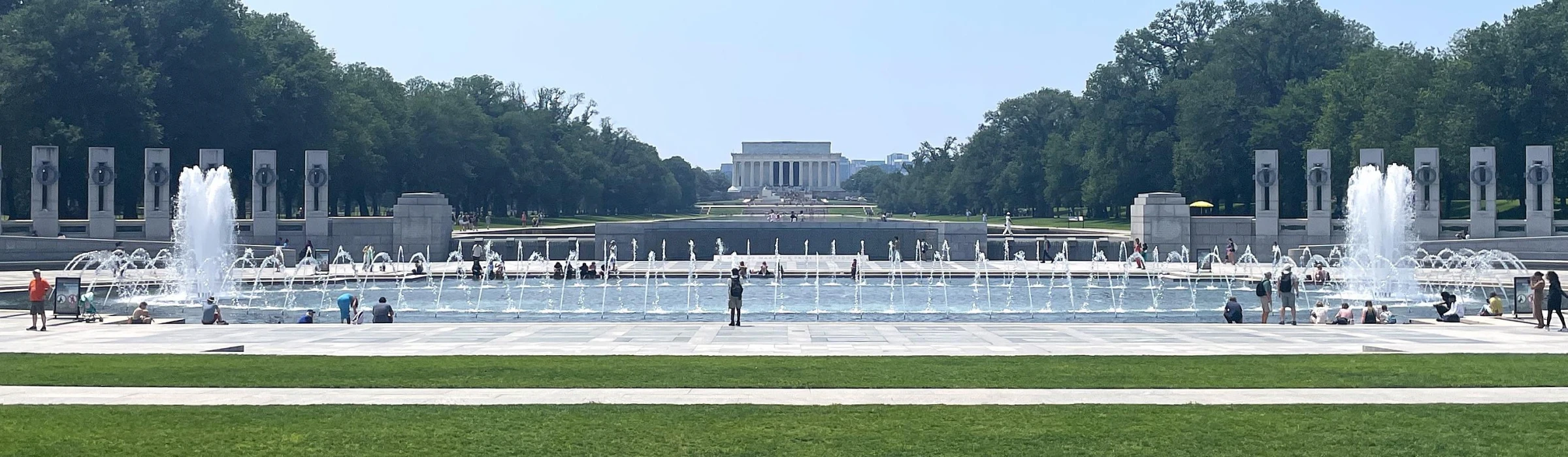
The National Mall is central to that permission. The Mall is where the United States stages its official story, through architecture, monuments, and federal institutions that announce what the country wants to remember about itself. To deny a women’s history museum a stable position there is to keep women’s history in a secondary register, important enough for programming but still negotiable when space, symbolism, and culture-war incentives collide. The mall debate is therefore not merely about square footage. It is about whether women’s history is treated as foundational civic knowledge or as a specialized subject that can be shuffled elsewhere if it becomes politically inconvenient.
The bill’s failure also casts a shadow over the National Museum of the American Latino, which was approved in the same 2020 package and likewise still lacks a permanent building. The two museum efforts have been twinned for years as tests of whether the Smithsonian can expand its official narrative without triggering congressional retreat. If one can be stalled by edits that transform a siting bill into a fight over trans inclusion and presidential authority, the other now looks more vulnerable too. Museum leaders across Washington will read the vote not as an isolated failure but as a warning about the fragility of congressional museum-making.
How Culture-War Language Reframed a Museum Bill
The most revealing part of the episode is how efficiently the debate was reframed. Instead of asking what women’s history requires from a national museum, lawmakers ended up arguing over whether trans inclusion had contaminated the concept of a women’s institution. Democratic critics described the revisions as sabotage; Republican defenders framed them as common sense protections. Both sides understood the same fact: once the bill was made to carry the symbolic burden of defining womanhood, its museum mission would struggle to survive intact. In legislative terms, the edits narrowed support. In cultural terms, they shifted the museum from a public-history project into a loyalty test.
That tactic is familiar across the heritage sector. Politicians increasingly intervene not at the level of scholarship but at the level of framing, governance, and vocabulary. They may not rewrite wall texts themselves, yet they can determine what kinds of boards, charters, or statutory language institutions inherit. That is why the Trump override clause in the bill felt so telling. It was not only about location. It signaled that museum autonomy could be subordinated to executive discretion, placing a future national museum under a political shadow before it even secured a building. For museum professionals, that is a governance alarm as much as an ideological one.
The rhetoric around the vote also exposed a deeper asymmetry. Opponents of the revised bill were forced to defend both the museum and the principle that historical institutions should not be built around exclusionary statutory language. Supporters of the revisions had the easier sound bite: claim to defend women while turning the institution into a battlefield over identity. This is one reason symbolic museums are now such attractive political targets. They can be attacked not because they are weak, but because they sit where public memory, representation, and federal legitimacy meet.
What the Failed Vote Means for the Museum Field
For the museum sector, the failed vote lands at a moment when governance questions matter as much as exhibitions. Curators and directors have spent the past several years navigating donor pressure, board conflict, restitution claims, labor disputes, and political campaigns over race and gender. The women’s museum fight adds another lesson: institutions still in the authorization phase may be the most vulnerable of all, because their legal architecture is not yet settled. A museum with a building, staff, and endowment can absorb attacks differently than one whose charter, mission language, and physical location remain subject to congressional bargaining.
The consequences reach beyond Washington. Regional museums, university galleries, and historical societies will watch this case when considering how explicitly to describe inclusion, identity, and public purpose in founding documents. Some may respond by drafting broader coalitions and stronger public-facing rationales before seeking state or federal support. Others may become more cautious, fearing that clarity itself can be weaponized. Neither outcome is ideal. Museums are supposed to clarify history, not survive by speaking in evasions. Yet the women’s museum vote shows that precision can carry political cost when lawmakers want a fight more than an institution.
There is also a public-trust issue. Ordinary visitors often assume museums emerge through scholarly planning, philanthropy, and architectural review. In reality, federally linked museums are also creatures of law, and law is shaped by shifting partisan incentives. When a museum project fails under these conditions, the damage is not only to a single institution. It also feeds cynicism about whether the state can still build cultural infrastructure that looks beyond the next election cycle. That cynicism has material effects on fundraising, staffing, partnerships, and long-range planning.
The stakes become even clearer when this fight is placed next to recent flashpoints around museum governance and public pressure. artworld.today’s guide to political pressure on museums argued that conflicts over mission often begin long before an institution opens its doors. The House vote confirms that point. Lawmakers do not need to rewrite a future exhibition to shape the future museum. They can do the work upstream, inside statutory language, appointment powers, and site rules that decide what the institution is allowed to become.
What Comes Next for the Women’s History Museum
The women’s history museum is not dead, but it is back in a precarious holding pattern. Supporters can try again with new legislation, push for the original language to be restored, or seek alternative location strategies that preserve institutional independence while reducing the bill’s political exposure. None of those paths is simple. Any new proposal will have to reckon with the fact that opponents now know exactly how to nationalize the debate. Still, the project retains real institutional momentum through Smithsonian programming, collections work, and the broader constituency that fought for authorization in the first place.
The next phase will likely depend on whether advocates can reframe the museum less as a symbolic prize and more as indispensable civic infrastructure. That means demonstrating, again and again, that women’s history is not a niche supplement to the national story but one of the structures through which the national story is intelligible at all. It also means building alliances across the Smithsonian, Congress, and the larger public-history field. The museum’s future may hinge on procedural details, but its persuasive case remains substantive: a country that treats women’s history as optional cannot claim to understand its own past.
For now, the failed vote leaves a blunt editorial conclusion. Congress did not reject women’s history because the case for it was weak. It rejected a path to permanence because symbolic institutions have become convenient stages for ideological combat. That is bad politics, but it is worse cultural policy. A national museum should help a republic think more clearly about itself. The House chose, at least this week, to make that harder.