The Winning Sycamore Gap Memorial Refuses the Comfort of a Single Monument
The National Trust-backed People's Tree proposal treats the felled Sycamore Gap tree as an archive, a sound work and a public process instead of a tidy symbolic replacement
The Sycamore Gap commission matters because it declines the cheap solution
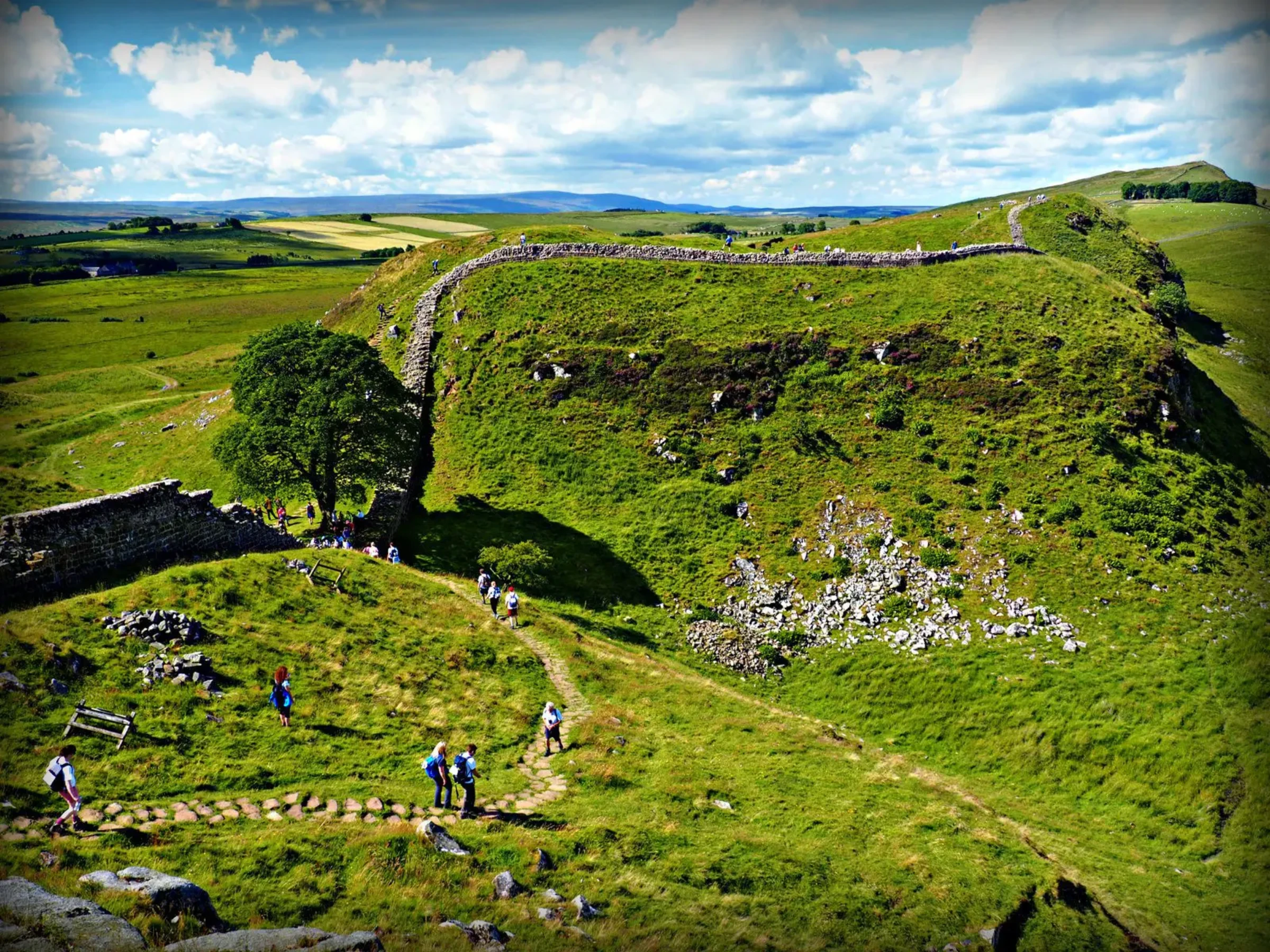
The worst possible response to the loss of the Sycamore Gap tree would have been a sentimental object dropped near the site and announced as closure. The winning proposal for the memorial commission does something harder. Helix Arts and George King Architects have been selected for a public vote-backed National Trust commission with The People's Tree, a multipart project that will use preserved wood, storytelling, sound and community participation to build what the team calls a living archive. That phrase could have sounded like grant-friendly mush. In this case it signals a more serious editorial choice: the commission accepts that the public meaning of the felled tree cannot be reduced to one image, one speech or one act of symbolic repair.
That is a strong starting point because the Sycamore Gap story was never just about landscape beauty. The 2023 felling damaged a place that had become a shared national shorthand for memory, attachment and the strange intimacy people can develop with a single tree in a single notch of land. The Northumberland National Park page now notes that the trunk is sprouting new shoots and that the largest section of the original tree is on permanent display at The Sill. The site already lives in an uneasy state between wound, tourist destination, ecological process and heritage management. Any artwork entering that field has to decide whether it will simplify those meanings or make them more legible. This proposal appears to choose the second path.
The project's real subject is not the tree alone but the infrastructure of memory around it
According to the reporting, The People's Tree includes a national sound archive, seed-pod forms made from preserved wood, community-made artworks, exhibitions, workshops and a sculpture-time capsule near the original location. These are not interchangeable embellishments. Together they suggest that the commission understands memorialisation as infrastructure rather than ornament. Someone has to gather testimony, translate it into public form, store it, replay it and decide how local and national audiences encounter it over time. That is the real work of a serious memorial commission, and too many institutions try to hide it under the romance of the unveiling moment.
What makes this project promising is that it does not pretend replacement is possible. George King's quoted line that the tree as it was can never be replaced is more rigorous than the usual language of healing. Institutions often rush toward reassurance because reassurance is easier to manage than grief or anger. But a beloved site that was illegally destroyed should not be followed by a commission that smooths away the rupture. By keeping memory active through recording, listening and distributed participation, the proposal treats loss as something that remains socially present instead of something a good design can solve.
That choice also fits the wider stewardship context. The National Park page makes clear that the site is jointly cared for with the National Trust and that visitors are still being directed to the landscape, the stump and the display at The Sill. In other words, this is already a managed memory environment. The memorial does not enter a blank field. It enters a place where institutions are actively shaping how the public encounters aftermath. The success of the commission will depend on whether it can keep that shaping process visible instead of hiding it behind soft language about nature and resilience.
Participation is the project's strength, but also the point where institutions usually get nervous
Helix Arts director Cheryl Gavin told the Guardian that the team wanted to respond to tragedy through participation rather than monument-making alone. That instinct is exactly right. The emotional charge around Sycamore Gap was never limited to people who live closest to it. The tree sat at the intersection of local belonging and national projection. A participatory structure is one of the few formats capable of holding both scales without flattening either one. But participation is also where commissions often become dishonest. Inviting stories is easy. Sharing narrative authority is hard.
The public should watch how that problem is handled. Who curates the submitted recordings? What kinds of speech count as appropriate? How much room is there for anger, anti-institutional feeling or disagreement about what the site should become? If the resulting archive is tightly filtered into heritage-friendly sentiment, the project's most ambitious promise will have failed. If it allows different emotional registers to coexist, then the work could become a rare example of a memorial that does not confuse consensus with care.
This is the same diagnostic question we raised in our guide to reading public art memorial commissions. The crucial issue is not whether a project says community often enough. It is whether the institution is willing to let community participation materially shape the memory structure that follows. A sound archive can either distribute voice or collect it for later institutional packaging. The difference will become clear in the next stage of development, not in the commission announcement.
The medium choices are smarter than a figurative memorial would have been
The proposal's use of sound, preserved wood and co-created artworks is not just fashionable interdisciplinarity. It is a practical answer to the problem of how to memorialise a loss that was both physical and affective. A figurative monument would almost certainly have reduced the event to one authoritative image. Sound, by contrast, allows memory to remain unstable, overlapping and revisitable. Wood transformed into seed pods or time-capsule structures keeps the original material present without pretending that its old life can be restored. Workshops and exhibitions spread the commission beyond the narrow logic of a pilgrimage site and ask what a national conversation about trees, grief and care might actually sound like.
There is still a risk of overdesign. Multifaceted memorial projects can become too concept-heavy, producing a stack of worthy components that never cohere as experience. But that would be a better failure than the alternative. The field has no shortage of memorial art that resolves complexity into a single emotionally efficient object. The Sycamore Gap commission is more interesting because it treats complexity as the medium rather than the obstacle.
The proposal also sits in productive tension with the biological reality that the tree itself may regrow. The Park page's note about new shoots is not incidental. It means the memorial cannot simply operate as if the tree were an inert relic. It has to reckon with a living stump, a damaged landscape and a public that may experience regrowth as hope, continuity or an inadequate substitute depending on the day. That instability gives the commission a chance to avoid heritage embalming and stay connected to an unfolding ecological fact.
The timeline will reveal whether the National Trust wants a process or merely the appearance of one
The reporting says public engagement begins this summer and completion is planned for autumn 2027. That is long enough for a serious participatory process, and also long enough for an institution to turn participation into a diffuse warm-up act before reclaiming control. Readers should track what happens between now and then. Are local artists being paid? Are communities along Hadrian's Wall getting sustained involvement rather than one-off consultation? Are the workshops producing public outcomes before the final sculpture arrives? Timelines are where institutional sincerity becomes measurable.
This is especially important because the Sycamore Gap commission now carries a symbolic burden beyond Northumberland. It will be read as a model for how British heritage institutions handle high-emotion public losses. That gives the National Trust an incentive to produce a polished consensus object. It also gives the project team an opening to demonstrate that a heritage commission can bear more ambiguity than institutions usually allow. Which side wins will determine whether the memorial becomes a real civic experiment or a well-managed case study in reputational care.
Readers should place this story beside our recent guide to political pressure on museums. The content differs, but the structural issue is similar. In both cases the public language is noble while the operational question is blunt: who gets to define what counts as acceptable memory, acceptable culture and acceptable public feeling? The memorial field often hides that question better than museums do, but it cannot escape it.
The best outcome would be a memorial that leaves the wound visible without exploiting it
The People's Tree has a real chance because it begins from the premise that memory after damage should remain active. That is a better ethic than replacement and a better aesthetic than consolation. The memorial should not make the felling feel solved. It should create durable forms through which people can keep returning to the tree's afterlife, the landscape around it and the institutions charged with stewarding both.
If the project works, it will do something rare in heritage culture: it will produce a structure that is emotionally legible to a broad public without reducing grief to sentiment. If it fails, it will likely fail by narrowing participation into branding and complexity into tasteful symbolism. For now the encouraging fact is that the winning team has at least chosen the difficult road. In a cultural field full of memorial gestures that try to finish the conversation too quickly, that is reason enough to pay close attention.