Why the Bayeux Tapestry's $45 Ticket Story Matters Before the New Museum Even Opens
Reported plans for Bayeux Tapestry tickets to reach about $45 turn a beloved heritage object into a test case for how museums price scarcity, tourism and cultural prestige
The price headline matters because it reveals what kind of museum experience Bayeux is preparing to sell
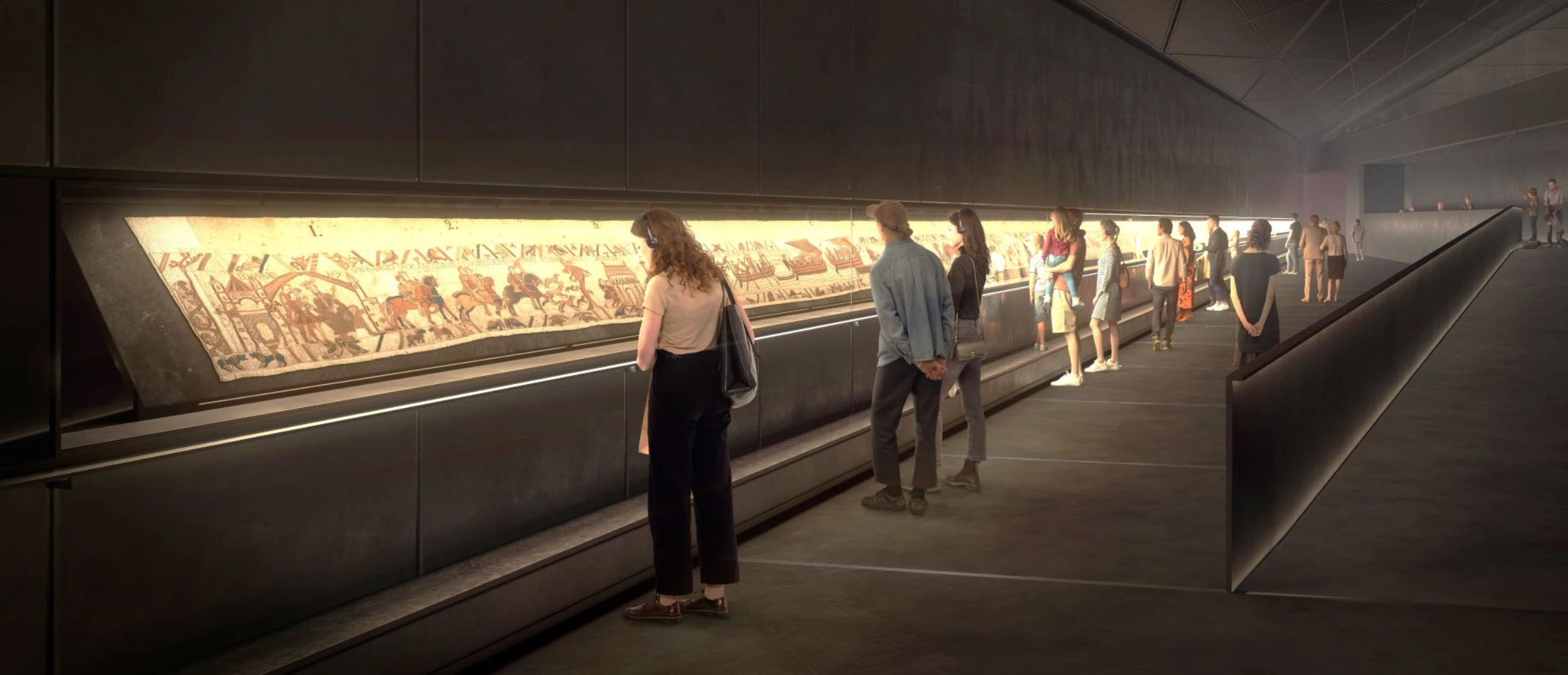
ARTnews reported this weekend that tickets to see the Bayeux Tapestry could cost as much as $45 apiece when the institution's new museum project comes online. That headline, from ARTnews, is short on procedural detail but rich in implication. The Bayeux Tapestry is not an ordinary temporary blockbuster. It is one of Europe's foundational narrative objects, a work whose art-historical, political and touristic meanings have been layered for centuries. On the official Bayeux Museum site, the institution is already framing its redevelopment around a future opening in 2027 and publicising both the tapestry's digital presentation and the reimagining of its museum home. Once a museum telegraphs price at that level, the real story is no longer just admission. It is how heritage is being packaged for a new era of destination culture.
A price near $45 may not sound outrageous by the standards of major temporary exhibitions in London, Paris or New York. But Bayeux is not positioning the tapestry as a one-season spectacle imported for a limited run. It is the permanent anchor of a local museum ecosystem and one of the strongest cultural reasons for travellers to stop in Normandy beyond the D-Day circuit. That difference matters. High pricing at a permanent heritage site changes the moral argument around access. The institution is not merely recovering the costs of an unusually expensive loan show. It is deciding how much a durable public treasure should be filtered through scarcity logic.
The redevelopment story helps explain why pricing pressure is arriving now
The Bayeux Museum homepage states plainly that the project to redeploy the Bayeux Tapestry Museum moved into a new phase in early 2024 and is now aimed at a 2027 opening. Redevelopment always comes with a narrative of necessity: improved conservation, better interpretation, stronger circulation, cleaner visitor flow, higher retail capacity and a more contemporary visitor experience. Some of those things are genuinely needed, especially for an object as famous and delicate as the tapestry. But redevelopment also changes what institutions believe they are entitled to charge. New architecture, new interpretation suites and a sharpened tourism strategy often create a silent pressure to raise the revenue expectations attached to a site.
That is why the ticket story should not be read as a stray pricing anecdote. It belongs to a much larger institutional pattern in which museum capital projects and admission strategy become inseparable. Once a heritage institution upgrades itself into a more sophisticated destination, the financial model often follows the logic of premium experience. Readers who have followed our guide to reading museum capital gifts will recognise the structure. New facilities are sold as access-enhancing and preservation-minded, but they frequently produce new hierarchies of access at the point of entry.
The Bayeux case is especially revealing because the object itself already carries extraordinary symbolic capital. The museum site highlights the tapestry's scene-by-scene digital visibility and the future museum's promise, reminding visitors that the institution is selling more than a ticket to a room. It is selling proximity to one of the West's most reproduced historical images. As soon as that symbolic capital is priced aggressively, a public conversation becomes unavoidable about where stewardship ends and monetisation begins.
Heritage institutions increasingly price against demand, not just against mission
Museums like to talk about educational purpose when defending their civic role. They become more market-literate when discussing a world-famous object with finite carrying capacity. That tension is not hypocrisy so much as a structural fact. A site like Bayeux knows the tapestry can draw heavy tourist demand, especially after a high-profile reopening. It also knows that conservation, queue management and multilingual interpretation cost money. The danger is that demand management starts to look indistinguishable from prestige pricing.
When that happens, institutions stop asking what the broadest responsible public access looks like and start asking what the market will bear without reputational damage. A $45 ticket is not only a number. It is a statement about which visitor the museum considers normal. Is the expected audience a family making repeat regional visits, a school group, a historically motivated traveller, a cruise-linked tourist or a once-in-a-lifetime cultural consumer willing to absorb a premium? Pricing reveals that imagined public more clearly than mission statements do.
The Bayeux Museum's own presentation of the site as a three-museum complex deepens the issue. The homepage ties together the Bayeux Tapestry Museum, the Memorial Museum of the Battle of Normandy and the Baron Gérard Museum of Art and History. That cluster can be read as a civic ecosystem, but it can also be configured as a bundled tourism product. The more those functions converge, the more ticketing starts to express a regional visitor-economy strategy rather than a narrow curatorial one.
The Bayeux Tapestry is exactly the kind of object that makes access politics impossible to ignore
There are works whose value is primarily market-driven, and there are works that carry a broader claim on public imagination. The Bayeux Tapestry belongs emphatically to the second category. It is historical evidence, myth machine, design object, political narrative and tourist magnet at once. That combination makes it unusually hard for a museum to defend premium pricing as if it were dealing with a luxury cultural commodity. Even if the ticket is meant to support conservation and visitor services, the optics are clear: a shared civilisational icon is being routed through a price point that will feel exclusionary to a meaningful slice of the public.
This is why the institution's digital access matters. The museum homepage celebrates the fact that visitors can now explore the tapestry online scene by scene in unprecedented image quality. That is a good public service and an important interpretive tool. It also reveals a familiar twenty-first century compromise. Museums widen remote access while tightening the prestige of physical presence. Digital abundance can coexist quite comfortably with expensive in-person scarcity. In some cases it even helps justify it. The public gets an online version, while the premium of standing before the object is further sacralised.
That trade-off may prove acceptable to many visitors, but it should still be named clearly. Heritage institutions increasingly divide access into tiers: freely browsable scholarship, moderate digital engagement and costly embodied encounter. The Bayeux story matters because it shows that one of Europe's most widely taught historical artworks is not exempt from that restructuring. If anything, its fame makes the model more tempting.
The smartest response is not outrage alone but scrutiny of the full access model
Ticket headlines tend to produce predictable reactions. Some will say the market sets the price and that serious heritage experiences cost money. Others will argue that no publicly significant object should approach that level of admission. Both responses miss the more useful set of questions. What discounted categories are planned? How will school groups, local visitors and low-income travellers be treated? Will timed entry and ticket bundling raise the real cost further? Will there be free days or shoulder-season strategies that meaningfully redistribute access?
Those questions matter more than the raw headline because they show whether the museum thinks of pricing as blunt revenue capture or as a calibrated public policy. Institutions often hide behind the complexity of ticketing structures to diffuse criticism. A high top-line price can be mitigated by thoughtful access design, or it can become the anchor of a premium experience model that cascades through every category. Until those details are clear, the Bayeux story should be treated as an early warning about institutional direction rather than a closed verdict.
Readers should also connect this case to our guide to museum funding crises. Not because Bayeux is obviously in crisis, but because pricing pressure often appears long before a museum publicly admits financial strain. Redevelopment, conservation needs and destination-marketing ambitions can all create the same effect: admission becomes one of the most visible places where institutional priorities get translated into a number ordinary people can feel.
What happens next will show whether Bayeux wants to be a steward first or a premium destination first
The official site is already preparing visitors for a future-oriented institution, not a sleepy historical museum. That is not inherently bad. Great heritage objects deserve intelligent interpretation and careful conservation. But prestige redevelopment has a way of smuggling in a new class position for the museum itself. A site once framed as part of regional civic life begins to behave like a must-do cultural product. The Bayeux Tapestry can withstand that transition commercially. The harder question is whether it should be encouraged to.
If Bayeux uses pricing to balance demand while building genuine access protections around the edges, the story may settle into a familiar but defensible model. If it uses fame, redevelopment and scarcity to normalise a premium threshold for one of Europe's most important historical works, then this ticket headline will look like the first honest sign of a deeper ideological shift. Either way, readers should resist treating the number as trivial. Ticket prices are never just administrative facts. They are public philosophy rendered at the box office.