Sagrada Família Nears Completion as Pope Plans Inauguration
Pope Leo XIV's planned Sagrada Família visit turns the basilica's final tower into a test of heritage branding, pilgrimage and cultural completion
The final tower turns a long construction saga into an event staged for the world
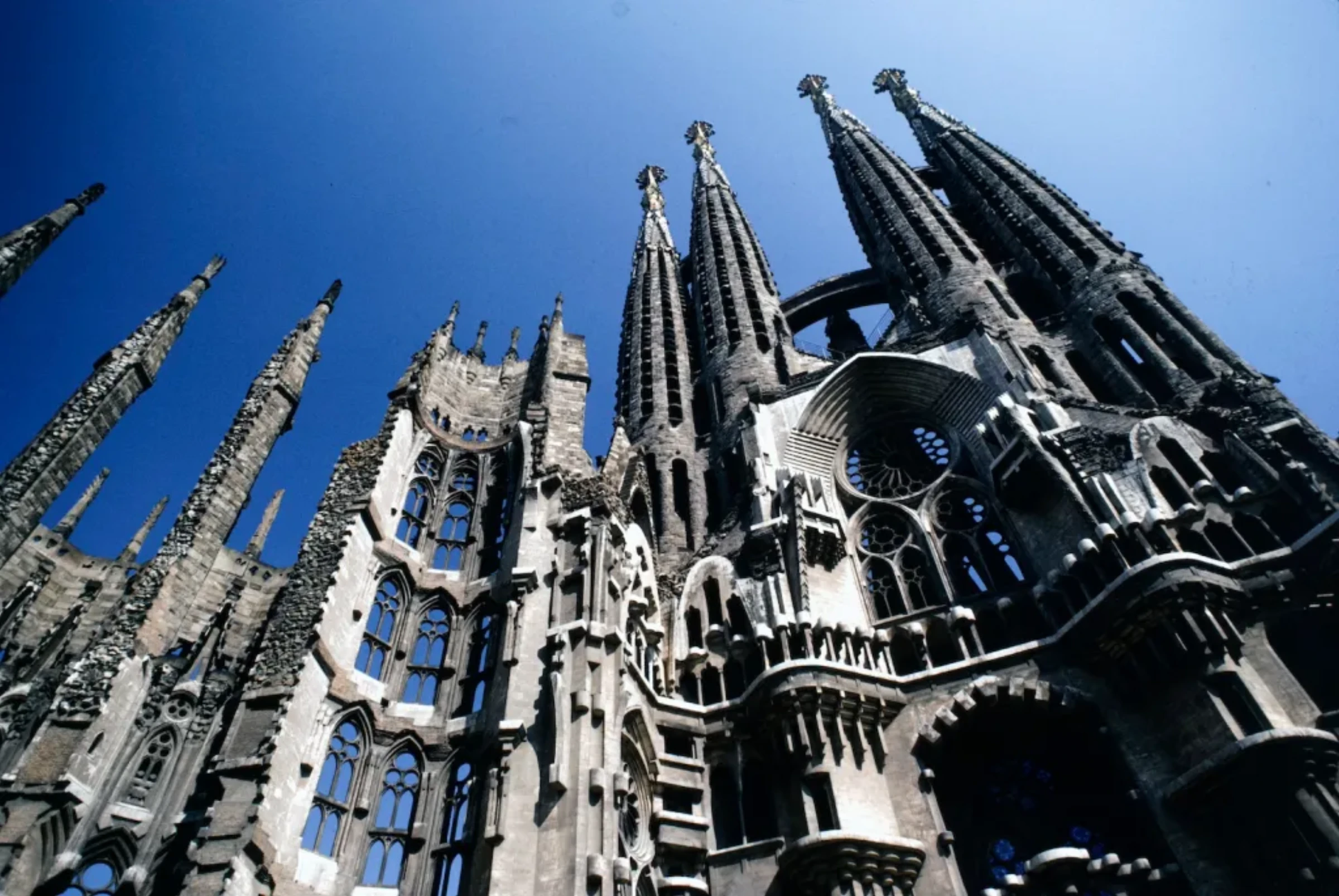
The Sagrada Família has been under construction for 144 years, and now the project is preparing for a moment designed to compress that immense timeline into one globally legible ceremony. ARTnews reports that Pope Leo XIV is expected to visit Barcelona later this month to inaugurate and bless the Tower of Jesus Christ, the final tower of Antoni Gaudí's basilica. The tower was completed in February, which means the remaining work is now less about structural realization than about choreographing meaning: liturgical meaning, civic meaning, tourist meaning, and national meaning all at once.
That is why the story matters beyond architecture fandom. The Sagrada Família is not merely a famous building nearing completion. It is a religious site, a UNESCO-listed cultural object, an urban tourism machine, and perhaps the most recognizable unfinished monument in Europe. Any milestone there is instantly overdetermined. A papal inauguration transforms a construction update into an international image event, one that allows the church, the basilica's administrators, Barcelona, and Gaudí's afterlife industry to claim a share of the symbolism.
The milestone also has unusual narrative power because incompletion has long been part of the basilica's identity. People know the Sagrada Família not just as a masterpiece, but as a masterpiece still becoming itself. Completion therefore creates a strange tension. It promises closure while threatening the myth that helped sustain endless fascination in the first place.
Gaudí's unfinished basilica has always been a live institution, not a frozen masterpiece
The official Sagrada Família site presents the basilica as a synthesis of worship, architecture, and historical continuity, which is true as far as it goes. But the building's modern life has depended equally on adaptation, fundraising, engineering innovation, and mass tourism. Construction has advanced through donations, ticket revenue, and technical updates that Gaudí himself could not have foreseen. That history complicates easy nostalgia. The Sagrada Família is not a relic patiently preserved until the master's design could be completed. It is a continuous negotiation between ideal plans, contemporary fabrication methods, ecclesiastical authority, and the demands of a city built around visitors.
The Tower of Jesus Christ condenses those negotiations into a single object. It is symbolically central because it crowns the vertical hierarchy of the church and reorders the skyline around Gaudí's cosmology. It is also operationally central because it gives the project a public finish line that can be marketed, celebrated, and photographed. The building's official historical timeline already frames the basilica as a multigenerational undertaking shaped by war, interruption, and renewed acceleration. A papal blessing sharpens that story into something closer to triumph.
Yet triumph is never the whole picture with monuments of this scale. The Sagrada Família has been debated for decades by architects, preservationists, residents, and visitors who disagree about how faithfully completion can represent Gaudí, how tourism reshapes the neighborhood, and whether the church's final form belongs more to the present than to the nineteenth century. To treat the inauguration as pure celebration is to ignore the extent to which completion itself is an interpretive act.
The real issue is who gets to define what completion means in 2026
For the Catholic Church, papal presence emphasizes devotion and consecrated continuity. For Barcelona, the event affirms the city's ability to convert heritage into global attention. For basilica administrators, it validates decades of engineering, fundraising, and visitor management. For admirers of Gaudí, it offers the emotional satisfaction of seeing an impossible project edge toward fulfillment. But each of those claims pulls the monument in a slightly different direction. That is what makes this event more interesting than a simple ribbon cutting.
There is also a political economy beneath the symbolism. The Sagrada Família is among the most visited sites in Spain, and major milestones feed the tourist imagination on a scale few museums can match. A new tower, a papal ceremony, and a narrative of long-awaited completion create exactly the kind of compressed spectacle that tourism authorities know how to circulate. The building becomes content as much as architecture. That does not negate its artistic and spiritual value, but it does change the terms under which audiences encounter it. Visitors arrive not only to see a church, but to consume the story of a church that has finally crossed a historic threshold.
This matters because the building's public identity increasingly depends on those thresholds. Heritage institutions all face pressure to remain narratable in the present tense. A monument cannot simply endure; it must keep generating reasons to visit, photograph, and discuss it. In that respect, the Sagrada Família is not so different from the blockbuster museum economy. It thrives on sequencing revelation. The Tower of Jesus Christ is therefore not only an architectural culmination. It is a new chapter in a carefully managed cycle of attention.
Readers who followed our guide to reading infrastructure announcements will recognize the pattern. Institutions present construction milestones as neutral progress, but those milestones usually carry hidden arguments about authority, access, and public meaning. The Sagrada Família is simply a grander and more photogenic version of the same logic.
Completion will not end debate. It may intensify it
One tempting misunderstanding is that a completed tower resolves long-standing questions around the basilica. More likely, it shifts them. Architectural historians will continue debating how much of the final result is truly Gaudí and how much belongs to interpreters working from drawings, fragments, and evolving technologies. Urban critics will continue asking what mass pilgrimage and tourism have done to the surrounding district. Devout visitors may celebrate spiritual fulfillment while others see a monument increasingly optimized for global throughput. None of those positions disappear because a pope blesses the tower.
In some ways, the building's incompletion made those tensions easier to hold. An unfinished masterpiece invites patience, projection, and historical sympathy. A monument framed as complete invites judgment. Audiences can ask more pointedly whether the result justifies the process, whether contemporary interventions feel coherent, and whether the basilica's final public image reflects devotion, commerce, or a strategic mix of both. Completion is not the end of interpretation. It is the point at which interpretation becomes harder to postpone.
There is also the basic paradox that what the public calls completion is rarely total in operational terms. The basilica can celebrate one tower while still facing ongoing maintenance, visitor management, conservation, and interpretive work. Cultural institutions never really finish. They shift from construction problems to stewardship problems. The papal event may close one narrative loop, but it opens another: how does a monument that has lived so powerfully through becoming learn how to live after arrival?
What comes next is not simply a finished church, but a new phase of cultural management
The most revealing consequences of the inauguration will appear after the cameras move on. Watch how the basilica reframes its public story, whether ticketing and access policies shift around the new milestone, and how aggressively the site leverages the tower in future programming and branding. Watch too how scholars and critics respond once the emotional appeal of a final blessing gives way to the less glamorous work of assessing what has actually been built.
The Sagrada Família's power has always rested on more than its forms. It comes from the ability of those forms to gather belief, desire, controversy, money, and time into one of the few monuments that still feels larger than any single reading. The Pope's visit will make for a potent image. The harder question is whether the basilica can carry that image without flattening itself into a solved icon. In 2026, the most serious way to look at the Sagrada Família is not as a miracle finally completed, but as a monumental work entering a new argument about what cultural completion even means.
That argument will not be settled by ceremony. It will be shaped by how the basilica balances worship with tourism, how Barcelona absorbs the next wave of attention, and how historians continue to parse the relationship between Gaudí's intentions and the twenty-first-century methods used to realize them. The structure may be nearing formal closure, but its public meaning is becoming more unstable, not less. That is usually what happens when an unfinished legend finally meets the discipline of being judged as a finished object. The real milestone is not the blessing itself. It is the shift from anticipation to accountability.
Accountability here means practical questions as much as symbolic ones. Will future interpretation acknowledge the layers of modern engineering and institutional decision-making behind the tower, or will the site lean too heavily on the fantasy of seamless authorship? Will the inauguration widen public understanding of the basilica's complexity, or simply intensify its role as a spectacular backdrop for tourism imagery? Those questions are not hostile to the monument. They are what serious attention looks like once the romance of incompletion begins to give way. A building this famous does not stop producing meaning when it nears the end of construction. It starts producing a new and more demanding kind of scrutiny.
That scrutiny should extend to the language of inevitability that so often surrounds the basilica. Nothing about a project of this duration was inevitable. Funding streams, political permissions, engineering choices, conservation debates, and visitor demand all had to align repeatedly over decades. Remembering that helps resist the sentimental idea that the church simply grew toward its destiny untouched by modern institutional power. What visitors will encounter after the inauguration is not a timeless miracle outside history. It is a profoundly historical object, completed through conflict, administration, and continuous reinterpretation. That knowledge makes the building richer, not less sublime.