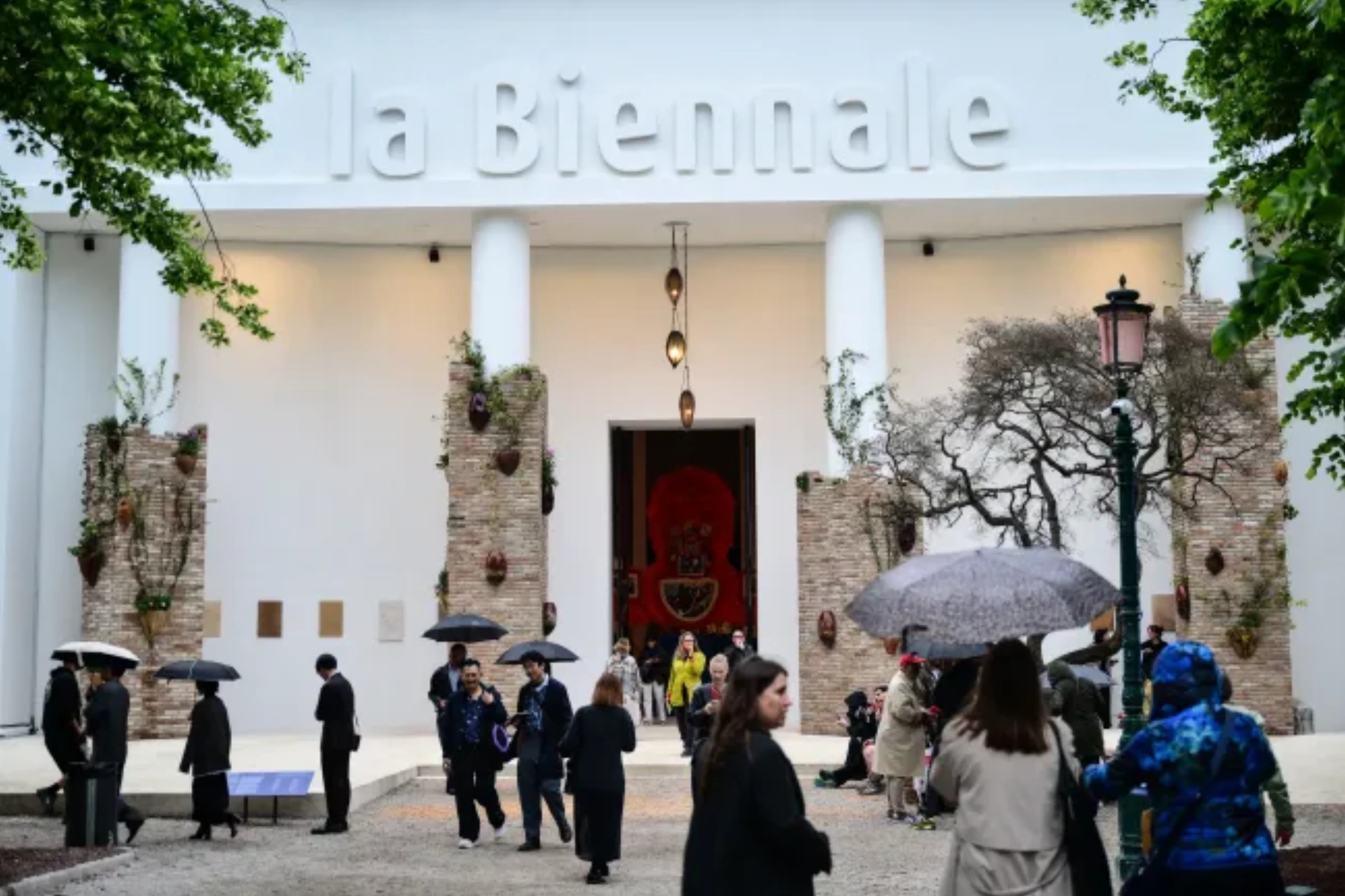
Democratic Deflection: Artists Sue Venice Biennale Over Popular Vote
Over 100 artists are threatening legal action against the Venice Biennale after being included in a public vote for awards against their explicit wishes.
The Conflict Over the Visitors' Lions
The 61st Venice Biennale, under the curation of Koyo Kouoh, has descended into a legal battle that exposes the deep rift between institutional administration and artistic autonomy. More than one hundred artists, including figures like Alfredo Jaar and Lubaina Himid, have threatened legal action after the Biennale included them in the ballot for the "Visitors' Lions" awards against their explicit requests to be withdrawn. This clash is not merely about a prize, but about the right of an artist to refuse a reward they deem ideologically or procedurally compromised.
The controversy stems from a catastrophic failure of the Biennale's traditional awarding process. Earlier this spring, the entire jury responsible for the Golden and Silver Lions resigned en masse. Their resignation was a political act of solidarity, as they refused to participate in a process that omitted artists and pavilions from countries whose leaders were accused of crimes against humanity by the International Criminal Court. In the wake of this institutional vacuum, the organizers scrambled to create the Visitors' Lions as a populist alternative, shifting the power of selection from an expert jury to the general public. This move, while appearing democratic on the surface, was viewed by the artists as a cynical attempt to bypass the critical standards and political demands of the resigning jury.
The transition from a jury-led process to a public vote represents a fundamental shift in how "excellence" is defined at the Biennale. Where the jury's role was to provide a rigorous, historically grounded critique, the public vote reduces the artist's work to a popularity contest. For many of the participating artists, this is an unacceptable degradation of the event's intellectual purpose. The "Visitors' Lions" are not just a replacement prize; they are a symptom of an institution that has lost its way and is now attempting to use the public as a shield against its own internal failures.
Solidarity vs. Popularity
For the protesting artists, the creation of the Visitors' Lions is a transparent attempt to deflect attention from the jury's resignation. By introducing a popular vote, the Biennale organizers have attempted to replace a critical, expert-led discourse with a democratic veneer that masks the underlying political turmoil. The artists' open letter, published via e-flux, makes it clear: they have no issue with the concept of public voting in general, but they refuse to be used as pawns in a strategic diversion.
The list of artists opting out is extensive and representative of the Biennale's most critical voices. From Austria's Florentina Holzinger to the UAE's Farah Al Qasimi, these creators argue that the inclusion of their names on the ballot, despite their formal requests for removal, is "blatantly disrespectful" and confusing for the visitors. It suggests that the institution values the appearance of a comprehensive competition over the actual consent of the artists involved. This lack of consent is a recurring theme in the 2026 Biennale, where the administrative drive to maintain the event's status as a global destination often overrides the ethical commitments made to the participants.
The act of continuing to include these artists in the promotional materials and voting ballots is more than a clerical error; it is a form of institutional erasure. By ignoring the artists' requests, the Biennale is effectively telling them that their agency is irrelevant compared to the administrative convenience of a pre-set ballot. This dynamic mirrors the very power structures the resigning jury was protesting: a system where the powerful define the terms of engagement and the artists are expected to simply comply with the framework provided.
The Institutional Defense of "Freedom of Expression"
The response from the Biennale has been characteristically evasive. A spokesperson claimed that keeping the names on the ballot was necessary to "guarantee all visitors their freedom of expression" in making their choices. This framing is a cynical inversion of the term; the institution is claiming to protect the "freedom" of the visitor to vote for an artist who has explicitly stated they do not want the vote. In this logic, the visitor's whim is prioritized over the artist's autonomy. It is a masterclass in bureaucratic gaslighting, where the institution claims to be promoting democratic values while simultaneously suppressing the democratic will of the creators.
While the Biennale has promised that votes for the refusing artists will not be counted, the damage is already done. The act of listing them on a promotional ballot serves as a form of coerced participation. This legal struggle highlights a recurring theme in the 2026 Biennale: a struggle for the soul of the event, caught between its desire to remain a prestigious global brand and the artists' demand for ethical consistency. The contradiction is stark: the event celebrates "global art," but its administration operates on a logic of control and erasure.
The potential for legal action is a significant threat to the Biennale's image as a sanctuary for artistic freedom. If a court finds that the institution violated the artists' rights or breached the terms of their exhibition agreement, it will be a devastating blow to the prestige of the Visitors' Lions. The case underscores the fragility of the relationship between the artist and the mega-event. When the event becomes too big to fail, it often becomes too blind to see the artists who actually make it possible.
The Future of the Biennial Model
The chaos at the 61st Venice Biennale suggests that the traditional biennial model is under extreme stress. The gap between the institutional goals of the organizers and the ethical demands of the artists has become a chasm. As artists become more attuned to the politics of representation and the ethics of funding, they are less willing to accept the "prestige" of a global exhibition if it comes at the cost of their autonomy. The Venice Biennale is no longer just a place to show art; it is a battleground for the rights of the artist in the 21st century.
This conflict is an example of what happens when an institution tries to use a popular vote to solve a political problem. The "Visitors' Lions" are a failed experiment in performative democracy. By attempting to democratize the award process, the organizers have only succeeded in alienating the very people they are supposed to showcase. The result is a Biennale that is technically functional but intellectually bankrupt, where the image of success is maintained through the coercion of the artists.
As we look toward future editions, the Venice Biennale must decide whether it wants to be a critical forum for art or a tourist destination for "experiences." If it continues to prioritize the latter, it will find that the best artists—those who are truly engaged with the political and social crises of our time—will simply stop coming. The current legal battle is not just a dispute over a ballot; it is a demand for a new social contract between the institution and the artist, one based on consent rather than coercion.