Holburne Museum Reclaims Printmaking for Modern Art
The Holburne Museum's Bath exhibition argues that Manet, Gauguin, Toulouse-Lautrec and Picasso used printmaking to reshape modern art itself.
Bath's new printmaking exhibition asks viewers to stop treating prints as secondary objects
The Holburne Museum's Beyond Impressionism: Printmaking from Manet to Picasso arrives with a blunt corrective. Too much museum programming still treats prints as supporting material for the main event of painting, useful for scholarship but rarely granted equal imaginative force. By gathering work from the 1850s through the 1930s, the Bath exhibition argues that modern printmaking was not an appendix to Impressionism and its afterlives. It was one of the places where artists tested what modern seeing could do when line, tone, color and repetition were no longer constrained by the singular canvas.
That matters because the familiar story of late nineteenth-century art is still tilted toward painted masterpieces and branded personalities. Manet, Gauguin, Toulouse-Lautrec and Picasso are commonly taught through signature paintings that flatten their wider experiments into a handful of market-approved images. The Holburne's exhibition shifts the emphasis toward process, circulation and technical risk. In editorial terms, that is the right move. Printmaking was one of the mediums through which modern artists moved between elite collections, public audiences and the commercial world. It is precisely where questions of experimentation and visibility collide.
The timing is useful too. Museums across Europe are under pressure to justify why another canonical show deserves attention in a crowded calendar. One answer is scale, another is tourism, but the stronger answer is argument. The Holburne is proposing that the history of modern art looks different when prints are read not as reproductions of better-known works but as sites of invention. That is a sharper claim than simple connoisseurship, and it gives the Bath show a reason to exist beyond the pleasant fact that famous names are on the checklist.
The exhibition reframes modern printmaking as a laboratory for form, collaboration and circulation
According to the Holburne's exhibition page, the project takes a broad view of printmaking's resurgence from the mid nineteenth century onward, bringing together figures including Manet, Pierre Bonnard, Henri de Toulouse-Lautrec and Pablo Picasso. That framing makes an important point. Print revival was not a niche craft movement happening on the edge of modernism. It was woven into the mainstream of modern art, even if later museum habits often pushed it back into specialist departments and study rooms.
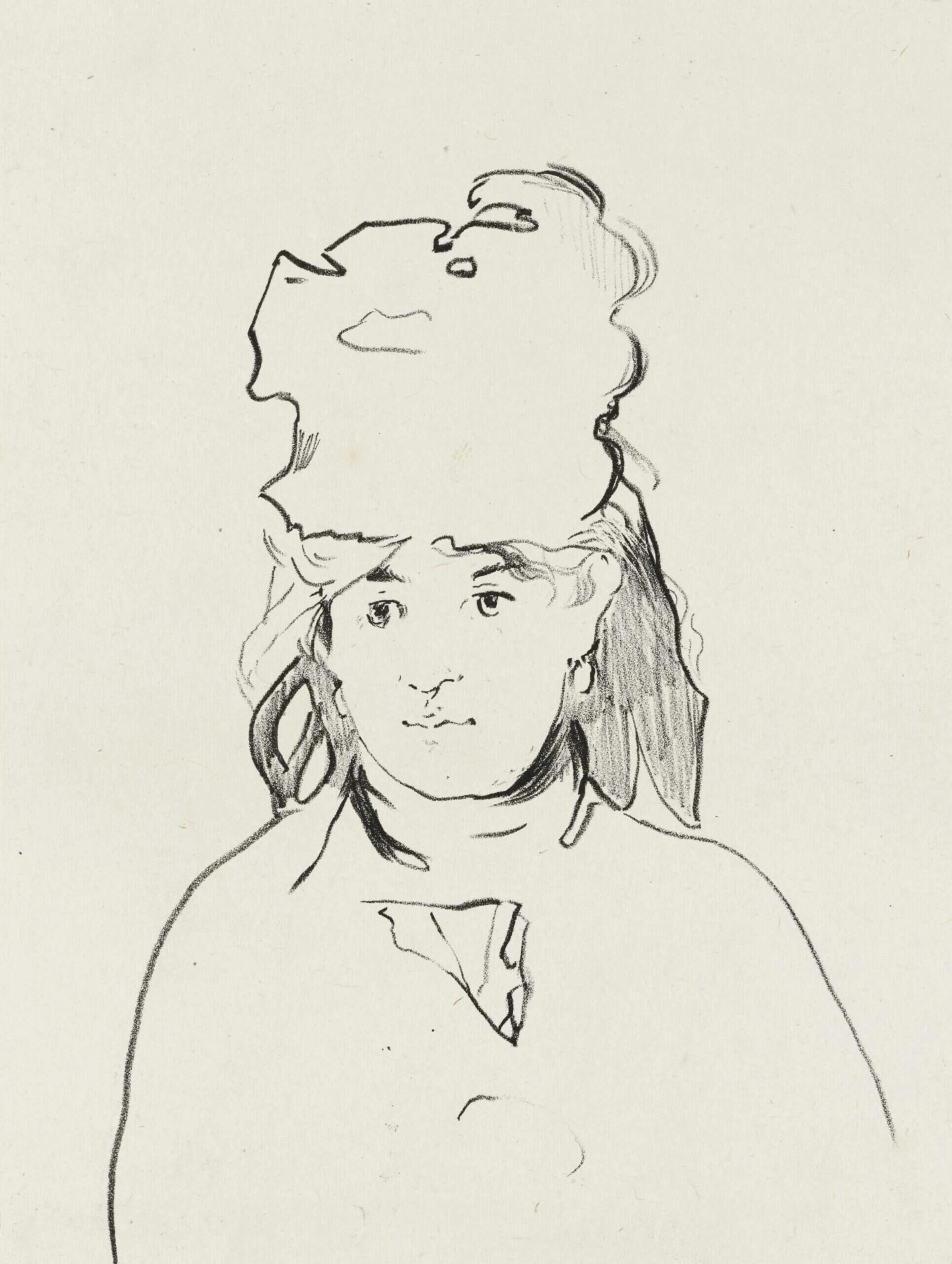
Manet's role is especially telling. His work with lithography and his connection to the Société des Aquafortistes helped position printmaking as an artistic medium rather than a merely reproductive one. Seen from that angle, the medium's revival was also a political struggle over status. If prints could carry the same intensity, intelligence and formal ambition as paintings, then the hierarchy separating unique object from multiplied image became less stable. Modern art did not simply invent new pictures. It also destabilized the channels through which pictures moved.
That collaborative dimension is central to the story. Printmaking depends on matrices, presses, workshops, publishers and technical exchange. The medium rewards artists who think through translation and sequence. It also leaves visible traces of negotiation between hand, tool and material. The Courtauld and the Ashmolean Museum, both cited among the lending institutions, help underline that this history lives across collections rather than inside one heroic museum narrative. The show's strength is that it appears to understand printmaking as a networked practice before it is a category of objects.
That networked quality also explains why prints remain such effective evidence for shifts in taste. When Toulouse-Lautrec used lithography to intensify the visual field of Paris nightlife, or when Gauguin pushed woodcuts toward roughness and compression, they were not stepping down from painting. They were discovering forms of boldness that the medium itself made possible. A good print exhibition restores that technical intelligence. It makes viewers ask not whether the works are as important as the paintings, but how the paintings start to look thinner once the prints are ignored.
Whistler, Van Gogh and Picasso show how prints hold mood, structure and aggression differently from paintings
One of the pleasures of the Bath exhibition, at least from the advance reporting and institutional framing, is the range of visual temperatures on offer. Chris Stephens has singled out James McNeill Whistler's etchings of Venice and the Thames, and that is revealing. Whistler's prints often make atmosphere feel built rather than merely observed. They are not watered-down versions of his painted nocturnes. They are laboratories for tonal ambiguity, places where urban haze and compositional control tighten around one another.
The Van Gogh inclusion should work differently. A print such as Gardener by an Apple Tree lets viewers see how observation, outline and surface economy can coexist with the artist's more famous chromatic urgency. It is also a reminder that Van Gogh, like many artists canonized through paint, participated in a broader visual economy than the mythology of singular genius usually allows. That broader field included print shops, illustrated journals, reproductive techniques and the cross-pollination of Japanese and European models that shaped modern visual thinking. The Victoria and Albert Museum remains an essential institutional reference for that history because its print and design holdings show how deeply these media conversations were intertwined.
Picasso's presence in the show extends the argument into the twentieth century, where printmaking becomes a medium for appetite, distortion and reinvention rather than simply revival. If works such as The Frugal Meal and the Minotaur etchings are indeed among the anchors, they should make clear that the medium could absorb hunger, erotic charge and violence with exceptional directness. Prints are often more blunt than paintings about the artist's decisions. Their cuts, bites and reversals are difficult to sentimentalize. In that sense, the medium can make a canonical artist feel less polished and more dangerous.
This is where the exhibition can do more than celebrate technique. It can show that prints helped modern artists move between intimacy and publicity. A painted masterpiece often arrives in the museum as a singular destination object. A print belongs equally to the studio, the portfolio, the dealer's inventory and the reader's hand. That mobility is part of why printmaking mattered to modernism, and why it still matters to museums trying to explain how art enters public life.
What this Bath show gets right about museum programming in 2026
The most convincing museum shows right now are not simply additive. They do not just place more famous names in one room and wait for validation to arrive through quantity. They narrow the lens until a structure becomes visible. Beyond Impressionism seems poised to do exactly that by taking a medium that has often been treated as supplementary and making it the organizing principle. The result is a more useful kind of canon show, one that teaches viewers how to look at familiar artists through a less exhausted frame.
There is also a practical institutional lesson here. Regional museums increasingly need exhibitions that can compete for attention without mimicking the blockbuster logic of London or Paris. The Holburne does that by offering specificity. Bath becomes the place where a visitor can think through the material intelligence of printmaking rather than passively consume another greatest-hits parade. For artworld.today readers who followed our recent look at how Tate is reframing Whistler in this earlier report, the Bath exhibition extends the same broader question: how can museums make overfamiliar names feel structurally alive again?
It also helps that the exhibition is anchored in a city where visitors can move between institutions and test the argument against other contexts. Bath is not being asked to impersonate a metropolitan mega-museum. It is using its scale well. That kind of curatorial precision is increasingly valuable at a moment when audiences are exhausted by oversized claims and museums need sharper reasons for why a show belongs exactly where it is.
The answer lies in medium, argument and sequence. Prints force museums to show relationships rather than icons. They encourage a visitor to notice recurrence, variation, technical decision and circulation. They also complicate the market habit of treating singularity as the measure of value. In a moment when editioned media, digital images and reproduction economies saturate visual life, that historical complication feels contemporary rather than antiquarian.
There is another reason this show lands well in 2026. Contemporary image culture has made reproduction ubiquitous while leaving most people with a shallow understanding of how reproducible images historically carried difficulty, authorship and technical intelligence. A serious print exhibition can close that gap. It reminds audiences that multiplication did not dilute modern art. In many cases it accelerated it, letting artists test how an image changes when it passes through stone, wood, acid, ink and repeated circulation. That is not a side note to painting history. It is one of the engines that made modern visual culture possible.
What viewers should watch for, then, is not only which famous works appear. Watch how the exhibition stages adjacency. Does Manet sharpen Gauguin? Does Whistler temper Picasso? Do the labels explain collaboration and process without retreating into specialist jargon? If the answer is yes, Bath will have done something better than host a handsome seasonal show. It will have restored printmaking to the center of the modern story, which is where it belongs.