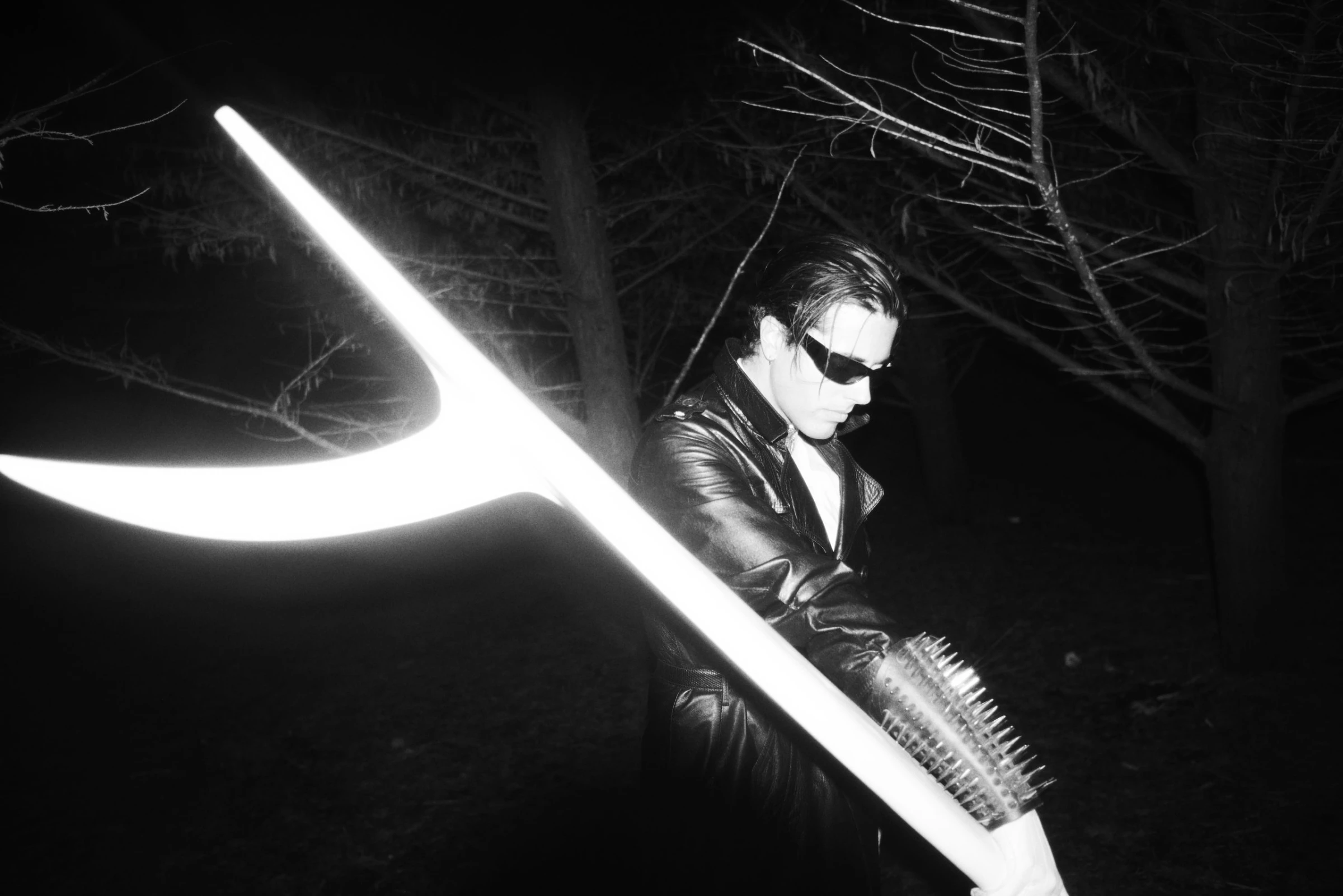
Lucas Lecacheur Pushes Surfboard Design Off Script
At Melbourne Design Week, Lucas Lecacheur treats surfboards as sculptural experiments that test how utility, performance and myth can coexist.
Melbourne Design Week gives Lucas Lecacheur's surfboard experiments a sharper art context
Lucas Lecacheur's appearance at Melbourne Design Week matters because it pulls an object usually trapped between sport and lifestyle branding into a different register. Through Perfect Designs, staged at At The Above in Fitzroy, the French designer treats the surfboard as a sculptural proposition, a performance device and a design myth all at once. Crab-pincer outlines, stingray references, a cowboy-boot nose and a board dragged through the Australian bush are not simply eccentric shapes. They are arguments about what counts as design seriousness when function is still technically in play.
That distinction matters. Plenty of contemporary design discourse celebrates boundary crossing in the abstract while still rewarding highly predictable products and polite material innovation. Lecacheur's boards are less well behaved. They flirt with absurdity, but they do so inside a craft tradition that still demands performance in water. According to the reporting around the project, the boards are actually rideable, which means the work cannot be dismissed as pure prop-making. It sits in the unstable zone where utility becomes theater without fully surrendering utility.
Melbourne Design Week is a good host for that instability. The event's broader program, presented through the festival platform, has increasingly leaned into design as a cultural and speculative field rather than a showroom for clean solutions. Lecacheur's residency fits that shift. It proposes that design can still be unruly, image-driven and slightly ridiculous without becoming intellectually trivial. In fact, the ridiculousness is part of the point.
That is also what makes the work more than surf exotica imported into a design calendar. The boards are being framed inside a civic design event that usually rewards the language of systems, materials and future-thinking. Lecacheur inserts subcultural swagger into that context and forces the festival to accommodate humor, obsession and fetishized form. Whether every object succeeds is less important than the fact that the exhibition pushes design-week seriousness away from corporate smoothness and back toward authored weirdness.
That authored weirdness has become scarce in big design events, where institutional language often flattens every project into innovation and impact. Lecacheur's contribution is less obedient. It foregrounds personality, contradiction and a willingness to let an object look excessive. Those qualities do not automatically make great design, but they do make the field more legible by showing what standard programming usually tries to hide.
The project works because it treats style as method rather than ornament
One of the more revealing details about Lecacheur's practice is his insistence that how he dresses affects what he makes. He reportedly shapes boards in vintage Yves Saint Laurent, Armani or Givenchy suits, claiming that style itself behaves like a muscle. That line could sound like branding fluff if the actual objects were timid. They are not. The exhibition's appeal lies in the way personal theatricality extends directly into material form. The boards do not illustrate a lifestyle. They externalize a method of self-stylization that passes through music, fashion, surfing and object design.
That is why the Melbourne residency format matters. The Design Week page notes that Lecacheur has been living and working inside the gallery, with the project encompassing residency, exhibition, surfboard and fin design works, performance, film and a publication. This is not a conventional product launch. It is a temporary total environment, one where process, persona and object are deliberately difficult to separate. In institutional terms, that pushes the work closer to installation practice than to luxury sporting goods.
There is a real art-historical lineage behind that move. Twentieth-century artists repeatedly migrated between performance, craft, furniture, music and fashion to test whether the artwork had to stay obedient to one category. Lecacheur is not working at that scale of historical consequence, at least not yet, but he is borrowing the same permission structure. The surfboard becomes a support for gestures that would make less sense inside a standard industrial design brief. Seen that way, the project is not about novelty for its own sake. It is about recovering room for eccentric authorship inside an object culture that often punishes deviation.
The danger, of course, is that eccentricity gets mistaken for depth. Plenty of collectible design thrives on one-liner forms that photograph well and say little after the first look. Lecacheur avoids some of that shallowness because his boards remain tied to use, travel and subcultural testing. If a surfer responds with delight, confusion or skepticism on the beach, that feedback is part of the work's life. The object is not sealed inside the white cube, even when it enters one.
Surf culture gives the work its friction, but the gallery gives it leverage
Surf culture is crucial here because it introduces a constituency that does not automatically care about design-world approval. A strange chair can survive on theory alone. A strange surfboard enters a harsher tribunal of embodied performance, peer reaction and folklore. Lecacheur appears to understand that and uses it to his advantage. The boards are conversation starters on the beach, but they are also tests of whether a highly stylized design language can still function under real conditions. That tension is what keeps the project alive.
At the same time, the gallery context gives the work leverage that subculture alone rarely provides. At The Above can stage the boards alongside photography, film, publishing material and the artist's own residency environment, allowing the project to be read as a world rather than a set of isolated products. That matters because contemporary design increasingly rewards practitioners who can build narrative ecosystems around objects. Lecacheur is doing that with a degree of shamelessness that I find refreshing. He is not pretending the myth-making is separate from the making.
There is also a market lesson in the project. Design weeks often struggle to distinguish between genuine experimentation and premium lifestyle packaging. The difference usually lies in whether risk is visible. Here, risk shows up in awkward silhouettes, uncertain utility, and a willingness to make objects that could fail publicly. A board dragged through the Australian landscape is not efficient. It is a dare. That willingness to court failure gives the project more credibility than the average design-week object polished into painless desirability.
That visibility of risk is what keeps the project from collapsing into novelty design. You can imagine collectors wanting the objects, but you can also imagine surfers and designers arguing about them in ways that are not fully flattering. Good. Debate is evidence that the form still has edges. Too much collectible design now arrives pre-approved, with all friction sanded off. Lecacheur is at least trying to preserve abrasion as part of the object's meaning.
For artworld.today readers who have been following how exhibitions and fairs try to build arguments around medium rather than category, Lecacheur's show fits a broader pattern. Like the Bath printmaking show published in this batch and the current emphasis on expanded platforms at Photo London, it asks viewers to take a supposedly secondary or hybrid form seriously. The question is not whether a surfboard belongs in a gallery. The question is what kinds of thinking become possible once it does.
What Perfect Designs says about design culture in 2026
The strongest reading of Perfect Designs is that it refuses the false choice between craft legitimacy and image culture. Lecacheur wants both. He wants the object to work, and he wants it to seduce, confuse and circulate as a story. That ambition feels contemporary in a productive way. Designers now operate inside attention economies where objects must survive as photographs, clips, anecdotes and social signals long before anyone encounters them physically. Lecacheur does not resist that condition. He exaggerates it until it becomes visible.
There is something a little merciless in that strategy. It exposes how much design value depends on narrative charge, scene-making and performative confidence. But it also opens a door. If design already lives through myth, why not make the myth stranger, more personal and less obedient to commercial norms? That is the challenge his work poses to more respectable corners of the field.
The project also exposes a tension running through collectible design more broadly. Many design events now celebrate experimentation while quietly steering artists toward objects that remain easy to place in domestic interiors or private collections. Lecacheur's boards resist that comfort. Even when they become collectible, they retain an awkward relation to use, subculture and physical testing. That awkwardness is useful. It prevents the work from settling too neatly into the polished language of limited editions and reminds viewers that risk can still be a material quality, not just a curatorial slogan.
What comes next will determine whether the project remains a compelling episode or grows into a durable practice. A single successful residency can be absorbed quickly into content culture. The harder task is to keep pushing the form until it develops genuine conceptual weight across exhibitions, publications and collectors without losing its bodily relation to water, motion and risk. Still, Melbourne Design Week has given Lecacheur something valuable: a frame in which the surfboard can be read not as merch but as an unstable design object with enough tension to deserve argument. That is already more interesting than most design-week novelties manage.