Phoenix Art Museum’s Indigenous Gift Rewrites Its Collection
Phoenix Art Museum’s 185-work Healey gift is more than donor news - it forces the Southwest institution to rewrite how it tells the story of American art
Phoenix Art Museum uses the Healey gift to redraw its collection map
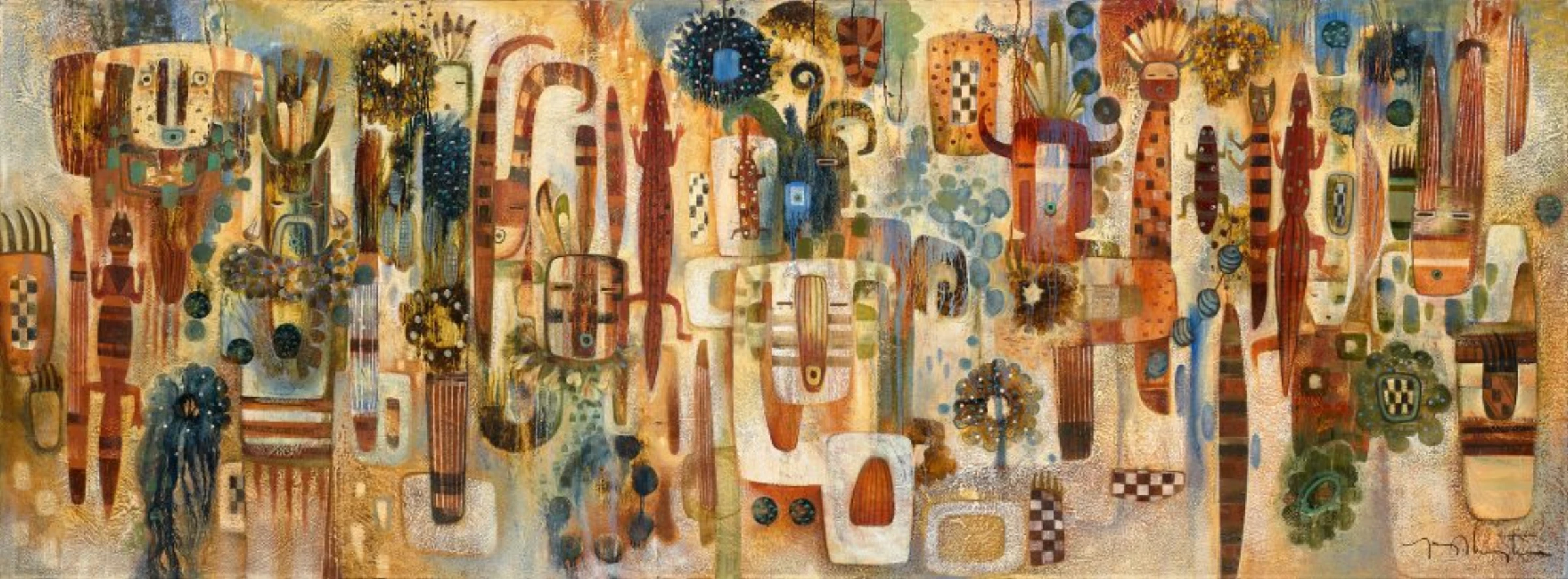
Phoenix Art Museum is not treating its newly announced gift of 185 Indigenous artworks as a ceremonial add-on. The institution said the works from the William P. Healey Collection of Native American Art will enter the museum as a major expansion of its Art of the Americas holdings, and the scale matters because the museum has long described Indigenous art as a gap in its permanent collection rather than a decorative supplement. According to Artforum’s report and the museum’s own June announcement, the gift includes modern and contemporary work by artists such as Cara Romero, Allan Houser, and Jaune Quick-to-See Smith. Phoenix is pairing the acquisition with an exhibition, not a storage-room promise, which is usually the clearest sign that a museum understands a gift as an institutional statement rather than donor relations copy.
The exhibition, The Way We Came: A Century of Indigenous Art, opens in August and will place more than 100 works from the Healey gift on view through July 2027. That timeline gives the museum more than a quick splash. It gives Phoenix a year to persuade local audiences, trustees, scholars, and future donors that Indigenous art belongs at the center of any serious account of art in the Americas. The institution’s framing is also unusually direct. Rather than treating the works as regional enrichment, Phoenix describes the gift as a way to tell a more expansive story of North American art. That language matters because museums have historically isolated Indigenous work in separate ethnographic or Southwestern compartments even while borrowing its authority to claim geographic rootedness.
The exhibition’s language of survivance is sharper than the usual museum uplift
The curatorial frame around the gift is not neutral. Phoenix says the exhibition will center the concept of survivance, the term developed by Gerald Vizenor to describe Indigenous continuance, resistance, and active presence beyond victim narratives. That is a more demanding proposition than the standard museum vocabulary of resilience. Resilience can too easily flatter the institution showing the work. Survivance insists on the persistence of Indigenous sovereignty, memory, and artistic self-definition, including in spaces that once excluded or misread those traditions. Dr. JoAnna Reyes, the museum’s adjunct curator of Art of the Americas, is organizing the exhibition with artist Tony Abeyta, whose own work is part of the gift. The pairing of a curator and a living Native artist helps shift the show away from static heritage language and toward a live argument about authorship, continuity, and representation.
That argument is visible in the artist list. Allan Houser’s place in twentieth-century sculpture, Cara Romero’s photographic staging of Indigenous life against tourist and colonial expectations, and Jaune Quick-to-See Smith’s long insistence on political clarity give the gift range across media and generations. The museum’s press materials also emphasize that the works deepen its holdings of modern and contemporary art rather than sit outside them. That sounds obvious, but it still cuts against a durable museum habit: treating Indigenous art as something historical, regional, or ceremonial first and aesthetic second. Phoenix is making the opposite case. It is saying the story of American modernism and contemporary practice is incomplete without Indigenous artists shaping it from within.
Why this gift matters beyond donor generosity in the Southwest
Collection gifts are usually announced in the softest possible tone. They come wrapped in gratitude, philanthropy, and a promise of public benefit. Sometimes that is all they are. But large gifts also expose a museum’s hierarchy of knowledge. What gets accessioned, researched, exhibited, and taught reveals whose history the institution believes is worth preserving at scale. Phoenix is the largest art museum in the American Southwest, a region where museums have long relied on Indigenous presence as atmosphere while often underinvesting in Indigenous authority. This gift pushes against that imbalance because it is large enough to change future programming decisions, cataloguing priorities, school tours, and the shape of the permanent collection.
It also arrives at a moment when museums are being forced to show whether their inclusion language has operational consequences. A donor can give 185 works and still leave an institution with the wrong interpretive habits if the museum does not commit staff time, scholarship, budget, and long-term display space. Phoenix’s rollout suggests a stronger level of commitment than that. The museum immediately tied the acquisition to a major exhibition, named the conceptual frame, and quoted its director Jeremy Mikolajczak on the need to address a historical gap. That is more credible than the vague collection-growth rhetoric museums often use when they want the prestige of diversity without the friction of change. It also gives Phoenix a benchmark John and every other editor should hold it to next year: the museum now has to prove that Indigenous art remains central after the press cycle is over.
The broader museum field has been moving in this direction, but unevenly. The Phillips Collection’s recent expansion of its collection through a major gift, covered earlier at artworld.today, showed how donor narratives can reshape an institution’s self-description. The difference in Phoenix is that the gift presses on one of the most entrenched distortions in US museum history: the marginalization of Indigenous artists inside supposedly national art histories. If Phoenix handles the acquisition seriously, the gift will not just enrich a museum in Arizona. It will offer a model for how regional institutions can revise the canon without pretending the canon was neutral to begin with.
There is a regional stakes question here too. Museums in the Southwest have often leaned on proximity to Native histories as a form of cultural legitimacy while still presenting Indigenous artists as adjacent to the main narrative of American art. A gift of this size makes that maneuver harder to sustain. Once the works are catalogued, exhibited, and taught as part of the museum’s central holdings, Phoenix will have fewer excuses to segregate Indigenous production into occasional thematic moments. That pressure will not solve everything, but it changes the institutional baseline in a way smaller symbolic acquisitions rarely can.
The donor profile matters as well. A museum accepting a highly focused collection inherits not just objects but the collector’s pattern of attention. The question is whether staff can translate that pattern into scholarship that serves the public rather than the mythology of private collecting. Phoenix appears aware of the issue because its announcement foregrounds artists and curators more than Healey’s personal narrative. That is a healthy sign. The best museum gifts eventually stop being about the donor and start being about what the institution can now say, show, and teach with greater precision.
There is also a national implication. Museums across the United States have spent the past decade talking about reparative collecting, but many have done so through modest acquisitions that do not materially affect the shape of their galleries. A 185-work gift changes scale. It can shift storage priorities, registrar work, interpretation budgets, and the expectations placed on future acquisitions. If Phoenix follows through, other regional museums will have a harder time claiming that structural change is impossible without encyclopedic resources or coastal donor networks. This is exactly the kind of acquisition that tests whether rhetoric about expansion of the canon can survive contact with museum operations.
What Phoenix has to do next to avoid turning a real shift into branding
The next phase is where museums usually wobble. Phoenix has already made the acquisition legible through a public exhibition and strong curatorial language. Now it has to build the less glamorous infrastructure that makes such a gift matter five years from now. That means transparent accession records, robust wall texts, programming with Native artists and scholars, and a commitment to let the work disrupt existing collection narratives rather than occupy a separate celebratory lane. It also means deciding how the museum will integrate these artists into future modern and contemporary installations after The Way We Came closes. A gift that large should alter the museum’s baseline display logic, not just produce a successful temporary show.
The museum also has an opportunity to make the Southwest legible in a different way. Too often, regional branding reduces Indigenous art to place-based authenticity while leaving power untouched. Phoenix can do better by showing how these works speak to photography, abstraction, sculpture, media critique, and institutional history on equal footing with the rest of its program. If it does, the Healey gift will stand as a real editorial correction inside the museum field. If it does not, then the acquisition will remain what many museum gifts become: an admirable headline followed by a slow return to familiar habits. For now, Phoenix has made the right ambitious claim. The important part starts after the applause.
The exhibition’s duration is another quiet signal of seriousness. A show that stays up for nearly a year has to support repeat visits, school programming, loans, interpretation updates, and continued critical attention. That is very different from a donor-thank-you display that peaks on opening weekend and disappears. Long runs create institutional memory. They also leave the museum with no place to hide if its interpretive ambitions turn out to be thinner than its announcement promised.