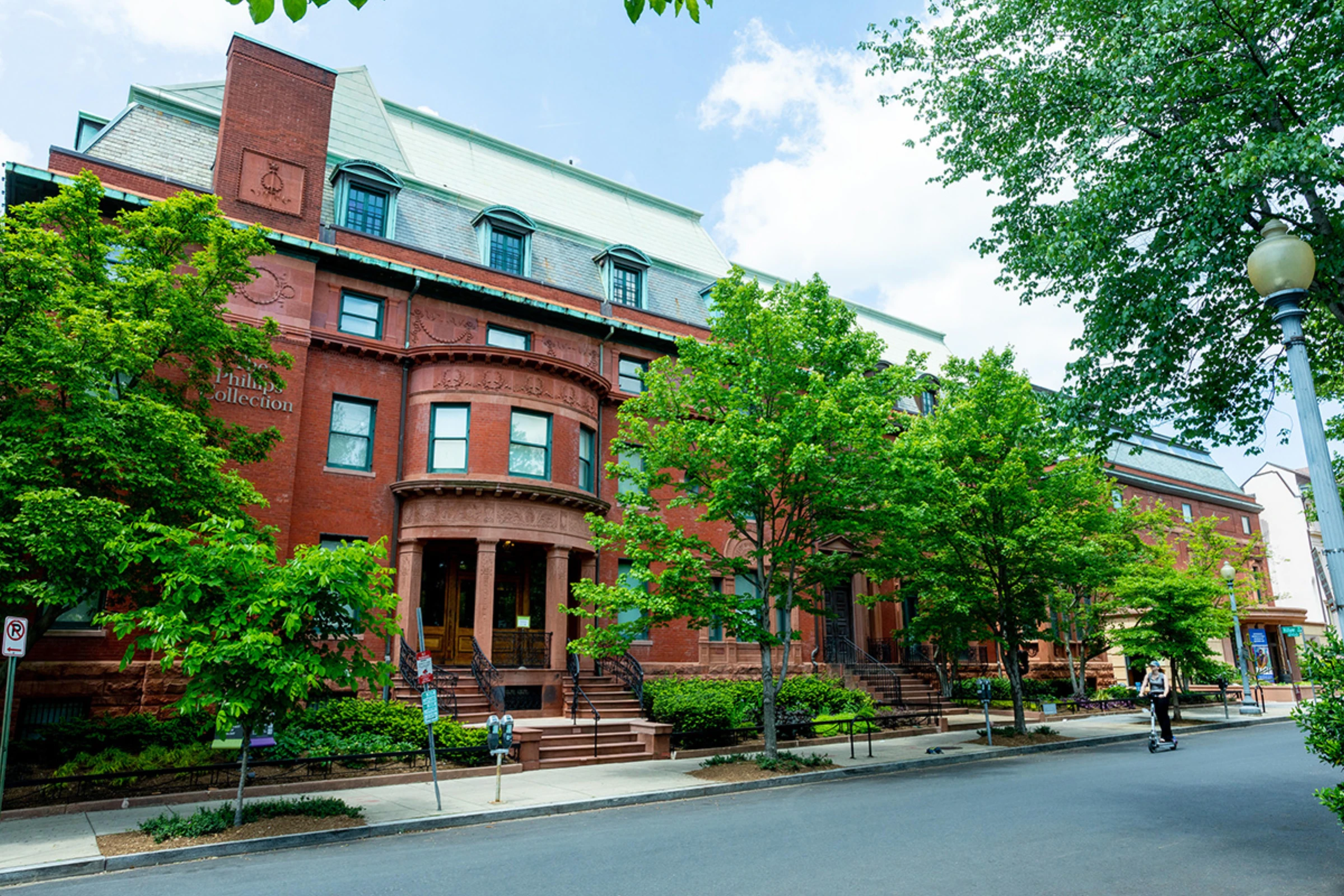
Phillips Collection Lands $15M to Rebuild From the Inside
A record $15 million Sherman Fairchild Foundation gift bolsters the Phillips endowment, facilities planning, and access strategy in Washington
The Phillips Collection Gets More Than a Windfall
The Phillips Collection has announced a $15 million gift from the Sherman Fairchild Foundation, the largest in the Washington museum’s history. Artforum framed the grant as a historic donation, but the museum’s own press release makes clear that the significance lies in where the money is going. Of the total, $11.75 million is headed into the endowment, with dedicated support for conservation leadership, staff investment, and a new capital reserve. The rest backs facilities planning, digital infrastructure upgrades, and community-facing programming. In other words, this is not the kind of donor splash that produces a named wing and a brief burst of applause. It is a structural grant meant to strengthen the museum’s internal machinery.
That distinction matters because museums have spent the past decade learning the hard way that glamour without operating resilience is a brittle model. Boards and donors still like to underwrite visible programming, but the institutions under the most strain are often failing in quieter places: deferred maintenance, understaffed departments, obsolete collections systems, and aging buildings that are expensive to preserve yet difficult to adapt. The Phillips is using this gift to address exactly those issues. The museum says it will fund its first comprehensive facilities needs assessment within its current footprint while also accelerating upgrades to core data and digital asset management systems. This is money for the backstage, and backstage money is what keeps institutions from drifting into permanent crisis management.
Why Endowment and Infrastructure Are the Real Story
Jonathan P. Binstock has been trying to position the Phillips as a museum that can modernize without abandoning its intimate scale or founding ethos. The 2025-29 strategic plan presents that ambition in expansive language about seeing differently, welcoming broad publics, and strengthening long-term sustainability. The Sherman Fairchild grant gives that document actual financial force. A stronger endowment is not exciting copy, but it is the difference between a museum that can set priorities and one that lurches from campaign to campaign. By earmarking funds for conservation leadership and a capital reserve, the Phillips is saying that stewardship and stability are not optional housekeeping tasks. They are central to the institution’s future.
That is an unusually sober use of philanthropy at a moment when many museums are still tempted to spend big gifts on the most publicly legible forms of ambition. The Phillips has instead chosen to turn a record donation into leverage for maintenance, staffing, systems, and institutional agility. It helps that the museum can point to measurable recent activity. Its release cites 135,301 guests in 2024-25, 359 public programs serving more than 31,000 attendees, and dozens of school and adult tours. Those numbers are not being offered as triumphal branding. They are evidence for why internal capacity matters. A museum that wants to keep serving those audiences cannot rely on charm and reputation alone. It needs infrastructure that works.
Community Outreach Still Has to Earn Its Place
The grant is also designed to deepen the museum’s public-facing work, especially through Phillips@THEARC in Southeast DC. The release highlights the newly announced Art-Play-Practice series, an immersive installation program intended for multigenerational audiences. This is where the gift becomes more than an internal repair package. The Phillips is trying to connect its strategic planning language about broadening access with actual place-based programming beyond its Dupont Circle home. That is smart, but it also raises the standard by which the museum should now be judged. Community engagement can no longer function as a warm paragraph appended to a donor announcement. If the museum claims this gift strengthens relationships across Washington, it should be prepared to show how those relationships shape programming, staffing, and resource allocation over time.
The best reading of this grant is not that it solves every institutional contradiction, but that it gives the Phillips room to address them with more honesty. Museums routinely promise access while underinvesting in the people and systems that make access sustainable. The Phillips now has the means to reduce that gap. Whether it does so will depend on execution. A technology audit, a facilities assessment, and a healthier endowment can either become the basis for serious organizational change or sink into the genre of managerial paperwork that never quite reaches the visitor experience. The encouraging sign is that the museum has tied these investments to a broader strategic framework rather than presenting them as isolated fixes.
That larger framework matters because the Phillips is trying to accomplish something many museums describe but few fund coherently: combining civic outreach, collections stewardship, and internal modernization without treating any one of them as optional. The strategic plan’s language about developing authentic relationships with audiences, expanding public programming, and strengthening financial foundations can sound abstract on first read. Paired with this gift, it starts to look more testable. We explored that problem more broadly in our guide to reading museum strategic plans: the useful question is not whether a museum can write a persuasive mission statement, but whether it is prepared to fund the conditions that make the mission believable. The Phillips now has less excuse than most if its public promises remain soft.
What This Gift Says About Philanthropy in 2026
There is a wider lesson in the Sherman Fairchild Foundation’s choice. The gift acknowledges that major museums do not merely need support for acquisitions and exhibitions. They need donors willing to fund the less photogenic conditions of endurance. Conservation leadership, digital systems, staff retention, and reserves are not romantic line items, but they are where institutional seriousness lives. The Phillips is fortunate to have a donor ready to underwrite that reality. Many peer institutions are still trying to convince funders that operating capacity is a public good rather than an overhead problem.
That makes this announcement a useful signal to the sector. If philanthropy in 2026 wants to matter, it has to move past vanity and into maintenance, governance, and long-term public service. The Phillips has been handed the chance to turn a record gift into a stronger museum instead of a louder one. That is the right challenge. The harder part begins now: translating internal reinforcement into a public institution that feels more stable, more generous, and more ambitious because its foundations were finally funded properly.
It is worth emphasizing how different that is from the older museum habit of treating capital and programming as separate moral universes. A museum that spends on roofs, systems, and conservation is not betraying the public mission. It is protecting it. The Phillips seems to understand that, and the donor appears to understand it too. If other major foundations follow this logic, the sector could begin moving away from the boom-and-patch cycle that has left so many institutions publicly polished and privately strained.
There is a Washington-specific dimension as well. The Phillips occupies a civic position that is slightly awkward and therefore potentially productive: it is prestigious enough to matter nationally, but small enough that every operational weakness is felt quickly by staff and visitors. That scale can encourage clarity. The museum cannot simply hide behind the grandeur of a sprawling campus or the inertia of federal backing. If it wants to remain persuasive as America’s first museum of modern art, it has to prove that intimacy can coexist with rigorous stewardship, strong public programming, and a genuinely modern operating base. This gift gives it the resources to try.
What Comes Next for the Phillips
Watch for three things over the next year. First, whether the facilities needs assessment produces visible priorities rather than vague aspirations. Second, whether digital and collections-system upgrades improve not just staff workflows but public access to archives and information. Third, whether Phillips@THEARC grows as a genuine site of cultural exchange rather than a satellite repeatedly invoked to prove the museum’s civic conscience. If the Phillips can make progress on those fronts, the gift will look less like a singular act of donor generosity and more like the financial hinge of a real institutional reset.
A fourth measure is whether the museum becomes more transparent about the relationship between its internal investments and its public outcomes. If better systems lead to improved collections access, if staff investment leads to more stable programming, or if facilities work makes the museum more usable and welcoming, the Phillips should say so plainly. Museums often describe operational spending as invisible necessity. In reality, it shapes the public experience at every level. A museum willing to articulate that connection can help shift how donors and audiences understand institutional value.
That kind of transparency would also help the Phillips distinguish itself from institutions that discuss reform only in curated fragments. The museum does not need to publish every internal memo, but it should be willing to explain which upgrades were made, what they cost, what changed for staff, and what visitors can reasonably expect to notice. If the gift is truly meant to advance the museum’s future, then the public should eventually be able to see more than a donor headline. They should be able to see a stronger institution taking shape in concrete terms.
The Phillips has always traded on intimacy, but intimacy can become an alibi for undercapitalization if a museum is not careful. This grant gives the institution a chance to reject that trap. It can preserve what makes the Phillips distinctive while modernizing the systems that keep distinction from becoming fragility. That is a much more interesting story than a big check, and a far more consequential one.