Why the Phillips Collection’s $15 Million Gift Matters
A record Sherman Fairchild Foundation gift gives the Phillips Collection room to repair its balance sheet, staff capacity, and public mission at once.
The gift lands where museum weakness is usually hidden
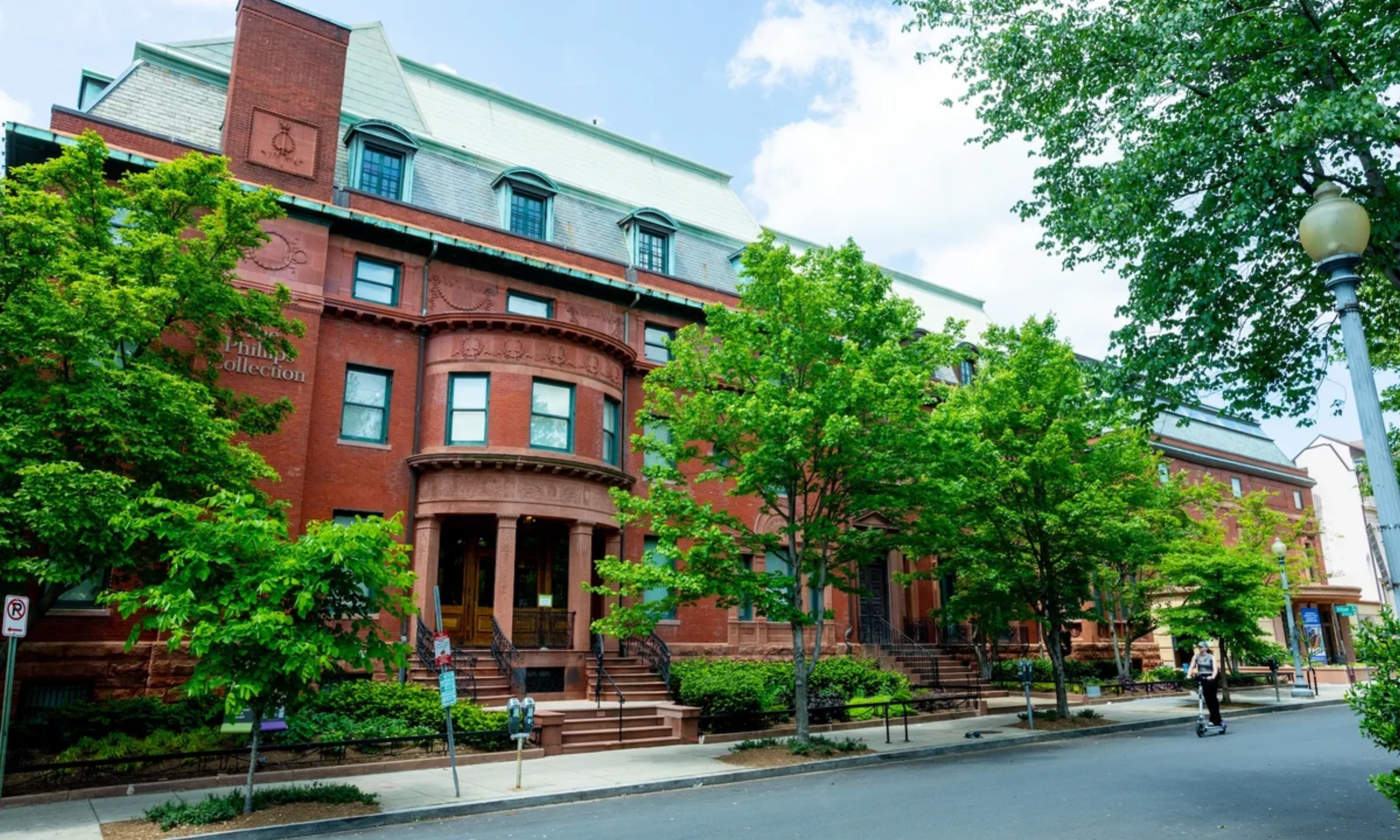
The Phillips Collection has received a $15m gift from the Sherman Fairchild Foundation, the largest in the Washington museum’s history. The headline number is impressive, but the more important fact is where the money is going. Roughly $12m will reinforce endowment strength and long-term planning for infrastructure, maintenance, digital systems, and specialist staff. That allocation matters because museums often prefer to announce support for exhibitions, acquisitions, or glamorous public initiatives rather than for the operational skeleton that keeps the institution credible. The Phillips is doing the opposite. It is saying, with unusual clarity, that cultural ambition depends on payroll, systems, conservation, and deferred capital work as much as it depends on curatorial vision.
That is a serious message in 2026. Museums on both sides of the Atlantic are still dealing with the compound effects of higher operating costs, donor selectivity, labor pressure, and the expectation that they deliver public value while maintaining aging buildings and increasingly complex digital infrastructure. In that context, a gift earmarked for the museum’s invisible functions should be read as more than philanthropic goodwill. It is a vote for institutional resilience. Jonathan P. Binstock’s comments to The Art Newspaper make that explicit: the Phillips had substantial strengths already, but it also had long-deferred needs that required a plan rather than another round of cosmetic optimism.
The Phillips has good reason to take this line. Since becoming director in 2023, Binstock has been reshaping leadership, board structure, and strategic priorities around a museum best known for intimacy rather than for gigantism. Its official institutional platform still presents the Phillips as America’s first museum of modern art, but the phrase only matters if the museum can sustain the labor and conservation environment needed to protect that inheritance. A large gift that goes straight into infrastructure is therefore not unglamorous housekeeping. It is governance by financial means.
Why this is not just another donor prestige story
Record gifts often generate lazy coverage because the script is familiar: donor gives money, museum celebrates confidence, everyone says the future looks bright. What makes the Phillips story stronger is that the museum is not pretending unrestricted optimism alone will solve structural strain. The reported uses of the gift include conservation staffing, maintenance planning, and digital systems, which are precisely the areas that become fragile when institutions prioritize front-end visibility over back-end durability. In other words, the museum is naming the problem that many peers still avoid describing clearly.
That candor makes the gift more interesting than a standard capital splash. Museums have spent the last decade learning that growth stories can conceal brittle operations. New wings, headline exhibitions, and expanded public programming do not automatically produce resilience if the institution lacks the endowment support to maintain buildings, retain specialists, and absorb rising fixed costs. Readers who have followed our earlier guide to museum funding crises will recognize the pattern. Trouble usually surfaces first through deficits, staffing strain, and deferred maintenance, not through an immediate collapse of public-facing rhetoric.
The Sherman Fairchild Foundation has a long history with the museum, including support for conservation. That continuity matters. It suggests the donor is not merely funding a one-off naming opportunity but is backing a management logic that treats conservation and institutional capacity as central public goods. The Phillips’s own programming around events and public engagement depends on those systems. So does the care of works that anchor the museum’s identity. A serious donor understands that a beloved small-to-mid-sized museum can become strategically vulnerable precisely because it does not possess the resource cushion of a giant encyclopedic institution.
Endowment money changes what a museum can refuse
One under-discussed value of endowment support is that it buys institutions time and judgment. Museums with stronger financial cushions can resist the panic logic that pushes weaker organizations toward desperate programming, rushed rentals, unstable staffing, or donor appeasement by spectacle. They can say no more often, and that can matter as much as what they can say yes to. For the Phillips, a major gift routed into resilience rather than short-term splash expands managerial discretion. It helps the museum decide on its own pace of maintenance, staffing, and program design instead of being cornered by the next urgent systems failure.
That is especially important for conservation. The article notes that the Phillips’s conservation program has overseen major technical work, including projects around Pablo Picasso’s The Blue Room. Conservation departments are easy for the public to romanticize and just as easy for boards to underfund if no immediate crisis is visible. Yet conservation is where scholarship, stewardship, and public trust meet. A museum that cannot keep conservation capacity stable is not merely cutting a technical line item. It is weakening the evidence base through which it understands and preserves its collection.
The same logic applies to digital systems. It is tempting to hear that phrase and think of websites or marketing. In practice it can mean collection records, visitor systems, internal workflows, image management, conservation documentation, and the basic informational architecture through which museums function. If these systems lag, everything else becomes harder: scholars get weaker access, staff spend more time compensating for friction, and public engagement suffers. The Phillips appears to understand that digital infrastructure is no longer optional cultural garnish. It is part of the museum’s operating truth.
Phillips@THEARC shows what infrastructure is for
The story would be less compelling if it stopped at endowment mechanics. It does not. The gift also supports Phillips@THEARC and a new annual Art-Play-Practice initiative tied to the museum’s collection. That detail matters because it shows the intended chain from infrastructure to public purpose. The museum is not asking for patience on systems so it can retreat into managerial abstraction. It is arguing that stronger systems and staffing make more meaningful public-facing work possible. The inaugural project’s engagement with Sam Gilliam’s Broad Cape fits that logic well, connecting collection depth, local history, education, and contemporary interpretation.
Gilliam is not a decorative choice here. He is a Washington artist whose relationship to the Phillips is historically loaded, and invoking him allows the museum to align philanthropic infrastructure with a local civic and art-historical argument. The strongest institutional gifts are not just balance-sheet interventions. They reset how a museum narrates its relevance. By linking endowment support to a neighborhood-facing initiative, the Phillips is trying to show that funding maintenance and staffing is not separate from serving audiences beyond Dupont Circle. It is how that service becomes sustainable.
This is also where the museum distinguishes itself from the more familiar expansionist script. The Phillips is not presenting this gift as a mandate to become bigger for the sake of being bigger. Binstock’s remarks suggest something more disciplined: maintaining and enhancing the existing campus so it can be the best version of itself. In a sector that often mistakes scale for seriousness, that restraint reads as intelligence rather than modesty. A museum with a clear sense of form can deploy money more effectively than one always hunting the next oversized proof of ambition.
What the gift says about museum strategy in 2026
At field level, the Phillips story underscores a widening divide between institutions that can convert donor confidence into structural capacity and those still trapped in project-by-project survival. The question is not simply who can attract gifts. It is who can persuade donors that staffing, conservation, maintenance, and systems deserve major support. That takes a board and director willing to talk plainly about unglamorous needs without sounding defensive. It also takes donors mature enough to understand that a museum’s public magic depends on administrative competence.
There is an ideological point here too. Museums often speak as though the noblest philanthropy is the gift that visibly expands public offerings, while support for operations is somehow secondary. That distinction has become harder to defend. The post-pandemic museum has taught us that infrastructure is public-facing, whether audiences see it or not. A conservation hire, a repaired climate system, or a stabilized endowment can do more for long-term public access than a temporary burst of programming unsupported by durable capacity. The Phillips is not abolishing the romance of patronage. It is redirecting it toward realism.
That realism does not remove risk. A single large gift does not solve the structural pressures facing US museums, and it certainly does not eliminate labor questions, donor dependency, or the politics of public trust. But it does change the museum’s room for maneuver, and that matters. In a year when so many institutions are learning that deferred needs eventually become headline problems, the Phillips has secured a resource that lets it address those needs before they become emergencies. That is the real significance of the Sherman Fairchild Foundation’s intervention. Not that a donor wrote a large check, but that the museum appears ready to use it on the parts of institutional life that actually decide whether a public mission can endure.
That distinction should shape how other museums talk to donors now. The strongest ask is no longer always the one attached to a glamorous expansion, a blockbuster promise, or a naming opportunity that photographs well. It may be the quieter argument that a museum’s public worth depends on climate control, records management, conservation intelligence, and enough staffing depth to keep ordinary operations from turning into extraordinary crises. The Phillips has managed to turn that quiet argument into headline news. More institutions should be paying attention.