Mildred Howard Finally Gets the Major Retrospective
Oakland Museum of California opens Mildred Howard's first major retrospective, making overdue recognition a live argument about memory, place and Black life.
Oakland Finally Gives Mildred Howard the Scale Her Work Has Long Demanded
Mildred Howard's first major-museum retrospective opens on 12 June at the Oakland Museum of California, and the timing lands with a sting. Howard is eighty-one, she has been making work for roughly five decades, and the show arrives only after years in which institutions benefited from the political vocabulary of artists like her without always granting them equivalent space or long-form attention. The immediate facts come from recent reporting around the exhibition, but the museum's own page for Mildred Howard: Poetics of Memory makes the scale plain: this is the first major museum exhibition devoted to a Bay Area artist whose collages, found-object sculptures and installations have been shaping arguments about memory and Black experience for decades.
The retrospective has the chance to do more than correct the record. It can demonstrate why Howard's work feels newly urgent in a museum landscape that talks constantly about repair, civic engagement and historical accountability. Howard has been working those questions for years through glass, found materials, monument critique and spatial storytelling. She does not treat memory as a sentimental archive. She treats it as a fought-over structure embedded in neighborhoods, labor histories and the physical residues of American power. That gives the exhibition a live edge. It is not only a career survey. It is an argument about what the institution failed to see when it still imagined artists like Howard as peripheral.
Her House, Studio and Archive Refuse the Neat Museum Separation Between Life and Work
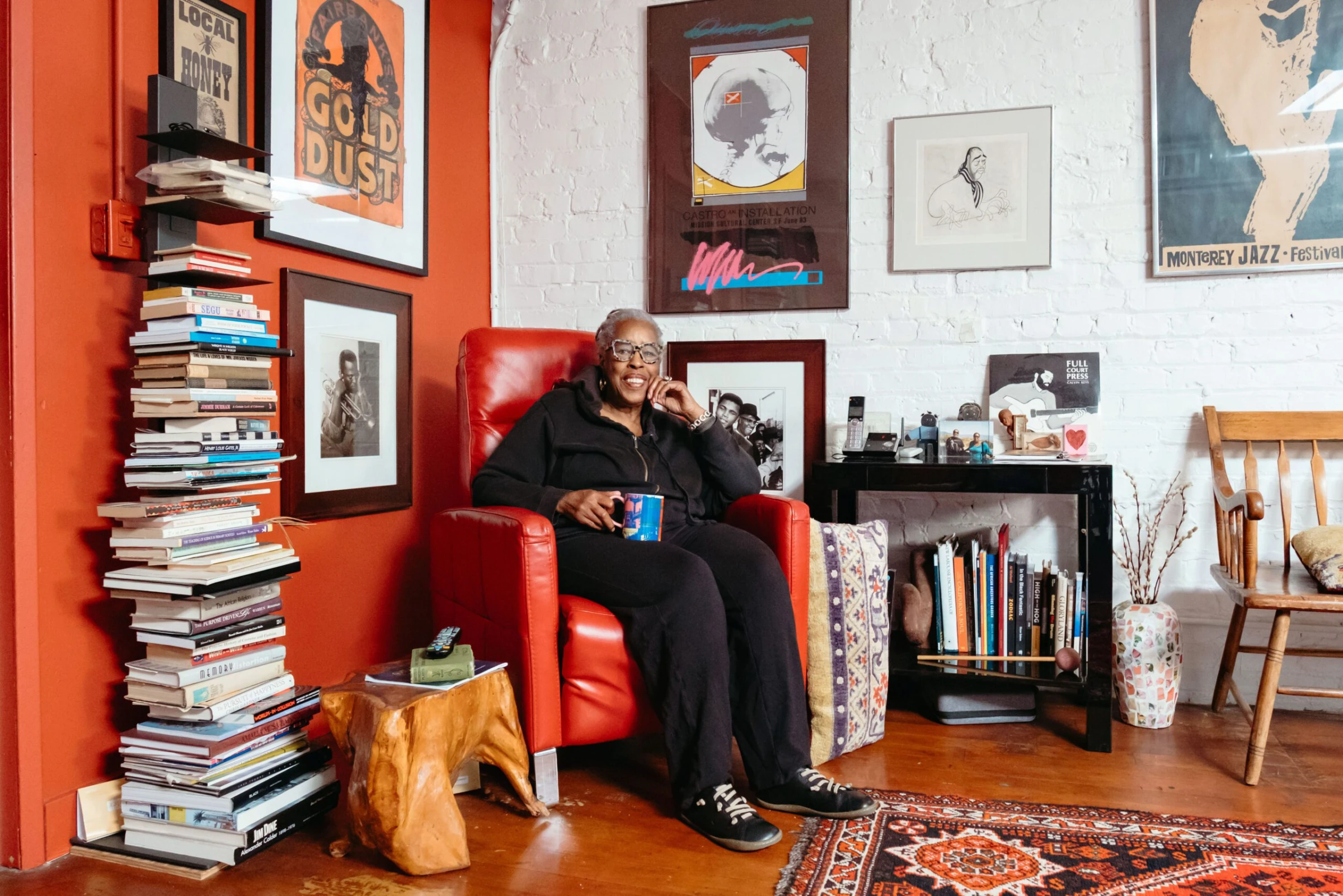
One of the most compelling aspects of the exhibition setup is that curators have reportedly worked through the textures of Howard's studio life rather than pretending biography is an optional supplement. The museum describes archival material from her Oakland studio as a core part of the show, a decision that matters because Howard's practice has always resisted the fantasy that art can be separated from the social systems that produce it. Too many retrospectives convert artists into tidy sequences of objects, flattening the social metabolism out of the work. Howard's practice will not survive that flattening.
Houses recur in her installations and sculptural forms not as decorative symbols but as containers of dispossession, aspiration and racialized belonging. Her family history in the East Bay, the pressure of displacement, and the long civic struggle around who gets to remain in place all run through the work's formal decisions. When she returns to structures, keys, locks and glass, she is returning to the material grammar of access. The museum context can sharpen that if it lets viewers see the work as an index of urban change rather than a loose inventory of autobiographical motifs.
The Retrospective Also Reframes Howard's Recent Rise
The last few years have brought a cluster of recognitions that can easily be misread as sudden discovery. The museum notes Howard's five-decade practice, while the exhibition materials also highlight the breadth of her Bay Area public work and the community of artists around her. Those developments should not be mistaken for proof that the field naturally corrects itself over time. What they actually reveal is how institutional attention tends to move in bursts once a threshold of consensus is crossed. By the time the museum world decides an artist is overdue, the artist has usually spent decades carrying work that would have justified the attention all along.
That pattern matters beyond Howard herself because the art world often celebrates overdue recognition as if delay were a neutral condition. It is not. Delay shapes markets, archives, scholarship, acquisition histories and public memory. A major retrospective at eighty-one is still significant, but it also prompts a blunt question: what conversations might museums have had earlier if they had treated Howard's work as central instead of belatedly indispensable? Her retrospective can become more than a victory lap if it makes that lag visible. Museums should not get to congratulate themselves for eventually catching up without also exposing the structures that made catching up necessary.
Monuments, Public Memory and the East Bay Political Imagination
Howard's newer works dealing with colonizers, public symbols and wrapped monuments show why this retrospective arrives at exactly the right political temperature. The Oakland Museum emphasizes that the exhibition connects personal memory to broader stories that define communities. That line is not curatorial filler. It points to the central power of Howard's work: she turns the material remains of public life into arguments about who has been honored, who has been hidden and who has been made to live inside other people's commemorative systems. In her hands, monumental language stops looking stable and starts looking embarrassed, brittle and open to reversal.
That strategy links her retrospective to larger debates already animating American institutions. We have seen related tensions in our coverage of the museum sector's America 250 reckoning. Howard's distinction is that she does not outsource critique to wall text. The critique is built into the altered body of the object itself. It is visual first, explanatory second. That makes the work unusually effective inside museums, where visitors often encounter charged histories at a glance before they reach the label. Howard knows that sequence and uses it mercilessly.
What the Oakland Museum Can Prove With This Show
The Oakland Museum of California is well placed to make this retrospective feel earned rather than opportunistic. Howard's story is inseparable from Bay Area civic, artistic and family histories, and that local density gives the museum a chance to show what regional institutions can do when they work from proximity instead of parachuting in after national validation arrives. The museum's exhibition page stresses Howard's ties to artists such as Betye Saar, Raymond Saunders and David Ireland, as well as the way her public artworks honor overlooked Bay Area histories. If the show folds together personal materials, public commissions, archival documents and difficult urban context, it could model a form of retrospective practice that refuses the split between formal appreciation and social history.
That also means the museum has less room for generic praise. Howard's work should not be framed as merely resilient or timely. It needs to be shown as structurally intelligent, materially exacting and politically unsparing. The strongest version of this exhibition would make clear that Howard is not important because the field now wants more neglected voices. She is important because she built a language adequate to the contradictions of California urban life, Black memory and public sculpture, and she did so with remarkable formal control. That is a stronger and more respectful claim.
What Comes Next After the Overdue Celebration
The test after opening week is whether this retrospective changes Howard's institutional position or simply crowns it for a season. A serious result would mean acquisitions, broader curricular uptake, new scholarship and more museums willing to stage work that keeps the friction intact instead of sanding it down for audience comfort. It would also mean recognizing that Howard's practice belongs in any account of postwar and contemporary American art that takes public space, race and memory seriously. The exhibition's support structure, including backing noted by the museum from the Andy Warhol Foundation for the Visual Arts, suggests that the resources are there to make this more than a ceremonial event.
There is a lesson here for curators as well. Overdue recognition is not a genre. It is a symptom. When a retrospective like this lands, the right response is not only admiration for the artist but scrutiny of the institutions that arrived late. Howard has done her part for decades. The burden now shifts to museums to show that this is not another short-lived correction, but a reordering of what kinds of artistic intelligence they are prepared to center and sustain.
If the Oakland exhibition succeeds on those terms, it will feel less like a gracious tribute and more like a reset. That would be fitting. Howard's work has never asked politely for a place in the room. It has been building the room differently all along.
There is also a practical museum lesson embedded here. Howard's retrospective suggests that institutions should spend more time following the connective tissue around an artist's work: archives, public commissions, neighborhood histories and intergenerational influence. Too often museums wait for a market cue or a biennial spotlight before acting. Howard's career shows how much richer the result can be when a museum traces an artist through the civic life she has already transformed. If this exhibition helps other institutions understand that responsibility, then its impact will extend well beyond Oakland and well beyond a single season of overdue acclaim.
It also raises the question of what museums do after the corrective headline fades. The strongest outcome would be for Howard's work to enter more permanent teaching collections, survey courses and comparative exhibitions about public memory, urban change and Black spatial history. That kind of follow-through is harder than opening a retrospective, because it requires institutions to keep rearranging their own hierarchies after the applause subsides. If Oakland can help trigger that next step, the show will have changed more than one artist's visibility. It will have changed the terms under which similar artists are recognized.