Hauser & Wirth Backs a Menorca Residency
Rashid Johnson and Sheree Hovsepian's new Casa Gràcia program turns Menorca into a test case for whether residency culture can be more than lifestyle branding
Casa Gràcia gives Menorca a residency with real art-world gravity attached
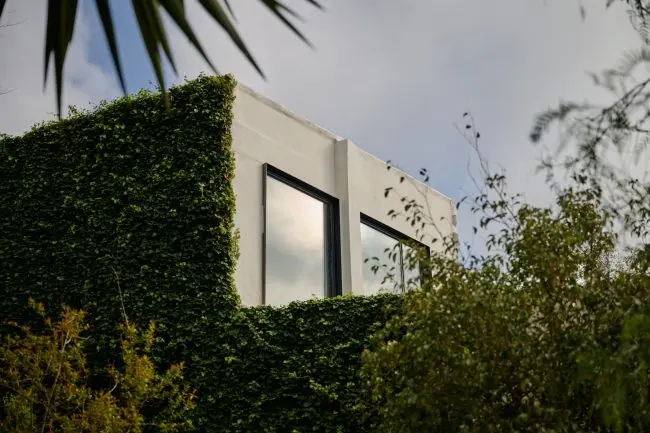
Rashid Johnson and Sheree Hovsepian are launching The Residency at Casa Gràcia in Menorca with Hauser & Wirth, and the announcement lands at a moment when the words artist residency can mean almost anything from genuine refuge to lightly disguised luxury marketing. On paper, this program has credible ingredients. Casa Gràcia will offer a 300-square-meter studio, a study, and a large private walled garden in Mahón. Five slots will be awarded each year, with three visual artists staying up to three months and two writers staying up to six. Applications are open now, with particular encouragement for applicants from the Balearic Islands and Spain.
That may sound straightforward, but the significance lies in who is attaching their names and infrastructure to the project. Johnson is not a decorative celebrity founder. Hovsepian has articulated Menorca as a place whose archaeological and emotional atmosphere expands thought. Hauser & Wirth is providing a local institutional spine through its Menorca art center on Illa del Rei, which opened in 2021 and has already helped convert the island into a recognizable node in the gallery's wider geography. In other words, this is not a rural fantasy detached from art-world logistics. It is a residency inserted into an existing network of cultural prestige, hospitality, and international circulation.
The strongest part of the pitch is that it does not pretend outcomes can be manufactured
According to the announcement, the residencies are self-directed and carry no obligation to produce a public presentation. That detail is easy to glide past, but it is the difference between a residency that respects time and a residency that merely rents atmosphere. Too many contemporary programs promise slowness while quietly demanding content, public visibility, or donor-facing proof that something happened. Casa Gràcia's stated refusal of a mandatory outcome is a smart move because it recognizes that the value of a residency often lies in the work that does not appear immediately legible to institutions.
It also gives the project a chance to separate itself from the growing ecosystem of experience-branded art initiatives. When galleries expand into hospitality, land stewardship, publishing, and residencies, they often talk about care while building ever larger soft-power portfolios. The danger is obvious: artists become symbolic proof that a place is culturally serious, while the institution gets halo effects from words like reflection, community, and experimentation. Casa Gràcia will need to prove that its language of renewal and inner space is matched by material conditions that genuinely favor artists rather than simply enhancing Menorca's desirability as a destination.
The selection board is a telling signal. With figures such as Patrick Radden Keefe and Hank Willis Thomas involved, the residency is positioning itself as more than a vacation compound for the already connected. The challenge will be whether that promise survives the first cohort. Selection lists are where lofty rhetoric either hardens into principle or evaporates into brand maintenance.
There is also a governance question embedded in this structure. When a residency is founded by artists but supported by a global gallery, who ultimately sets the tone if interests diverge? Artists typically care about protection from noise, interruption, and opportunistic exposure. Gallery systems, even at their most thoughtful, are built around visibility, relationships, and narrative control. Those pressures do not have to cancel each other out, but they will shape how the residency functions. Casa Gràcia will be judged not only by who gets in, but by whether the artists' priorities remain primary once programming calendars, visitor expectations, and institutional prestige begin to accumulate around the site.
Menorca is becoming an art destination, and that cuts both ways
Hauser & Wirth's Menorca presence has already demonstrated how galleries now use landscape, restoration, and site-specific cultural programming to build a broader institutional identity. The island offers history, architecture, Mediterranean light, and enough distance from major capitals to sell the fantasy of productive retreat. That can be genuinely useful. Artists often do need environments that interrupt deadlines, social obligations, and urban velocity. But the market has learned to monetize exactly that need.
Menorca's archaeological history gives the residency a second kind of appeal. Hovsepian's statement about ancient presence and expanded inner space is not empty poetry; it points to the way island settings are often understood as temporal as well as geographic breaks. Artists arrive expecting slowness, but also expecting contact with deeper time. That expectation can be fruitful if it leads to careful work. It can also drift into romantic projection, where the place becomes a canvas for imported spiritual hunger. A serious residency has to welcome artistic response without reducing local history to mood or scenery.
The important question is whether Casa Gràcia becomes part of Menorca's cultural fabric or merely another layer of selective access draped over it. The announcement's emphasis on local engagement is encouraging, and prioritizing applicants from the Balearics and Spain could ground the program in more than imported glamour. Still, every island residency has to navigate a familiar tension: the place is presented as spiritually charged and historically rich, but it can also become a backdrop onto which international art actors project their own hunger for authenticity.
Readers who spent time with our guide to reading AI oracle installations will recognize the broader issue. In both cases, institutions often borrow the language of depth, mystery, and transformation because those tones flatter contemporary cultural consumers. The test is whether the structure underneath the language can bear scrutiny.
Residency culture is one of the few places where the art world still debates time seriously
That is why this launch matters beyond Menorca. Residencies remain one of the rare institutional forms that can still argue for time as a medium rather than a scheduling problem. Museums and galleries are increasingly optimized around openings, fairs, donor events, and content cycles. Residencies make a different promise: protected duration, partial withdrawal, and a looser relation between labor and immediate visibility. When they work, they support practices that would otherwise be squeezed out by speed.
But the category is under pressure. Some residencies now function as prestige sorting mechanisms, travel perks, or lifestyle supplements for artists who are already well placed. Others are stretched thin by precarious funding and vague public missions. Casa Gràcia enters this field with stronger branding than most and better architecture than many. That gives it advantages, but it also raises the standard. If a program backed by Hauser & Wirth cannot protect artists from soft instrumentalization, then all the language about sanctuary starts to look cosmetic.
The writing component is especially worth tracking. Many residencies claim to support writers, but their imagery, staff expertise, and public narrative remain overwhelmingly visual. Offering two writer residencies of up to six months suggests a different tempo from the shorter artist stays and could become one of the program's strongest features if treated seriously. Writers often need time with fewer event demands and more privacy than visual-arts institutions naturally provide. If Casa Gràcia can support that slower intellectual labor rather than treating it as a side ornament to a photogenic campus, it may distinguish itself from the crowd faster than through any exhibition tie-in.
What to watch when the first cohort is named
The first cohort will tell us more than the founding statements do. Watch whether the artists and writers span different generations, geographies, and levels of market incorporation. Watch whether the local emphasis holds. Watch whether the residency develops public conversation without demanding overexposure from residents. And watch whether Hauser & Wirth keeps the residency adjacent to its exhibition machine or lets it develop a tempo of its own.
Watch, too, for the mundane evidence that usually separates durable residencies from atmosphere-heavy launches. Are residents given enough money to live without scrambling for side work? Are there translation resources if the program wants local engagement across languages? Are alumni relationships cultivated, or does each cycle function as a reset for publicity purposes? These questions sound operational because they are. But operations are where seriousness becomes visible. The first glamorous announcement is easy. The second year budget is harder.
The broader art world should care because residencies are one of the few places where institutions can still redistribute time rather than simply redistribute attention. If Casa Gràcia works, it will not be because Menorca photographs well or because Hauser & Wirth knows how to frame cultural experiences elegantly. It will be because the program manages to convert money, property, and organizational infrastructure into actual concentration for artists and writers. That remains one of the rarest and most valuable services an art institution can provide.
For now, Casa Gràcia looks more substantial than the average art-world retreat announcement because it connects artists, place, architecture, and institutional support in a legible way. But residency culture does not need more mood boards. It needs programs willing to defend artists' time against the pressures of branding, extraction, and accelerated visibility. Menorca has a compelling new residency. The next step is to make sure it stays a residency, not just a beautifully furnished idea.