How to Read AI Oracle Installations in 2026
A practical guide to telling serious AI oracle installations from shallow tech theater by tracking language, ritual, labor, and power
Start by asking what kind of authority the installation wants to borrow
AI oracle installations are having a moment because they condense several contemporary cravings into one experience: technological novelty, personalized attention, predictive fantasy, and the theatrical pleasure of being addressed directly. That mix can produce serious art, but it can also produce expensive nonsense. The first thing to ask is not whether the technology is advanced. Ask what kind of authority the work is trying to borrow. Is it borrowing from therapy, divination, customer service, wellness culture, religious ritual, startup optimism, surveillance systems, or some blend of all six? The answer tells you what emotional contract the installation is proposing before you even evaluate whether it is artistically persuasive.
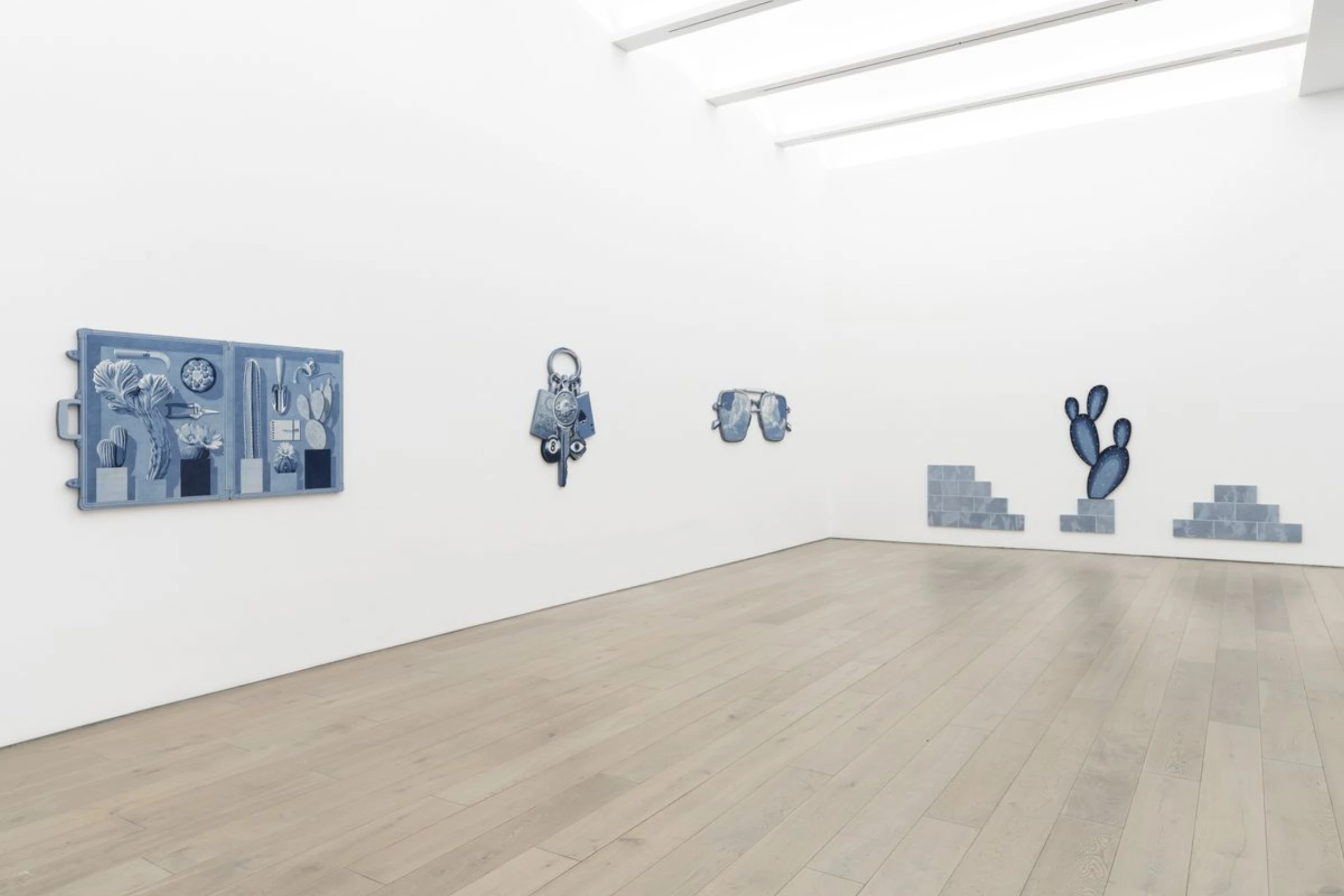
Nick Doyle's Collective Hallucinations at Perrotin is useful precisely because it makes that borrowed authority visible. Its AI oracle, Ava, operates inside a psychic-parlor set rather than a neutral tech interface, which means viewers are invited to confront the overlap between machine guidance and occult commerce. That overlap should be one of your main reading tools whenever you encounter similar work. What older cultural form is the machine impersonating? Very few oracle installations invent a new ritual from scratch. Most smuggle credibility from rituals audiences already recognize.
If the answer seems to be "all of the above, but vaguely," be careful. Weak installations often accumulate references to mystery, healing, consciousness, data, and destiny without specifying how those categories interact. Strong installations are more exact. They do not merely place a screen in a dark room and let ambiance do the work. They define the terms of encounter clearly enough that you can disagree with them. Serious art risks intelligibility. Decorative futurism prefers fog.
Read the language as closely as you would read a wall label or a sales script
Most AI oracle works live or die on language. That means you should listen to the system the way you would listen to a politician, therapist, medium, or app onboarding flow. What verbs does it use? Does it tell you to breathe, trust, optimize, surrender, align, reveal, purchase, or confess? Does it speak like a friend, a guru, a hotline agent, or a prediction engine? These choices are not surface decoration. They are the work's politics. Language decides whether the installation is exposing manipulative speech patterns or accidentally reproducing them without enough friction.
A good comparison point is how institutions frame adjacent work about ecology, spirituality, and altered states. The newly announced Bergen Assembly 2028 program language speaks in imagery of winds, whispers, animals, and clouds. That language may or may not succeed at exhibition scale, but it at least declares its atmosphere openly. Oracle installations should be read with the same scrutiny. If the machine's speech feels universal, ask whom that universality serves. Usually it serves the system's desire to sound intimate to everyone while remaining accountable to no one in particular.
It helps to read that speech against other institutional models too. Look at how the Serpentine's General Ecology program positions technology inside broader questions of environment, relation, and public life, or how the museum-exhibition essay form often turns technical systems into legible curatorial narratives. Even when those examples are not oracle works, they train the same critical muscle: listen for the point where language stops describing a system and starts trying to enchant you into trusting it.
Watch for repetition too. Repetition can be a deliberate artistic strategy when it reveals how automated empathy works. But repetition can also expose that the installation has very little to say. If every answer sounds like a horoscope generated from interchangeable reassurance phrases, the piece may still be culturally diagnostic, but only if the artist has built enough framing around that emptiness. Otherwise you are just watching a software limitation dressed as mystery.
Study the room itself because staging is part of the argument
AI oracle art is never only about the algorithm. It is about furniture, queues, props, lighting, privacy, and bodily positioning. Are you seated alone? Are you on display while interacting? Do you enter a booth, a chapel, a help desk, a kiosk, or a domestic interior? Those choices tell you whether the work wants to feel confessional, transactional, ceremonial, or clinical. Serious installations know that architecture is part of the prompt. Shallow ones treat staging as a mood board pasted around software.
This is one reason commercial galleries sometimes produce unexpectedly revealing oracle works. Their spaces are already haunted by sales intimacy, theatrical exclusivity, and highly managed forms of attention. When an artist leans into those conditions, the result can expose how easily spiritual language and luxury presentation reinforce one another. Readers should keep that in mind when moving between gallery installations and museum commissions. A museum may frame the oracle as public reflection, while a gallery may frame it as collectible atmosphere. Neither frame is innocent. The question is whether the artist turns the frame into content.
Also pay attention to where the machine sits in relation to human labor. Is a staff member guiding you through the interaction? Is there maintenance work happening offstage? Did the artist script the outputs heavily? Many installations market themselves as autonomous intelligence while relying on extensive curatorial, technical, and front-of-house labor. That does not make them fraudulent. It does mean that labor invisibility is part of what you are meant to notice. If the installation promises disembodied wisdom, ask who is carrying the body.
Separate critique of AI from mere use of AI
One of the laziest habits in contemporary criticism is to assume that any artwork using AI is automatically reflecting on AI. It is not. Sometimes the artist is just using a trendy interface to deliver a familiar aesthetic experience. To tell the difference, ask what would remain if the machine layer were removed. Would the installation still have a recognizable structure of meaning? In Doyle's case, the answer is yes because the work also operates through denim, Americana, strip-mall architecture, and the mythology of western self-invention. The AI component matters because it intensifies those themes, not because it substitutes for them.
You can apply the same test elsewhere. If the work becomes conceptually empty once you strip away the chatbot, voice model, or predictive gimmick, then the technology is likely doing too much of the artistic labor. That does not always doom the piece, but it lowers the threshold for skepticism. By contrast, when the machine is one register in a larger network of references, the installation tends to hold up better over time because it is not dependent on novelty alone.
This distinction matters even more now that AI aesthetics are becoming ordinary. The first generation of viewers could be impressed by the fact of interaction. That phase is over. In 2026, interactivity is cheap. The harder question is whether the interaction sharpens your understanding of persuasion, faith, prediction, labor, loneliness, or power. If it does not, the work may still be entertaining, but it is not doing much critical work.
Track what the installation says about belief, not just technology
The most interesting oracle works are never only about computation. They are about belief systems. They ask why secular audiences still crave prophecy, why personalization feels consoling, why guidance sold as neutral so often carries economic or ideological assumptions, and why machine responses can feel intimate even when we know they are assembled statistically. In other words, the real subject is often us. The machine is simply an efficient device for showing how willing contemporary subjects are to outsource reflection while calling that outsourcing insight.
This is where historical comparison helps. Long before AI, art and literature were full of automated or delegated forms of revelation: speaking statues, spirit photography, bureaucratic questionnaires, self-help manuals, telephone hotlines, fortune machines, and therapeutic scripts. Oracle installations should be read against that lineage. They are not eruptions from nowhere. They belong to a long history of mediated authority, now updated through computation and interface culture. Institutions that present them as unprecedented often make the work look thinner than it is.
If you need a practical question while standing in the room, use this one: what kind of person does this installation imagine me to be? A seeker? A consumer? A patient? A data subject? A lonely citizen? A co-author? The answer will often reveal the piece faster than technical explanation will. It will also tell you whether the work has made enough space for resistance, or whether it quietly assumes your consent from the start.
End by looking for the pressure point the work cannot smooth over
Every serious oracle installation should contain a pressure point it cannot fully resolve. Maybe the work wants to offer intimacy while exposing the machinery that falsifies intimacy. Maybe it wants to critique prediction while still delivering compelling predictions. Maybe it stages ritual sincerely while also satirizing ritual commerce. Those contradictions are not flaws to be eliminated. They are often the reason the work matters. If an installation feels too clean in its own self-understanding, it may be because it has evacuated the discomfort that gives oracle culture its power.
That is why readers should resist the binary of "pro-AI" versus "anti-AI" when approaching these works. The more useful question is whether the installation discovers something about contemporary authority that could not have been shown as sharply through another form. Sometimes the answer will be no. Sometimes, as with Doyle's Perrotin show, the answer may be yes because the machine is only one actor in a broader drama of myth, commerce, and emotional automation.
When in doubt, return to the oldest critical habit: describe what actually happens, then ask who benefits from it. Who gets to speak? Who gets to interpret? Who leaves with authority enhanced, and who leaves having surrendered a little more agency to the voice in the room? If you can answer those questions clearly, you will already be reading AI oracle installations better than most of the market copy written around them.