Louvre Picks Architects for New Renaissance
The Louvre's choice of Selldorf and STUDIOS Architecture makes circulation, security, and the Mona Lisa problem central to Paris's next museum remake
The Louvre Has Chosen Designers Who Specialize in Difficult Buildings
The Louvre's announcement of the team behind its Nouvelle Renaissance overhaul is not just another architecture appointment. By selecting STUDIOS Architecture Paris and Selldorf Architects for the Grande Colonnade competition, the museum and the French state signaled that the next phase of the Louvre will be judged less by icon making than by whether it can untangle circulation, public comfort, and the institution's most famous bottleneck. The official Ministry of Culture statement describes the plan as a response to technical wear, climate and security pressures, and the need to reconnect the eastern Colonnade to the city. That framing matters. The project is not being sold as a decorative add on. It is being sold as operational surgery on the most visited museum in the world.
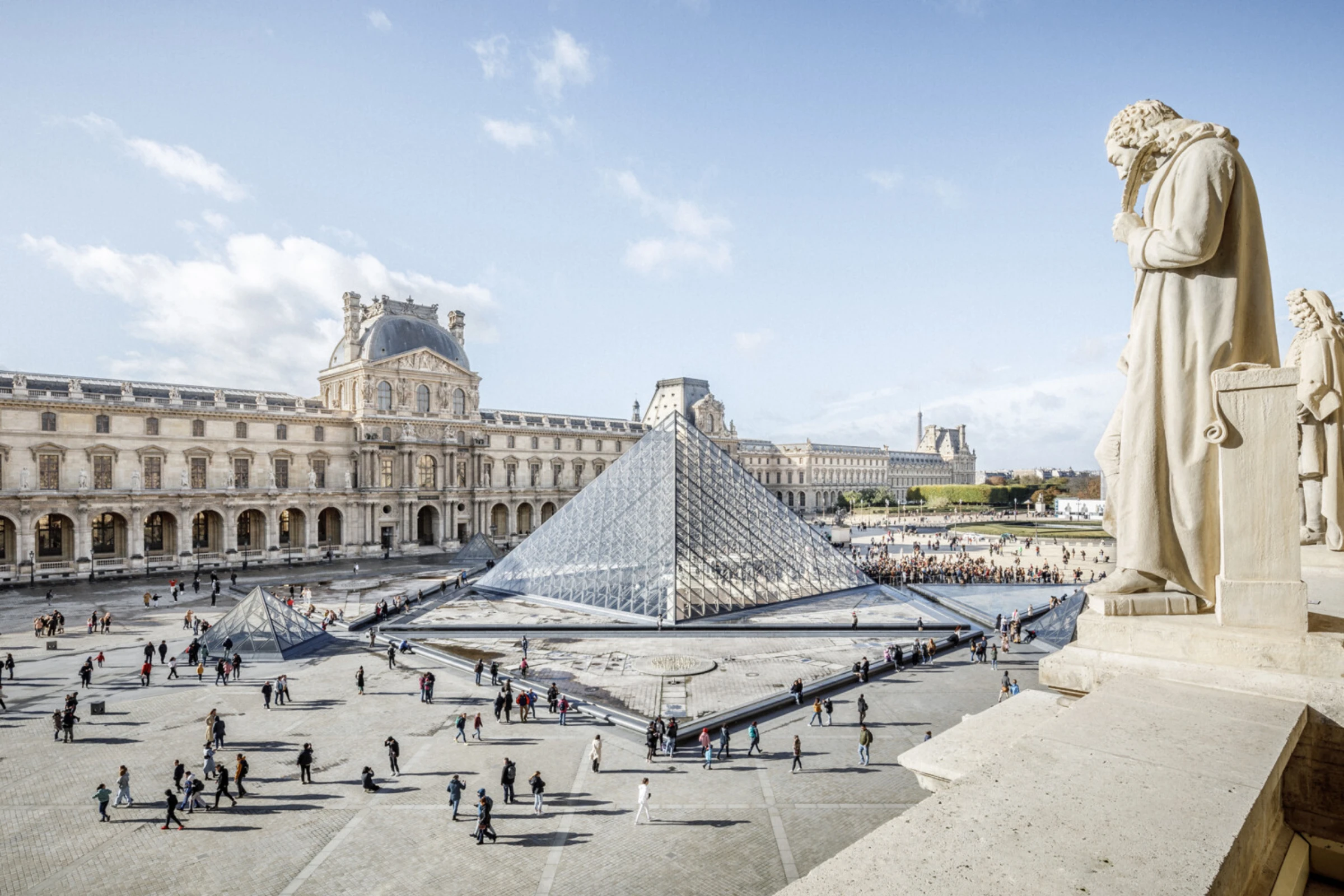
The choice of Selldorf is especially revealing. Her recent work at the Frick and the National Gallery's Sainsbury Wing has been praised for precision rather than bombast. She is not the architect of spectacular disruption. She is the architect institutions call when they need to modernize fragile prestige without looking reckless. The ministry's release stresses clarity of routes, sobriety, vegetation, and security, while the Louvre's own Nouvelle Renaissance project page frames the overhaul as a long term reinvention of visitor experience. Together those texts tell a blunt story: the museum knows the old model of funneling everything through the Pei pyramid has reached its limits.
The Real Problem Is Not Style but Visitor Flow
For years, public discussion about the Louvre's future has drifted toward the same visible symptom: the crush around the Mona Lisa. But the deeper issue is systemic. The Louvre now has to absorb security regimes, climate demands, digital infrastructure, and mass tourism pressures that were not imaginable when the Grand Louvre project reshaped the museum four decades ago. According to the ministry, the winning scheme creates new access points from the east, organizes movement from the city's edge toward the Colonnade, and introduces underground entries connected to new exhibition areas and a dedicated Joconde route. That is less glamorous than a signature roofline, but far more consequential. Museums fail visitors not only when they lack masterpieces, but when they turn every masterpiece into a traffic jam.
The Louvre has already made clear that the renovation package includes a separate space for the Mona Lisa, additional temporary exhibition capacity, and new service areas such as dining and bookshop spaces. Those are not minor amenities. They are part of a broader institutional admission that blockbuster attendance cannot simply be endured; it has to be designed for. When museums refuse that truth, they end up preserving prestige at the expense of actual looking. The Louvre is trying to avoid that trap, even if the politics of doing so will be messy. Any change to the palace, its moats, and the symbolic east facade will trigger arguments about heritage, commerce, and who the museum is really for.
That tension is already familiar across Europe. Large museums increasingly promise that expansion will solve overcrowding, improve scholarship, and democratize access all at once. Sometimes it does. Sometimes it merely redistributes pressure and adds expensive rhetoric about openness. artworld.today has seen the same pattern recently in debates around the Borghese Gallery expansion backlash, where the language of improvement collided with public suspicion about heritage compromise. The Louvre case is larger and more technically serious, but it belongs to the same category of cultural governance problem: how do you alter beloved institutions without making them feel either fossilized or overmanaged?
Why the Grande Colonnade Competition Matters Politically
The competition is also a test of state power. The ministry's release repeatedly emphasizes consultation with Louvre staff, city officials, state services, and the public. That is partly administrative necessity, but it is also political stage management. Major museum works in France are never purely curatorial decisions. They are exercises in national symbolism, urban planning, and cultural messaging. Reactivating the east west axis, landscaping the moats, and reconnecting the Colonnade to Paris are choices about how the Republic wants its flagship museum to address the city in the twenty first century.
There is an unmistakable subtext here: the Louvre cannot remain a monument that performs global centrality while relying on aging infrastructure and exhausted circulation logic. President Emmanuel Macron's original endorsement of the broader project made that clear, and the museum's donor facing material reinforces it by openly appealing for patrons to help build the Louvre of tomorrow. This is where the romantic language of renaissance deserves scrutiny. Renovation on this scale always carries winners and losers. New entrances privilege some routes over others. Dedicated display zones can clarify a visit, but they can also isolate star works into quasi separate attractions. Commercial services improve comfort, but they also make the museum feel more retail managed. None of those tensions are disqualifying. They simply should not be hidden by uplift language.
The winning team's promise, if the early descriptions hold, is disciplined integration rather than spectacle. That is the correct instinct. The greatest risk for the Louvre was not choosing a timid architect. It was choosing a flashy one who confused visibility with intelligence. In a building where every intervention is judged against centuries of accumulated authority, restraint can be radical. The real question is whether restraint will survive the years of stakeholder negotiation, budget pressure, and symbolic overloading that tend to inflate projects like this far beyond their clearest initial logic.
What Comes Next for the Museum Everyone Thinks They Know
What makes the commission unusually revealing is the way it treats heritage as an active constraint rather than a decorative excuse. The ministry release notes that the proposal was selected for its urban and landscape integration, security awareness, and clarity of movement. That language is bureaucratic, but it translates into a sharp curatorial question: can visitors actually encounter the Louvre as a museum rather than as an obstacle course organized by anxiety and reputation? The answer depends on design details that rarely dominate headlines, from the sequence of thresholds to the placement of ticketing, retail, and rest areas. Anyone following the project should therefore read the official Louvre press announcement alongside the ministry text, because the overlap and the differences reveal how the museum is trying to balance heritage symbolism with day to day practicality.
The donor and governance dimension matters just as much. The Louvre's public facing renovation material openly invites patrons to help finance its reinvention, which means architecture here is inseparable from fundraising. That can produce excellent results, but it also creates pressure to promise everything at once: wider access, better scholarship, greener infrastructure, and a more photogenic city interface. Readers should be cautious whenever an expansion project sounds frictionless. If the Louvre eventually delivers a calmer, more legible visitor experience, it will do so through years of compromise among curators, security planners, politicians, unions, contractors, and donors. The announcement is the cleanest version of the story the institution can tell before those negotiations leave visible marks.
The Ministry of Culture describes this moment as a founding step rather than a finished plan, and that phrasing is honest. The design now moves into a period of consultation and refinement with the Louvre, state services, the City of Paris, staff, and the public. That means the most consequential arguments are still ahead: how much disruption the museum can absorb during works, how the new Mona Lisa route will reshape the visitor map, how much vegetation and public space change can occur without heritage backlash, and how the project's sustainable ambitions will be measured rather than merely declared.
For the wider museum field, the Louvre decision is worth watching because it condenses several sector wide pressures into one commission. Can a global museum modernize without becoming theme park efficient? Can it ease access while preserving depth? Can it use architecture to improve looking, rather than just increase throughput? Selldorf and STUDIOS Architecture have been hired because they look capable of answering yes. But architecture appointments are promises, not achievements. The real test begins when drawings harden into trade offs, and when the world's most visited museum has to prove that repair and transformation are compatible rather than mutually flattering slogans.
There is also an institutional psychology to the appointment. The Louvre is not just solving for architecture; it is solving for trust. Staff need to believe the works will not compromise daily operations beyond reason. Visitors need to believe a new route and a new Mona Lisa space will make the museum more intelligible rather than more scripted. Donors need to believe the project is ambitious without being reckless. Politicians need to believe it advances Parisian prestige while respecting heritage. That is an impossible brief for almost any designer, which is precisely why the selection of a firm known for controlled, meticulous interventions should be read as a political choice as much as an aesthetic one.
That skepticism is healthy. Great museums deserve renovation plans that survive scrutiny rather than applause alone.