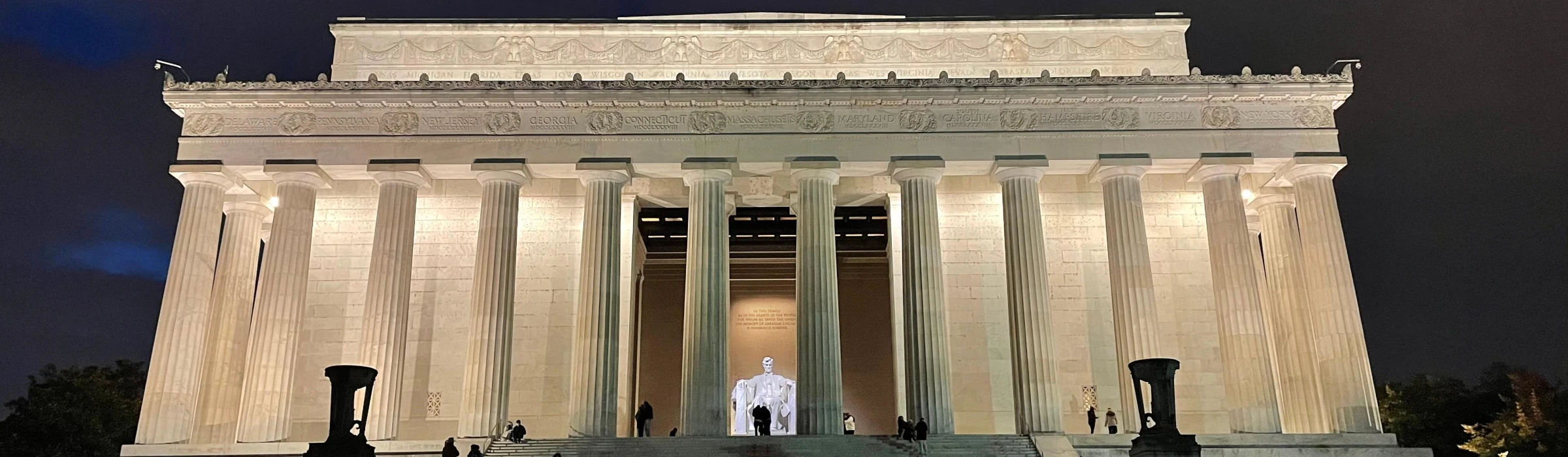
Lincoln Memorial Undercroft Opens to a Sold-Out Public
The new museum beneath the Lincoln Memorial shows how heritage sites now package infrastructure, access, and national myth as one visitor experience.
A famous monument is getting a second stage below ground
The Lincoln Memorial has long functioned as one of the United States' most overdetermined civic spaces: a presidential shrine, a protest backdrop, a tourist checkpoint, and a cinematic symbol all at once. Now the monument is adding a new interpretive layer beneath the marble theatre most visitors already know. As ARTnews reported, the National Park Service is preparing to open a 15,000-square-foot undercroft museum below the memorial, and the first tickets sold out immediately. That speed matters because it signals not just curiosity but a broader appetite for the hidden infrastructure of national icons.
The undercroft has always existed as a practical underside to a symbolic monument. What changes now is the decision to make that underside legible. Visitors will be invited into the structural and historical logic of a site normally experienced only from above, where Abraham Lincoln appears as purified allegory. Museums and heritage agencies increasingly make this move when they need to refresh relevance without altering the beloved surface. They open the backstage, literal or metaphorical, and present access itself as the attraction.
That can be genuinely illuminating. It can also be a way of turning maintenance, architecture, and deferred interpretation into a new ticketed narrative of discovery. The Lincoln Memorial project therefore deserves attention not only as a visitor amenity but as a case study in how public heritage institutions now market revelation. The hidden chamber is no longer just hidden space. It becomes a story about process, making, preservation, and democratic access.
The National Park Service is reframing monument literacy
The National Park Service's Lincoln Memorial page still introduces the site in familiar monumental language, calling Lincoln an enduring symbol of unity, strength, and wisdom. That civic register is expected. The more interesting move is the expansion of what visitors are being asked to understand. Instead of stopping at the neoclassical shell and Daniel Chester French's seated Lincoln, the agency is inviting the public to think about engineering, construction, and the memorial's layered public life.
That shift mirrors a broader change in heritage interpretation. Public institutions have learned that audiences increasingly want sites to explain how they were made, how they function, and how their meanings have been contested over time. The old model of reverent presentation is no longer enough, especially for audiences shaped by documentary culture and by constant access to archival fragments online. The undercroft museum meets that expectation by turning the memorial into an object of analysis rather than only an object of awe.
There is political intelligence in that choice. The Lincoln Memorial is not neutral terrain. It has hosted Marian Anderson, Martin Luther King Jr., antiwar demonstrations, commemorative ceremonies, and endless recirculations of national myth. A below-ground museum allows the Park Service to narrate some of that history while also steering it. Interpretation is never just education. It is governance through storytelling. Whoever controls the undercroft controls a new layer of how the monument is read.
Infrastructure has become part of the cultural product
One reason the sold-out opening matters is that it confirms a pattern we have been seeing across museums, memorials, and cultural campuses. Infrastructure is no longer backstage. It is increasingly presented as part of the cultural product itself. Visitors are asked to care about trams, entrances, environmental systems, conservation labs, and hidden chambers because institutions understand that transparency can generate both legitimacy and excitement. What once looked like a facilities issue now gets folded into programming.
That is not necessarily cynical. Sometimes it is overdue honesty. Cultural institutions are expensive physical systems, and audiences should understand how they work. But the framing still matters. When agencies package access to hidden structure as an event, they are effectively converting maintenance and interpretation into spectacle. The question becomes whether the spectacle deepens understanding or merely refreshes the brand. The undercroft museum will be judged on that distinction.
Readers may hear an echo of the same logic that shaped the Getty Center's renovation plan announced earlier today. In both cases, visitor infrastructure is being narrated as cultural vision rather than operational necessity. That is not wrong, but it is strategic. Institutions know that public support rises when upgrades can be described as enhanced experience, improved access, and renewed interpretation instead of as overdue capital work. The undercroft succeeds symbolically because it gives those abstract promises a dramatic physical form.
Why the sellout matters and what it does not prove
Sold-out tickets are a useful signal, but they can mislead if read lazily. They show demand for novelty, scarcity, and patriotic curiosity. They do not by themselves prove that the interpretation is strong or that the museum will sustain repeat attention once the first-wave excitement fades. Heritage institutions often benefit from a burst of opening urgency that later settles into a more ordinary pattern. The important question is whether the undercroft offers enough material depth to convert novelty into lasting public value.
It probably helps that the Lincoln Memorial already has a captive symbolic audience. People arrive at the site carrying schoolbook knowledge, political memory, and photo expectations. A new undercroft museum can leverage all of that without having to invent relevance from scratch. But it also inherits the monument's interpretive burdens. Visitors do not only want a construction story. They want to understand why Lincoln remains publicly useful, publicly contested, and publicly staged in the ways he is. If the museum ducks those harder questions, the project will feel polished but thin.
The undercroft should also be watched as an accessibility experiment. Bringing visitors below ground raises practical questions about circulation, wayfinding, crowd management, and the balance between security and openness. Public agencies increasingly speak the language of access, but access is not just a moral slogan. It is a design system. If this project works smoothly, it will become a model for other monument sites trying to open hidden spaces without degrading the visitor experience above ground.
There is a labor story here as well, even if memorial coverage rarely bothers with it. New interpretive space means attendants, maintenance routines, security protocols, cleaning cycles, digital upkeep, and new expectations for how staff manage queues and answer questions. Hidden space does not become public by magic. It becomes public because an institution commits to the unglamorous choreography that keeps visitors moving and the narrative legible. When heritage agencies celebrate access, readers should ask whether they are equally prepared to fund the work that access requires after the opening-week excitement disappears.
What comes next for memorial museums
The most interesting outcome would be for the undercroft to encourage a more mature public relationship with monuments generally. National memorials are usually consumed as finished images. In reality they are built objects with funding histories, labor histories, design compromises, and changing civic uses. A museum beneath the Lincoln Memorial could help normalize the idea that patriotic architecture should be read critically as well as reverently. That would be a real cultural gain.
It may also push other institutions to mine their own hidden spaces for meaning. The temptation will be obvious. If one of the country's most famous memorials can generate headlines from its underside, other heritage sites will look for their own versions of backstage revelation. Some of those projects will be worthwhile. Others will amount to novelty management. The difference will depend on whether institutions use hidden space to deepen public literacy or simply to extend dwell time.
Another issue to watch is how much of the undercroft's story remains about Lincoln and how much becomes a broader lesson in federal heritage management. Those are not the same thing. Visitors may arrive for the monument and leave talking about engineering, preservation, or the politics of interpretation. That could be a strength if the museum embraces the complexity. It could also produce a slightly overmanaged experience if every rough edge is smoothed into a civics lesson. Public monuments are most instructive when they admit the friction between symbol and structure rather than pretending the two were always harmoniously aligned.
The broader cultural test is whether the undercroft helps audiences understand monuments as edited environments rather than sacred givens. Once people see the underside of one national icon, it becomes harder to pretend that others arrived in the world fully formed and ideologically neutral. That shift in perception is subtle, but it matters. Heritage literacy grows when citizens can imagine scaffolding, budgets, labor, and revision beneath the polished symbolic surface. A museum that teaches that lesson quietly may end up doing more civic work than one that simply repeats familiar patriotic scripts more efficiently.
For now, the Lincoln Memorial undercroft is worth taking seriously because it sits at the junction of architecture, public memory, and institutional strategy. The memorial above remains one of the nation's cleanest symbols. The museum below has the chance to make that symbol messier, richer, and more intelligible. If it does, the sold-out opening will mean more than tourism. It will mean the public is willing, at least for a moment, to look beneath the marble script and ask how the script was made.