Julio Le Parc Dies as Tate Prepares a Major Retrospective
Julio Le Parc died at 97 days before Tate Modern opens a major survey, sharpening the case for his radical ideas about light, movement, and the active viewer.
Tate Modern will now open its Julio Le Parc survey as an argument made in the artist’s absence
Julio Le Parc died in Paris on 30 May at the age of 97, just days before Tate Modern opens its major retrospective Julio Le Parc: The Discovery of Perception. The timing gives the exhibition a different emotional charge than the museum likely intended. What was planned as a living encounter with one of kinetic art’s most persistent experimenters will now open as a posthumous reckoning. According to The Art Newspaper, Le Parc had hoped to attend the opening despite declining health. He will not be there, but the show’s stakes have only sharpened. Museums often use retrospectives to honor artists already canonized. Tate’s survey instead arrives at a moment when Le Parc’s core proposition still feels unsettled: art is incomplete until the viewer physically enters it.
It also helps that Le Parc never confined himself to one medium or one signature look. That restlessness is part of his importance. He kept returning to the same underlying question, how perception could be activated rather than merely received, while allowing the formal answer to keep changing. In a museum culture that often rewards brand consistency, that intellectual consistency paired with visual variation feels newly instructive.
That proposition can sound familiar now because so much installation art, museum design, and immersive experience marketing has borrowed its language. The danger is that Le Parc gets retrofitted into a story about spectacle. He deserves the opposite. His work with light, movement, reflection, and destabilized perception was never just about dazzle. It was about breaking the hierarchy between the object, the institution, and the public. That made him both historically central and oddly easy to domesticate after the fact. The challenge for Tate is to present the pleasure without losing the politics.
Le Parc’s death also arrives during a broader reassessment of postwar Latin American artists whose influence was long acknowledged in specialist circles but unevenly absorbed by Anglo-American museums. A major London survey matters because it inserts his work into the public mainstream rather than leaving it as a periodic art-historical correction. The museum is not simply memorializing a beloved elder. It is helping decide how forcefully Le Parc will sit inside the global story of modern and contemporary art.
Le Parc mattered because he treated light and movement as a social question, not a decorative effect
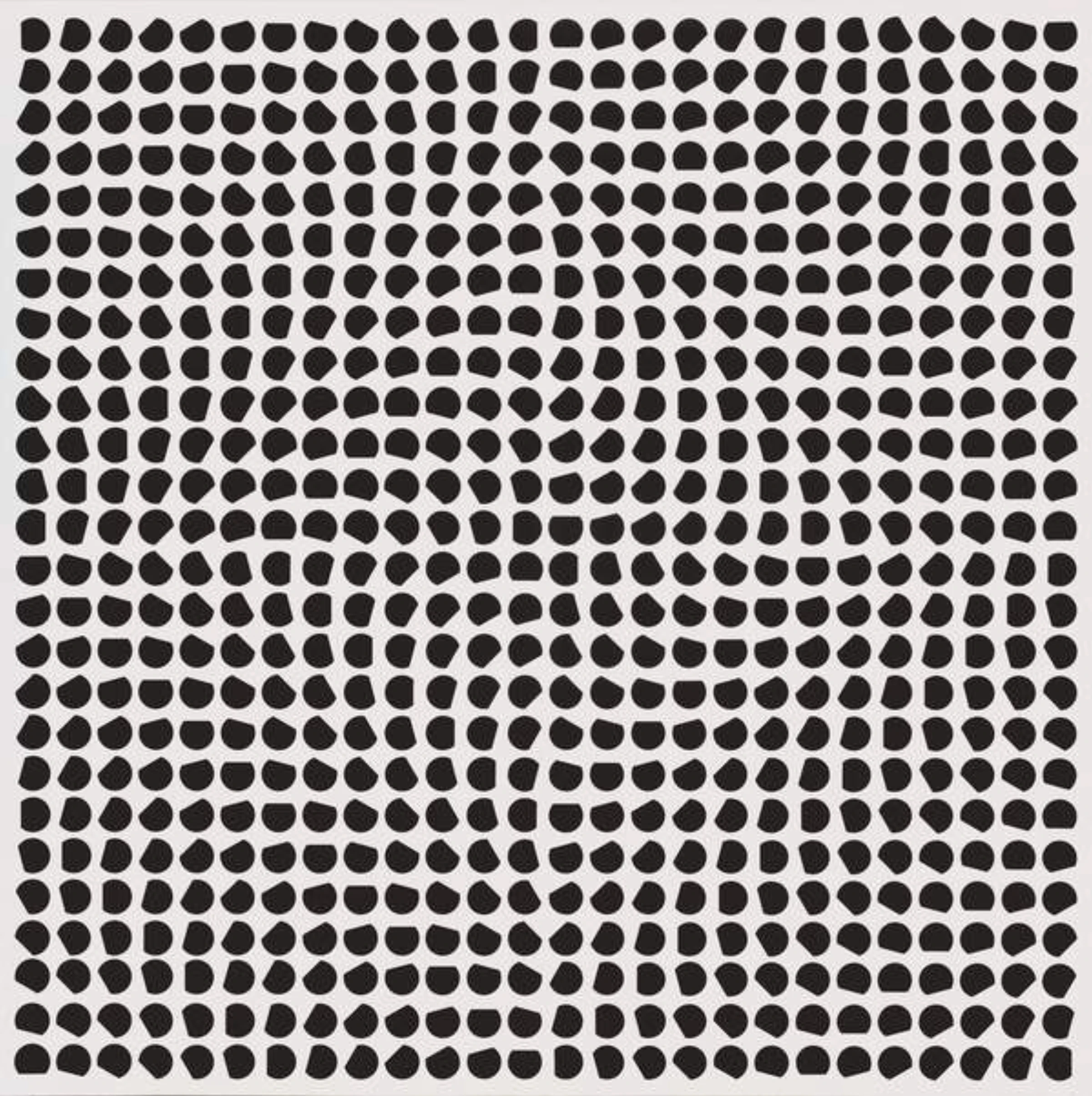
Born in Mendoza in 1928 and shaped by the avant-garde currents of Buenos Aires before moving to Paris in 1958, Le Parc developed a practice that challenged passive looking at almost every level. He co-founded Groupe de Recherche d’Art Visuel, or GRAV, whose work and manifestos argued that spectators should become participants rather than obedient receivers of artistic authority. Mirrors, mobile elements, unstable lighting, and optical disorientation were not stylistic tricks. They were tools for redistributing attention and agency.
Le Parc’s career also complicates the lazy center-periphery map that still distorts museum history. He moved between Buenos Aires and Paris, local argument and international recognition, without fitting the old script in which innovation is generated in Europe or the United States and merely echoed elsewhere. That mobility is part of the work’s meaning.
There is a further institutional challenge here. Museums love to claim participation as a democratic virtue while keeping interpretation tightly managed. Le Parc’s work can expose that contradiction if it is not overexplained. The best installations leave enough room for uncertainty that viewers must do some of the interpretive labor themselves. That is not a gimmick. It is part of the ethics of the work.
This is one reason Le Parc’s 1966 Grand Prize at the Venice Biennale felt so consequential. The award recognized an artist whose work did not sit comfortably within the heroic painting narratives that dominated postwar prestige. He was proposing an art of systems, perception, and collective activation instead. Later museum acclaim, including the Pérez Art Museum Miami retrospective, confirmed his influence, but they also risked sanding down the oppositional edge of the project. Once interactive art becomes institutionally beloved, its critique of institutions can disappear in the glow.
Le Parc’s own statements help keep that edge visible. He insisted that viewers were routinely ignored in the evaluation of contemporary art because moneyed actors controlled value. That line still stings because it remains true. Museums celebrate audience engagement while preserving economic and curatorial structures that give the public little real say. Le Parc did not solve that contradiction. He made it visible inside the experience of looking.
The Tate exhibition now carries the burden of separating Le Parc from today’s immersive-art cliché
There is a lazy version of Le Parc’s afterlife in which he becomes an ancestor to every reflective room, digital light tunnel, and selfie-friendly environment. That reading is not entirely false, but it is thin. Immersive art today often treats participation as a marketing category. The audience enters, photographs itself, and exits having confirmed the institution’s popularity. Le Parc’s best works are more destabilizing than that. They interrupt certainty. They make bodies aware of systems, surfaces, and movement in ways that are disorienting before they are enjoyable.
Seen from that angle, the Tate show is not simply corrective representation. It is an opportunity to adjust the viewer’s sense of cause and effect. Much of what now passes for experiential installation has roots in artists like Le Parc who were already questioning authority, distraction, and embodied looking decades before the term immersive became a selling point.
His death is therefore not only the loss of a major artist. It is the disappearance of a living witness to a set of postwar arguments that remain unfinished: who art is for, how spectators participate, and whether institutions can host experiences that loosen rather than reinforce authority. Tate cannot answer those questions alone, but it can stage them vividly enough that Le Parc stops being treated as a precursor and starts being understood as a continuing challenge.
Tate seems aware of the distinction. Its exhibition page emphasizes more than sixty works spanning seven decades and foregrounds the artist’s experiments with perception rather than merely the photogenic attractions. The museum also notes the inclusion of Blue Sphere, a later work that links recent production to the earlier investigations that defined his career. If the installation is handled well, visitors should come away understanding not only that Le Parc anticipated immersive culture, but that he also exceeds it. He belongs to a lineage of artists asking what institutions demand from viewers and how viewers might refuse that script.
That is why the show matters now. The cultural sector is drowning in experiences designed to feel interactive while asking almost nothing of the participant beyond attendance. Le Parc offers a harder standard. Interaction is not meaningful because the visitor moves. It is meaningful because the work alters the terms of attention and asks the institution to surrender some control.
His death closes one career but opens a sharper question about the canon Tate is building
There is no shortage of museums promising a more global postwar story. The real test is whether they can adjust the canon without reducing artists to supplements. Le Parc should not appear as a colorful Latin American exception appended to a European narrative already settled elsewhere. His work belongs at the center of any serious account of postwar abstraction, participation, and the politics of spectatorship. Tate has a chance to say that clearly in London, where the museum field still exerts disproportionate influence over how twentieth-century narratives get taught to broad audiences. Readers may also notice how differently Tate frames living historical revision when compared with our recent coverage of Tate’s Whistler exhibition, where canon maintenance and canon revision pull in different directions.
That would be a better memorial than solemn praise. Le Parc kept insisting that art had to be tested in use. A retrospective that merely celebrates his legacy without making that demand felt would miss the point.
That is why the retrospective should be watched not only by admirers of kinetic art but by curators, educators, and museum directors more broadly. Le Parc offers a demanding model of public address at a time when institutions often confuse popularity with participation. If visitors leave Tate feeling slightly less certain about where the artwork ends and their own role begins, the exhibition will have done him justice.
The survey also lands at a time when many institutions are reconsidering how to make difficult art legible without flattening it. Le Parc is ideal for that challenge because the invitation is immediate while the implications unfold slowly. Children can respond to the shimmer and movement. Scholars can map the work against concrete art, GRAV, 1960s political radicalism, and museum critique. The same installation can hold both. That breadth is not incidental. It is part of why the work survives.
Tate’s retrospective will now inevitably be read through loss, but it should resist the pious museum tone that often follows an obituary. Le Parc did not spend seven decades making agreeable monuments to his own reputation. He spent them insisting that art becomes real only when spectators test it with their bodies and attention. If the exhibition preserves that force, it will do more than honor him. It will remind viewers that participation is not a gimmick or a crowd-management strategy. It is a political demand hidden inside perception itself.