Independent 20th Century Turns the Breuer Into a Canon Fight
Independent’s expanded 2026 fair at the Breuer promises more than growth - it is a market test of whether twentieth-century revision can survive commerce
Independent 20th Century is turning the Breuer building into a canon fight
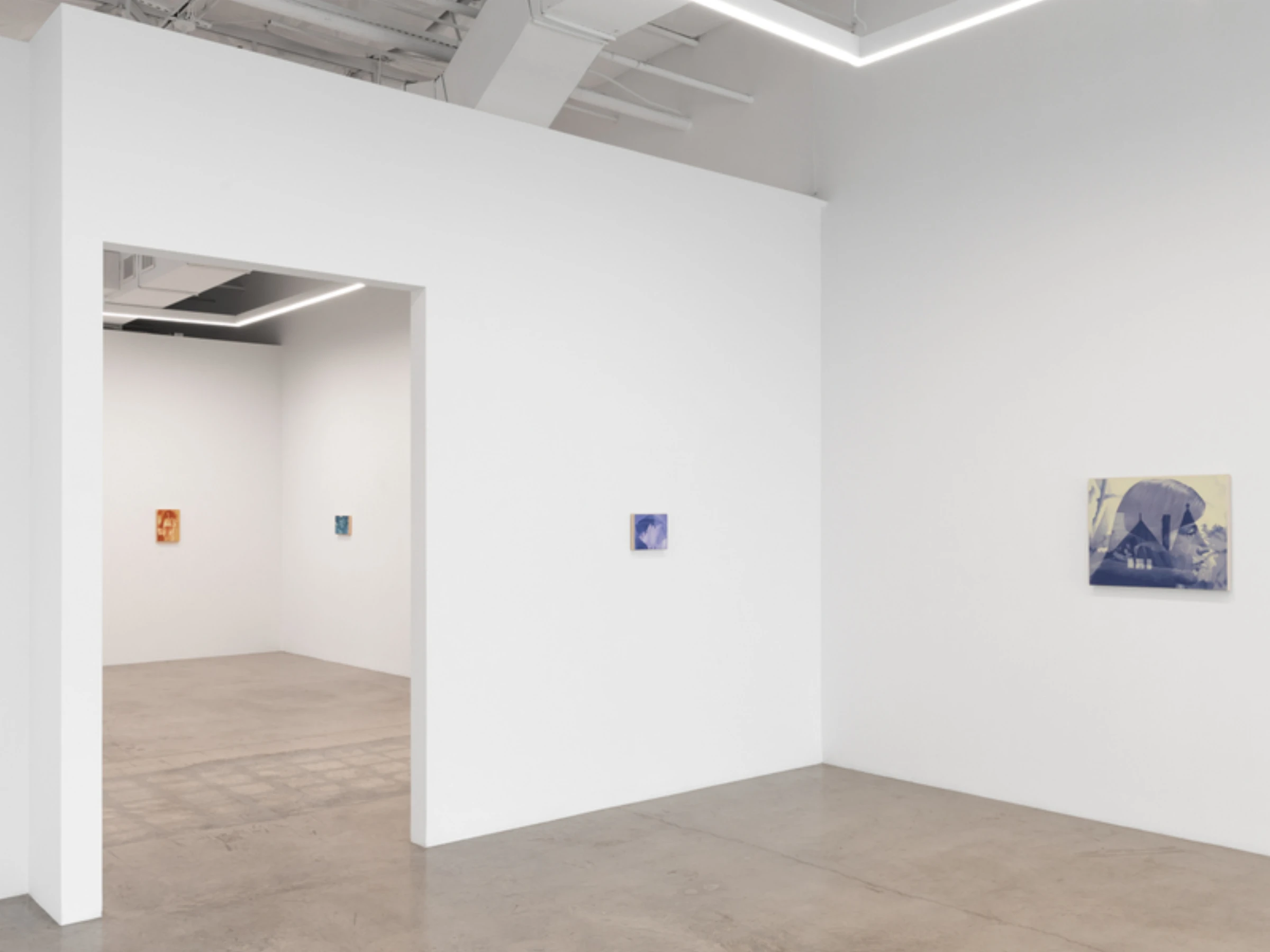
Independent 20th Century has announced its fifth edition with the kind of scale increase that would be easy to misread as mere fair growth. According to Artforum’s report, the 2026 edition will bring fifty-six exhibitors and more than 130 artists to the Breuer building from September 24 through 27, making it the fair’s biggest outing yet. But the more interesting point is where and how it is expanding. The fair is using the Breuer, now home to Sotheby’s global headquarters, as the stage for an explicitly revisionist account of twentieth-century art. Independent says in its fair materials that the edition will continue its project of diversifying the twentieth-century canon by combining artists, estates, and galleries that art history too often sorted into separate lanes. That is not neutral market language. It is an attempt to make commercial display look like historiographic intervention.
The venue helps sell that claim because the Breuer building carries institutional residue. Before Sotheby’s took it over in 2025, the structure housed the Whitney Museum of American Art, then the Met Breuer, then the Frick during renovation. It is one of the rare New York buildings whose walls still announce museum seriousness even after a corporate handover. Independent is using that symbolic capital cleverly. A fair on a convention floor always has to fight the perception that its rhetoric about scholarship and rediscovery is secondary to inventory. A fair in the Breuer can lean on the building’s museum afterlife and suggest that looking, selling, and rewriting history might happen in the same room.
The exhibitor list shows how the fair wants to widen twentieth-century art without pretending the market disappeared
The announced roster is broad enough to make that ambition plausible. Artforum highlights exhibitors such as Luxembourg + Co. with Kandinsky, Klee, and Sue Fuller; Mariane Ibrahim with Lorraine O’Grady and Jose Gamarra; and Berry Campbell with a presentation devoted to women of the Stable Gallery including Alice Baber, Perle Fine, Joan Mitchell, and Elaine de Kooning. The list stretches from blue-chip modernism to artists and movements long kept at the edge of canonical survey shows. That mix matters because it refuses the lazy version of diversification in which fairs insert one correction section while the main floor remains unchanged. Independent is trying to argue that rediscovery belongs inside the central market conversation, not at its charitable margins.
Still, the fair’s rhetoric should not be accepted without pressure. Markets love the language of correction because it can make overdue attention sound like innovation and convert historical neglect into commercial upside. When Elizabeth Dee told ARTnews that the concentration of galleries helps reveal the fabric of the art world around this material, she was describing a real effect. A dense fair can make a field feel suddenly legible. It can also make consensus look natural when it is partly constructed by price signals, collector taste, and institutional follow-through that may or may not last. The point is not that Independent is insincere. It is that fairs are strongest when readers understand they are staging arguments about value and history at the same time.
The Breuer setting gives Sotheby’s and Independent a mutual advantage
The partnership with Sotheby’s, announced last year and framed publicly through Independent’s own launch materials, is central to that staging. For Sotheby’s, hosting a fair devoted to twentieth-century revisionism helps the auction house project intellectual flexibility at a moment when the secondary market is hungry for fresh narratives and newly canonized names. For Independent, the alliance offers a building, a New York address with enormous symbolic force, and the chance to operate inside a space that still feels like a civic container for ambitious art. Neither party is hiding the arrangement, which is useful. What matters now is whether the fair can use that alliance without letting the auction-house frame flatten its curatorial risk.
The fair says the enlarged edition will also allow live performances and related programming, which is another test. Supplemental programs can either deepen a fair’s thesis or pad it with atmosphere. If Independent uses the extra space to connect exhibitors to broader debates about migration, gender, transnational modernism, and the mechanics of canon formation, the Breuer edition could feel unusually coherent. If those events function mainly as lifestyle garnish, then the fair will read like many others: intelligent copy wrapped around a sales floor. The fact that Independent has built a reputation on tighter curation than larger fairs gives it a real shot at the first outcome.
There is also a wider New York context. artworld.today’s recent coverage of dépendance’s closure in Brussels and other market pressure points has shown how mid-sized and concept-driven operations are navigating a harsher commercial environment. A fair that claims to champion nuanced twentieth-century revision has to answer a practical question: can that proposition support galleries beyond the mega-tier, or does the discourse of rediscovery mainly create new talking points for already powerful dealers? Independent’s exhibitor mix suggests it knows the issue. The September edition will show whether it can do more than acknowledge it.
The scale jump to fifty-six exhibitors matters because it alters the fair’s tone. Smaller editions can survive on intimacy and connoisseurship alone. Larger editions need a governing thesis or they dissolve into expensive browsing. Independent clearly knows that, which is why it keeps insisting on twentieth-century revision rather than simple expansion. The fair wants visitors to feel that unfamiliar names and under-read trajectories are not side notes to the period but constitutive of it. That is a smart and necessary argument, especially at a moment when the language of discovery can otherwise become indistinguishable from market churn.
The exhibitor list also hints at a more complex geography of twentieth-century art than New York fairs often manage. By mixing galleries from São Paulo, Mexico City, Reykjavik, Chicago, Paris, London, and New York, Independent is signaling that the twentieth century was never solely a North Atlantic story with occasional outsiders appended. Whether the presentations live up to that implication will depend on installation and interpretation, but the intention matters. Fairs rarely receive credit for framing transnational art history carefully because so many do it badly. Independent has at least assembled the ingredients for a more convincing argument.
Another point to watch is whether the fair can make room for genuine contradiction. Revisionist accounts of twentieth-century art are strongest when they do not flatten difference into a single corrective mood. Bringing Jenny Holzer, Emma Kunz, Lorraine O’Grady, General Idea, Oskar Schlemmer, and the Women of Stable Gallery into the same commercial environment should produce friction as well as affirmation. If the fair’s public language leans too hard on consensus, that friction could disappear into branding. If it lets the booths argue with one another, the Breuer edition could become one of the rare fairs that feels like an active proposition about art history rather than a themed sales deck.
What to watch when the fair opens in September
The most telling metric will not be attendance or even sales headlines. It will be whether the fair’s juxtapositions produce real changes in how artists are discussed after the booths come down. Do institutions borrow the presentations as prompts for exhibitions? Do critics write about the overlooked figures with the same seriousness they reserve for blue-chip anchors? Do galleries keep building context once the commercial urgency fades? Those are the signs that a fair has managed to function as more than a compressed market event.
Independent has given itself the right problem: it now has enough scale, enough prestige, and enough architectural theatre that the old excuse of being a small alternative fair no longer applies. If it wants to claim that twentieth-century art history can be widened in the marketplace without being trivialized, the Breuer edition is the place to prove it. If it succeeds, the fair will not just benefit from the building’s museum aura. It will earn some of it.
That is why September’s fair deserves attention beyond the usual preview culture. Independent is effectively asking whether a fair can behave like an editorial device inside a market that rewards speed, familiarity, and scale. The Breuer building gives it the stage, but not the answer. The answer will come from whether exhibitors, critics, and institutions treat the presentations as durable prompts for scholarship rather than just well-installed inventory. If they do, the fair’s claim to rewrite the twentieth century will sound less like branding and more like method.
It is also worth watching how museums respond to the fair, not just collectors. Independent has often been strongest when it anticipates institutional interest rather than merely following it. If curators walk away with concrete exhibition ideas or acquisition targets, the fair’s argument about twentieth-century revision will have escaped the booth system and entered the longer cycle of art history. That is the highest bar for any fair that talks about expanding the canon, and it is the bar this edition has effectively set for itself.
That follow-through is what separates a fair with ideas from a fair borrowing the language of ideas. Independent has asked for that distinction. September will show whether it can hold it.