Joe Hage Puts His Name on Courtauld Hepworth Show
Joe Hage’s public backing of the Courtauld’s Hepworth in Colour show reveals how patronage, law, and museum branding now overlap in London
Joe Hage Steps Out From the Back Room
Joe Hage has spent years as one of the art trade's least public power brokers, building Heni into a service machine for estates, artists, editions, litigation support, and market strategy. That is why The Art Newspaper story landed with more weight than a routine exhibition preview. Hage is not merely supporting a show at the Courtauld. He has attached his name, via Joseph Hage Aaronson & Bremen LLP, to Hepworth in Colour, the Courtauld Gallery exhibition opening 12 June and running through 6 September. In a field where influence is often exercised through anonymous donations, private dinners, and discreet advisory work, that visibility matters. The sponsor line turns a private operator into part of the exhibition's public framing.
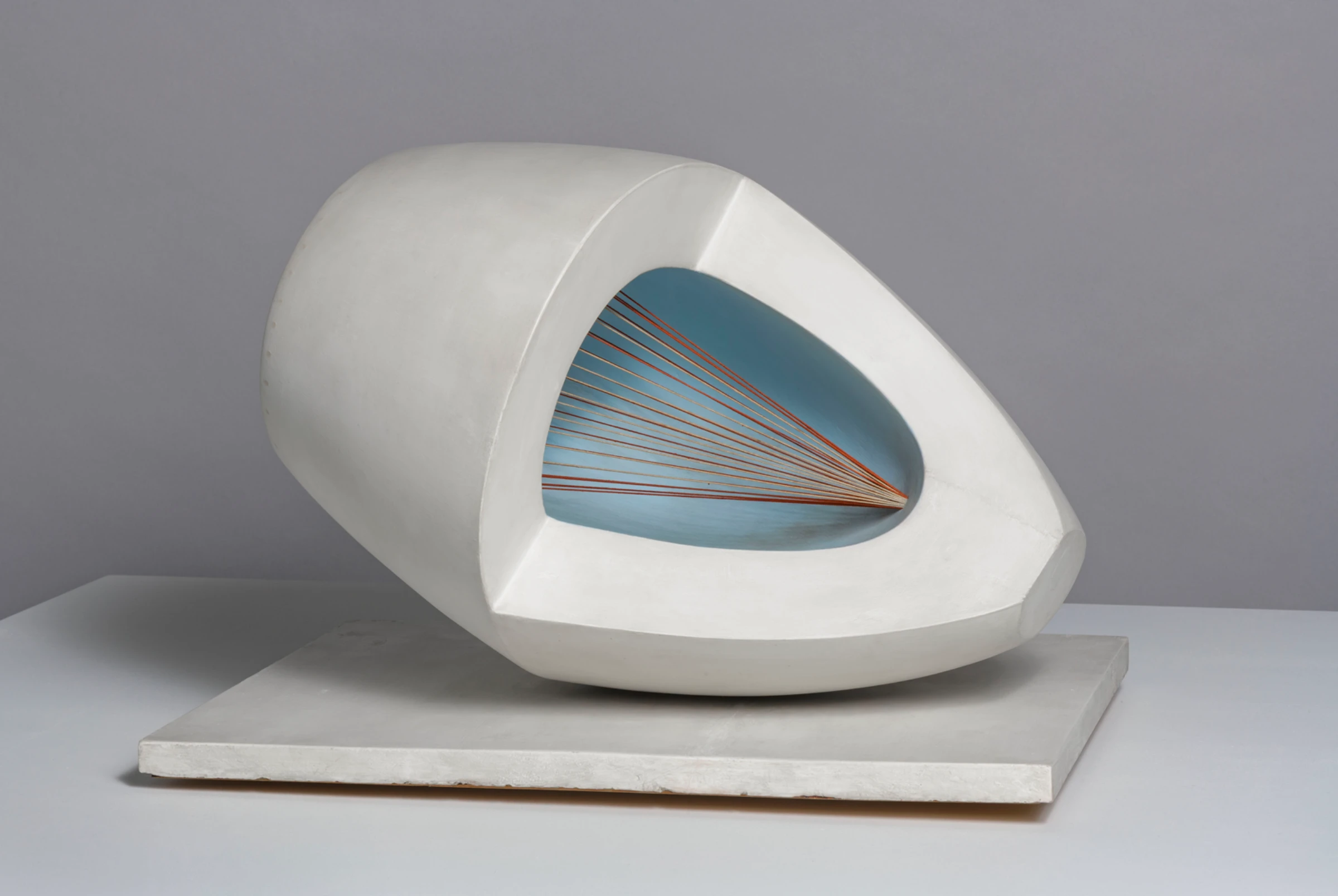
The immediate facts are straightforward. The Courtauld is staging a focused Barbara Hepworth exhibition built around polychromy, material finish, and the question of how colour functioned inside a sculptural language too often reduced to pure form. The title now carries JHAB branding. Hage, known more for structuring deals and protecting artists than for courting attention, has decided that the exhibition itself is a platform worth occupying. That move tells us something about today's patronage economy. Institutional prestige is no longer enough on its own. Sponsors increasingly want the public record to register their presence, their networks, and their claim to cultural seriousness.
Why Hepworth in Colour Is a Useful Stage
The Courtauld has given Hage a particularly effective stage because Hepworth remains one of the most secure names in British modernism while still leaving room for curatorial revision. The museum's own preview materials stress that the exhibition brings together sculptures, archival material, and new scholarship in order to challenge the habit of seeing Hepworth in monochrome terms. That is a smart institutional proposition. It offers fresh art historical value without the risk profile of a speculative contemporary project. For a sponsor, it provides the best of both worlds: scholarly legitimacy and broad prestige. Hage is not underwriting a vanity spectacle. He is underwriting a controlled correction to a canonical story.
That matters because sponsorship has become one of the clearest places where the art world's rhetoric of public value meets the private reality of influence. A named sponsor attached to a Hepworth exhibition is not the same as an oligarch slapping a logo on a gala wall. Yet the underlying logic is related. Public institutions need money. Private actors want association with judgment, permanence, and taste. What changes now is how explicit the arrangement has become. The sponsor line is not hidden in small print. It enters the title itself, making the economics of display part of the exhibition's official identity. Readers who followed our guide to museum strategic plans will recognise the pattern: the institutional surface is only persuasive when you read the funding architecture beneath it.
There is also a legal and market dimension here that deserves attention. Hage has built authority by working where art, law, and asset management overlap. His proximity to artists like Damien Hirst and to major estates gives him a kind of hybrid capital that museums increasingly find useful. He can move between scholarship, rights, dispute resolution, and market positioning without treating those as separate universes. When a figure like that becomes publicly visible inside an exhibition title, the old fiction that museums and market operators occupy different symbolic worlds gets harder to maintain.
What the Courtauld Gets From the Arrangement
The Courtauld is hardly naive about this. The institution has spent the past few years sharpening its public programme while defending a reputation for connoisseurship and focused exhibitions rather than blockbuster sprawl. A show on Hepworth's use of colour fits that identity neatly. Attaching strong private backing to such a project lets the museum preserve a scholarly tone while securing real resources. From the Courtauld's perspective, this is not surrender. It is selective alignment. The museum chooses a sponsor whose profile reinforces seriousness rather than distracting from it, and it chooses an artist whose stature can absorb the branding without seeming diminished by it.
Still, selective alignment is not neutral. Once a sponsor becomes part of the title, the institution is making a judgment about which forms of private visibility remain compatible with public trust. That judgment can be reasonable and still deserve scrutiny. Museums routinely insist that sponsorship does not shape curatorial substance. Often that is true in a narrow sense. Yet sponsorship shapes atmospheres of legitimacy, determines which projects are easier to mount, and signals which kinds of private actors are welcome as co-authors of institutional prestige. The Courtauld is effectively saying that Hage's kind of influence belongs in plain sight.
That may prove less controversial than revealing. Hage is not a tabloid villain, and Hepworth is not a fragile rediscovery. The exhibition is likely to be strong on its own terms. Precisely for that reason, it becomes a clean case study in how naming rights are evolving in British art institutions. What used to happen in donor walls and patron circles now happens in the exhibition title itself. The shift is subtle, but it marks a broader change from background support to branded cultural authorship.
How Naming Rights Reframe Cultural Authority
The art world has long depended on the productive ambiguity of patronage. Donors underwrite research, galleries underwrite production, collectors underwrite museums through gifts and board memberships, and advisers stitch the ecosystem together. Everyone knows this, yet institutions often present exhibitions as if scholarship floats above those relationships. Hage's visibility punctures that pose a little. It shows how contemporary authority is assembled from legal expertise, money, strategic discretion, and institutional access. That is not necessarily corrosive. It is simply more honest than the old performance of immaculate independence.
There is a second lesson here for artists' estates and blue-chip operators. Public cultural association is becoming a strategic asset in its own right. If an operator can move from managing rights and disputes behind the scenes to appearing as the public-facing enabler of museum quality scholarship, then cultural capital is being consolidated in a new way. It is no longer enough to influence the market. The stronger move is to influence the story the market tells about seriousness, scholarship, and historical stewardship.
That is why this announcement matters beyond one summer show in London. It suggests that the next phase of patron branding will not always look loud or vulgar. It may look refined, legally literate, and institutionally useful. Those qualities make it more effective, not less consequential. The question for museums is whether they can keep public confidence while increasingly sharing their symbolic stage with private actors who know exactly how much prestige is worth.
What Comes Next for the Courtauld and Its Patrons
The immediate next step is easy to predict: attention will focus on the exhibition itself and on whether the Courtauld's curatorial argument about colour can meaningfully recalibrate Hepworth scholarship. That is where the museum should want scrutiny to land. But the naming structure will linger as well. If the show performs strongly, it becomes a precedent for more visible sponsor identification on intellectually ambitious but market-safe exhibitions. Other institutions watching London closely will notice the model.
Watch, too, for whether Hage's public profile continues to rise. Damien Hirst's recent description of him as uniquely influential already nudged him out of the shadows. This exhibition title does the rest. If Hage keeps taking top billing in contexts like this, the art world will have one more example of how backstage power turns into front-stage authorship. The lesson is not that museums are compromised beyond repair. It is that authority now travels through sponsorship and branding with fewer disguises than before.
There is an audience lesson in that shift as well. Visitors are often encouraged to see sponsorship as external to the exhibition, a practical necessity that begins and ends with underwriting. In reality, the sponsor frame can subtly precondition how a show is received. A titled sponsor attached to a British modernist like Hepworth makes the exhibition feel protected, serious, and already ratified by elite networks before a single work is seen. That does not invalidate the curatorial work. It means viewers should understand that prestige is being staged from multiple directions at once: scholarship on the walls, market literacy in the background, and legal-financial credibility in the title itself.
That is why the exhibition deserves to be read not only as a Hepworth show but as a small institutional diagram. It maps how scholarship, private capital, legal expertise, and reputation management now overlap inside respected public venues. None of those forces automatically corrupt the result. But pretending they are irrelevant would be dishonest. The modern museum title card has become one of the clearest places to see who is claiming authority and how carefully that claim has been normalized.
For readers, the useful discipline is simple: read the title card as carefully as the wall text. Who paid, who is named, and why that naming now feels advantageous are not secondary questions. They are part of the exhibition's meaning. Hepworth in Colour may well be an excellent show. It is also an unusually clear document of how cultural prestige is financed and claimed in 2026.