FotoFocus Center Gives Cincinnati a Photography Museum
Cincinnati’s FotoFocus Center turns a biennial into a permanent museum and tests whether photography can hold a city’s year-round civic attention
FotoFocus Turns a Biennial Into a Permanent Institution
Cincinnati has no shortage of museums, but the opening of the FotoFocus Center marks a different kind of claim. The new 14,700-square-foot building gives a city known for periodic photography festivals a year-round institution dedicated to lens-based culture, public programming and the politics of representation. As The Art Newspaper reported, the center opened in late May after more than three years of construction, extending the work FotoFocus has done since 2010 through biennials, grants and collaborations. That shift from event platform to permanent museum matters because it changes the tempo of the conversation. A biennial can stage urgency for a season. A museum has to sustain it in ordinary time, when the crowds thin out and the press cycle moves on.
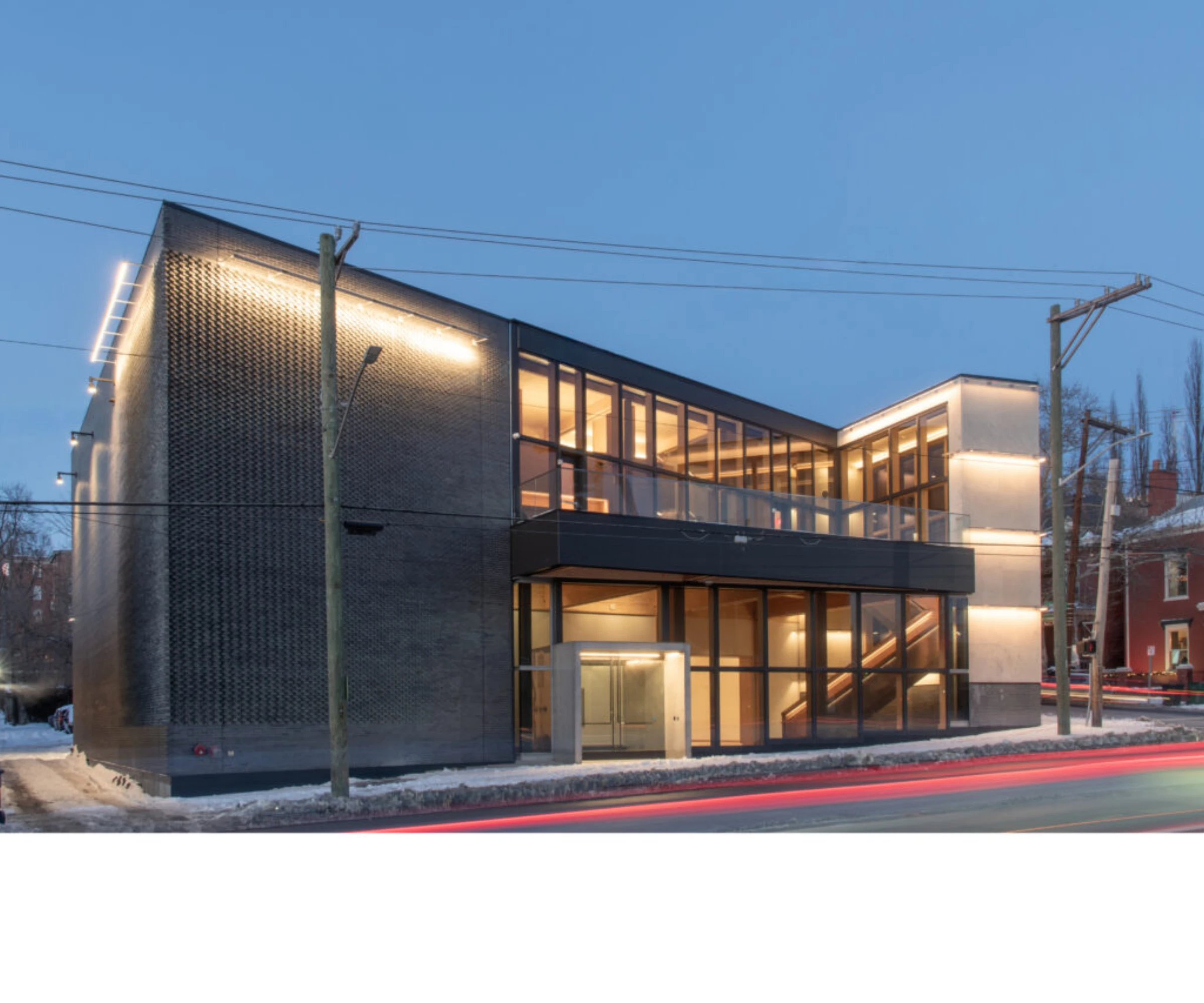
The architecture makes that ambition legible. Jose Garcia designed the building around black, white and sepia tones that echo photography’s early material history, while also tying the structure to Mount Auburn and Over-the-Rhine. Gridded windows suggest viewfinders without turning the place into a gimmick. More important is the social proposition Garcia attached to the design. He described the museum as warm, open and belonging to anyone. That language can sound dutiful in a press release, but here it arrives with some substance behind it: the institution grew from a regional network rather than a billionaire’s single-building vanity project, and it has spent years building a constituency before asking the city to accept a permanent home.
FotoFocus also opens at a moment when photography is doing heavy political work again. Images remain the dominant evidence format of public life, from protest documentation to surveillance feeds to personal testimony shared online. A museum devoted to photography cannot pretend the medium is just about connoisseurship. The institution’s challenge is whether it can turn that democratic promise into programming that feels sharper than branding. On paper, the ingredients are there: a permanent building, a history of grantmaking, and an inaugural exhibition that frames photography as a medium through which communities see themselves and are seen by power.
Why the Building and the Collection Strategy Matter
The site itself says something about the institution’s ambitions. The museum occupies a lot that previously held an abandoned gas station, which is not only a tidy redevelopment story but a reminder that culture often arrives through reuse rather than spectacular clearance. According to the FotoFocus organization, the center expands its mission while reaffirming its place in Greater Cincinnati and the broader lens-based arts community. That claim is backed by scale: more than 800 projects and over 600 grants across its collaborative history. In other words, the building is not a speculative shell waiting for purpose. It is an architectural consolidation of work already underway.
Executive director Katherine Siegwarth framed the project in civic rather than market terms, arguing that local audiences have shown they want photography year-round. That point deserves emphasis. Too often, arts infrastructure gets justified through tourism boilerplate or booster language about economic development. FotoFocus is making a more interesting argument: photography can function as a recurring forum for social inquiry inside a mid-sized American city. The distinction matters. Tourism logic makes institutions chase spectacle. Forum logic asks them to build trust, continuity and local relevance.
The inaugural exhibition, Big Tent, reinforces that orientation. Curator Kevin Moore took Amanda Gorman’s poem “In This Place (An American Lyric)” as a prompt for thinking about pluralism, difference and belonging. The exhibition reportedly mixes nationally known figures such as Gordon Parks, Catherine Opie and Marco Anelli with photographers rooted in Cincinnati collections and local practice. That is a strong institutional move. Instead of announcing seriousness by importing prestige from elsewhere, FotoFocus is testing whether a regional museum can position local holdings and local artists inside a broader national argument.
There is also an explicit memory of conflict in the building’s program. Moore invoked Cincinnati’s complicated photographic history, including the 1990 Robert Mapplethorpe obscenity trial at the Contemporary Arts Center. That reference is not incidental. It reminds visitors that photography’s public life in the city has already been shaped by fights over morality, censorship and who gets to define cultural legitimacy. A photography museum in Cincinnati should not smooth that history into a triumphalist narrative. It should understand that the medium’s civic force comes partly from the fact that pictures can destabilize consensus.
The Politics of Calling Photography a Democratic Medium
One of the opening show’s central ideas is that photography is a democratic medium. The phrase is attractive, but it needs scrutiny. Photography is democratic in the sense that more people can make, circulate and repurpose images than in most other art forms. It is also profoundly unequal in who gets seen, whose archive survives, and whose images are granted evidentiary authority. The center appears aware of that tension. Moore’s remarks about serious conversations and the institution’s relative freedom from some federal funding pressures suggest a willingness to be direct about the present political climate. If FotoFocus wants to matter beyond its opening season, that willingness has to survive contact with donors, local sensitivities and the long administrative weather of nonprofit life.
The center’s timing helps. Photography now sits at the intersection of artistic practice, civil rights history, migration, surveillance, platform capitalism and synthetic media. Trevor Paglen’s planned autumn show for the 2026 biennial underlines that breadth. Paglen’s work on machine vision and surveillance fits naturally with a museum that claims the medium as a tool for understanding power, not merely documenting surfaces. By teasing that exhibition inside Big Tent, FotoFocus hints that it does not intend to stop at humanist consensus. It may be trying to bridge documentary traditions, local histories and the harder questions raised by networked image culture.
That could make the institution unusually relevant if it avoids the trap of topicality without depth. Museums often respond to social crisis by adopting the language of urgency while maintaining curatorial habits built for safer times. FotoFocus has a chance to do better because it grew from programming rather than collection hoarding. It can treat exhibitions, symposia and grants as interconnected forms of public work. It can also learn from the recent institutional reckoning around American civic identity that museums across the country continue to face, including the debates tracked in artworld.today’s recent coverage of museum nationalism and public memory.
Still, there is a risk in the phrase “big tent” itself. Inclusivity can become a soft substitute for judgment. A museum should welcome many publics without pretending every image politics is equally benign or every representational claim equally serious. The strongest version of FotoFocus’s mission would not be a neutral space for everyone’s feelings about photography. It would be a demanding institution that broadens access while sharpening standards about what images do in the world.
What Cincinnati’s New Photography Museum Has to Prove Next
The opening season gives FotoFocus momentum, but permanence changes the standard of evaluation. The institution now has to prove it can keep audiences returning between marquee events. It has to show that educational work, grantmaking and exhibitions reinforce each other instead of operating as separate departments with separate vocabularies. It has to convince artists that the building is not merely a respectable headquarters for a successful biennial but a site where difficult work can be staged without dilution. And it has to show local communities that year-round presence means more than repeated invitations to consume culture already framed elsewhere.
The next real test may come with programming that is less consensual than a celebratory opening. If a photography museum says it exists for public conversation, it eventually has to host arguments about policing, migration, queerness, racial memory, climate evidence and the unstable truth-status of images. The fact that FotoFocus emerged from a collaborative regional ecology rather than a single encyclopedic collection may help it stay agile. Its scale is large enough to matter but small enough to avoid the inertia that cripples many legacy museums.
There is another practical advantage to the center’s model: it can tie local cultural life to a recurring international conversation without pretending Cincinnati must mimic New York, Los Angeles or London to be serious. A regional photography museum can become a place where schools, activists, artists, archivists and casual visitors all encounter the medium as a public tool rather than a luxury niche. If FotoFocus uses its lecture series, biennial, grants and building in concert, it could create a durable ecology for criticism and participation. That would make the museum more than a new venue. It would make it a working piece of civic infrastructure.
For now, the center looks like one of the more persuasive cultural openings of the year because it does not sell itself as salvation. It offers a building, a curatorial argument and a public mission that can actually be checked against future practice. That is more credible than the usual language of transformation. Cincinnati now has a dedicated photography museum. The real story begins if FotoFocus can make that fact feel necessary six months from now, not just impressive on opening weekend.