Dolores Olmedo Reopens With Kahlo, Rivera and Old Questions
Museo Dolores Olmedo has reopened with its Kahlo and Rivera holdings intact, but the fight over who controls that legacy is not over
The Return of Museo Dolores Olmedo Is More Than a Reopening
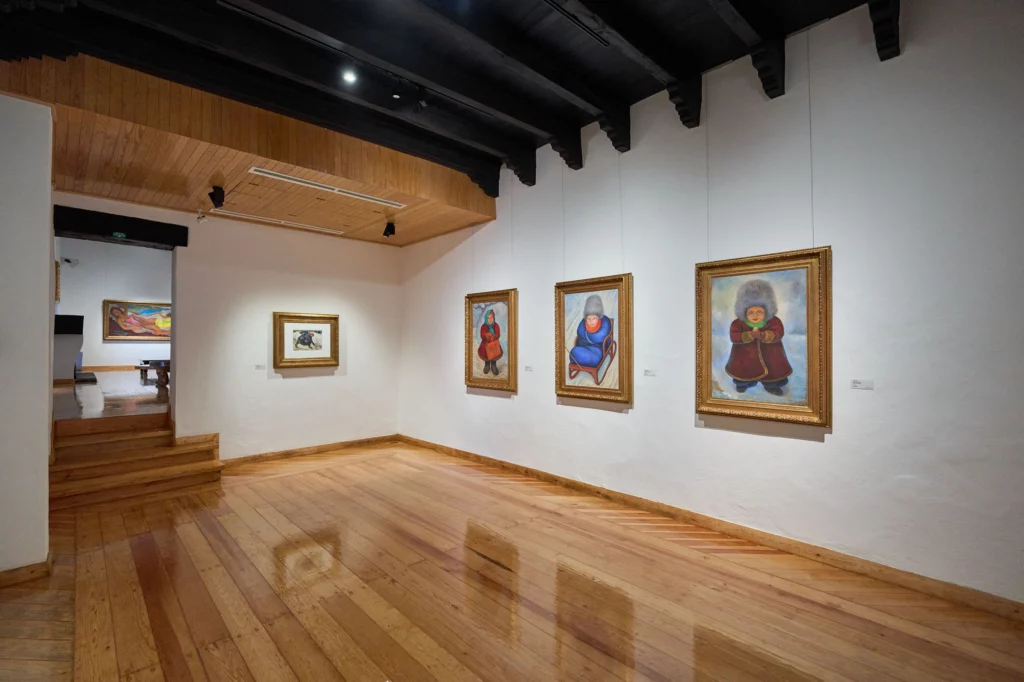
The Museo Dolores Olmedo has reopened in Xochimilco after six years of closure, bringing back into public view the world’s richest collection of Frida Kahlo and Diego Rivera works inside the former hacienda La Noria. On one level, that is enough to make the story major: one of Mexico City’s most symbolically loaded museums is receiving visitors again, with 98 Rivera works, 26 Kahlos and newly accessible rooms once occupied by Dolores Olmedo herself. But as The Art Newspaper noted, the reopening follows years of controversy over whether the collection would be partially relocated to Chapultepec. That history changes the tone. This is not a straightforward comeback narrative. It is a museum returning under pressure, with its legitimacy shaped as much by public resistance as by curatorial planning.
The official Museo Dolores Olmedo site still describes the institution as a home for the largest collection of Rivera and Kahlo works, preserving the legacy of the collector and businesswoman who opened the museum in 1994. That mission sounds stable. In practice, stability has been the central dispute. The museum’s own account of Dolores Olmedo’s life and legacy reinforces how tightly the collection is bound to her personal vision, which is exactly why relocation proved so explosive. After the pandemic closure, the trust run by Olmedo’s descendants floated plans in 2021 to move part of the collection to a new venue in Chapultepec’s Parque Aztlán. Critics argued the proposal violated Dolores Olmedo’s wishes and stripped the works from the spatial world that gave them meaning. The six-year gap that followed made many observers suspect the museum’s return would be partial, cosmetic or strategically vague.
Instead, the works are back, and the reopening reportedly restores the museum’s layered atmosphere rather than flattening it. Visitors again encounter the gardens, the peacocks, the hacienda architecture, the pre-Hispanic objects and the strong personality of Olmedo herself. New access to her private rooms makes the house-museum logic more explicit. That matters because the collection was never just a neutral storage site for canonical works. It was always entangled with the collector’s taste, social power and proximity to Rivera. To reopen the institution without that context would be to misunderstand why it became important in the first place.
Why the Collection’s Location Was the Real Battleground
The fight over Museo Dolores Olmedo was never only about visitor convenience or urban planning. It was about whether masterpieces can be detached from the eccentric, historically dense environment that framed them and still claim to represent the same legacy. La Noria in Xochimilco is not an incidental shell. It is part of the museum’s meaning. The hacienda setting, the gardens and the collector’s presence turn the institution into a study of how private taste becomes public patrimony. Removing the art to a more streamlined venue in Chapultepec might have increased foot traffic, but it also risked converting a singular museum into a more generic culture stop.
That is why grassroots opposition mattered. The collective Defendamos al Olmedo understood that the site itself had become cultural evidence. Their argument was not nostalgia for peacocks and picturesque courtyards. It was a defense of context, donor intent and neighborhood heritage against a familiar logic of centralization. Major cities often justify relocation through accessibility and efficiency while quietly privileging visibility, sponsorship and branding. In this case, the resistance worked, at least for now. The reopening celebration outside the museum suggests the public did not experience the return as an administrative update but as a recovered victory.
The museum’s own statement, quoted by Carlos Phillips, stresses the effort to reimagine the house-museum concept while preserving how Olmedo lived and respecting the building’s flora and fauna. That is intelligent institutional framing because it avoids pretending nothing changed. A house museum that simply freezes itself can become inert. One that modernizes without discipline can destroy the intimacy that made it worth visiting. The challenge is to make the place readable as both historic environment and active museum.
What remains unresolved is governance. Staff reportedly avoided questions about relocation and denied interview requests about future plans. That silence is significant. A reopened museum can still be politically unstable if its governing trust has not clearly abandoned earlier ambitions. Until there is transparency about long-term stewardship, conservation priorities and any future loan or relocation strategy, the reopening should be treated as a provisional settlement rather than the end of the dispute.
What the Reinstalled Rivera and Kahlo Works Reveal
The rehang appears to take Rivera more seriously than the shorthand version of his legacy that often circulates outside Mexico. Eight galleries present 98 works chronologically, including portraits, Cubist experiments, landscapes, mural sketches and the late Acapulco sunset series made during the last year of his life. That breadth matters because Rivera is too often reduced to muralist monumentality. A collection of this scale can show him as a restless painter whose methods and moods shifted across decades, and whose relationship with Olmedo shaped the afterlife of his work in ways that were personal as well as ideological.
The new gallery focused on Rivera and Olmedo’s bond sounds especially revealing. It reportedly includes letters, motifs linked to Rivera’s frog alter ego and other traces of a relationship that was emotional, social and strategic all at once. That emphasis risks hagiography if handled softly, but it can also sharpen understanding of how patronage works in modern art. Olmedo was not a passive caretaker. She was a forceful businesswoman, collector and institutional operator whose choices helped shape what later publics would see and value.
The Kahlo galleries carry a different pressure because Kahlo has become one of the most overexposed artists in global culture. Any museum holding a major group of her works now has to cut through the flattening effects of brand Frida. The presence of The Broken Column and Henry Ford Hospital gives the museum that chance. These works are not lifestyle emblems. They are severe, destabilizing paintings about pain, embodiment, fragility and self-construction. Reinstalling them in Xochimilco, in a collection built through Rivera’s prompting and Olmedo’s acquisitions, can bring back some of the historical friction that mass merchandising tends to erase.
The museum also benefits from showing Kahlo and Rivera in relation rather than as separate pilgrimage objects. Their shared presence does not dissolve their differences. It does, however, make visible the collector networks, institutional decisions and long afterlives that helped build both reputations. That is one reason the reopening matters beyond tourism. It restores a place where Mexican modernism can be encountered as a lived historical environment, not merely a sequence of exportable icons.
What Comes Next for the Museum and for Mexico City
The reopening arrives at an important moment for Mexico City’s museum ecology. Competition for attention is intense, but so is the demand for institutions that can hold complex national narratives without simplifying them for quick consumption. Museo Dolores Olmedo has an advantage many museums would envy: a collection of indisputable importance, a deeply specific site and a built-in public story about struggle, inheritance and legitimacy. It also has a weakness just as obvious: the governance conflict has not been fully clarified, which means confidence in the institution still depends partly on public vigilance.
There is an opportunity here to rebuild trust through candor. The museum could publish a clearer roadmap for conservation, loans, public programming and site protections. Supporters have already called for formal heritage designation in Mexico City. If the governing trust is serious about keeping the institution rooted in Xochimilco, it should welcome safeguards rather than treat them as interference. Cultural credibility now depends as much on governance as on masterpieces. Audiences have learned to ask who controls collections, who benefits from relocation, and what exactly institutions mean when they say they are preserving legacy.
The reopening also sharpens a broader lesson for museums elsewhere. Legacy collections often become vulnerable not when they lose cultural value, but when their value becomes so obvious that administrators begin imagining more profitable, more visible or more centralized futures for them. The backlash around Olmedo belongs in that wider conversation about site integrity, donor intent and public accountability. It echoes concerns visible in other museum debates, including recent arguments over who gets to define civic memory in museum spaces. Context is not sentimental excess. It is part of the collection.
There is also a curatorial opportunity now that the museum is open again: to make the politics of stewardship visible rather than treating it as embarrassing background noise. Exhibitions, labels and public programs could address how the collection traveled, who defended it, and why its continued presence in Xochimilco matters. That would not diminish the paintings. It would make the museum more honest about the social conditions that keep masterpieces public. Too many institutions hide governance until crisis forces it into view. Olmedo could do something rarer and smarter by admitting that governance is part of cultural meaning.
For visitors, the immediate result is simpler and still substantial: one of the essential museums for understanding Rivera, Kahlo and Dolores Olmedo’s peculiar triangle of patronage, intimacy and power is open again. For the field, the sharper lesson is that public pressure can still alter an institutional outcome. The collection is back where many believed it belonged. Whether it stays there, and under what terms, is the question that will determine if this reopening becomes a durable cultural repair or just a temporary ceasefire.