Crystal Bridges Opens a Major Expansion as America Turns 250
Crystal Bridges is adding 114,000 square feet, new galleries and a learning hub, betting that growth can still look civic instead of merely spectacular
Crystal Bridges is not just getting bigger. It is trying to prove that museum growth can still be framed as public service.
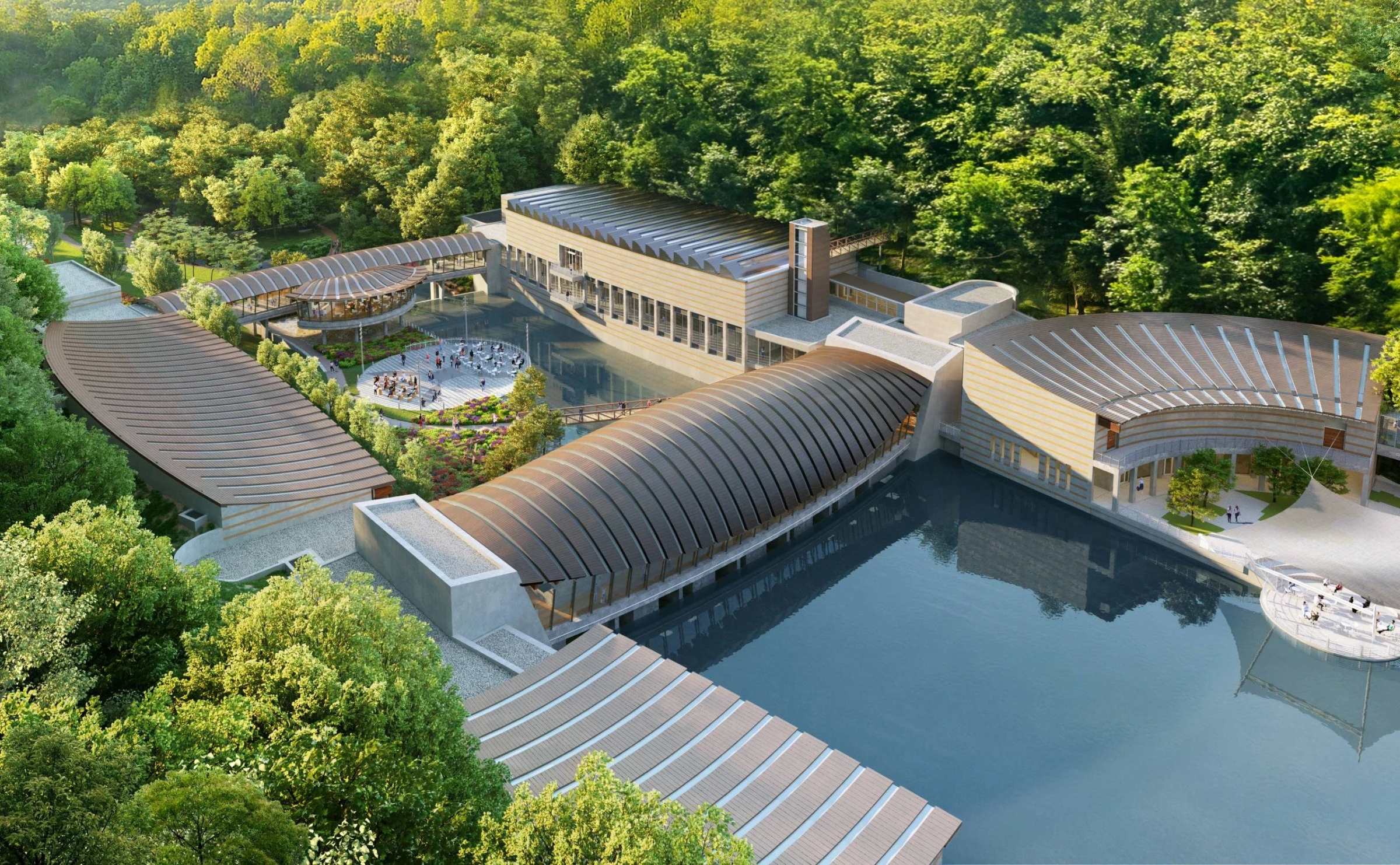
Crystal Bridges Museum of American Art will open a 114,000 square foot expansion to the public on June 6 and 7, a project first detailed by Artnet and promoted through the museum's official expansion page and opening announcement. The Arkansas institution says the project adds new galleries, a temporary exhibition hall, studio facilities, landscaped outdoor areas, and a Learning and Engagement Hub, all while preserving the free-admission model that has always been central to its public story. On paper, that sounds like the ideal museum expansion press release: more space, more access, more programming, more beauty, and no ticket barrier.
But Crystal Bridges has always been more consequential than its press materials imply. Since opening in 2011 under the patronage of Alice Walton, it has functioned as a test case for what a major American museum can look like when philanthropy, regional ambition, architecture, and soft civic branding are fused into one institution. The new expansion raises that stake. It is opening as the United States turns 250, at a moment when museums are under pressure to justify growth not only as spectacle but as a public argument about whose stories count in American art. Crystal Bridges is clearly trying to meet that pressure head on.
The architecture matters, but the institutional ambition matters more
The expansion continues the looped circulation logic of the original Safdie design, which was built into a wooded ravine and sold from the start as a rare marriage of architecture, landscape, and regional setting. According to the museum, the new footprint includes a larger contemporary gallery, a second temporary exhibition space, an elevated café, additional outdoor features, and new artmaking spaces. Those are not minor amenities. They mark a shift from a museum known mainly for its singular campus and collection to a broader cultural campus designed to keep visitors for longer stretches and to serve more types of publics in a single visit.
That strategy is easy to caricature as lifestyle packaging, but it would be a mistake to dismiss it that quickly. American museums increasingly have to compete not just with one another, but with every other claim on public time, family attention, and cultural spending. Crystal Bridges is responding by making itself more legible as a place where people can learn, linger, make things, and encounter art without being forced into the old sequence of entry, reverence, and exit. The museum's own language about storytelling and community is self-conscious, yet it also describes a real operational model. This is a museum trying to convert architectural growth into repeat public use rather than one-off pilgrimage.
That operational shift has curatorial implications too. A museum that builds more studios, social zones, and flexible learning spaces is implicitly saying that the audience for American art is not just a visitor who arrives ready to decode objects from a distance. It is also a family, a school group, a local resident, a repeat visitor, and someone who may enter through making before they enter through connoisseurship. Institutions talk this way all the time, but Crystal Bridges has the scale and funding to test what it means in practice. If the new spaces are programmed seriously, they could help the museum dissolve the old boundary between the gallery as a place of authority and the education wing as a place of simplification.
The strongest part of the project is the attempt to widen American art without pretending the category is settled
Artnet's preview made one point especially clear: the expansion is being paired with a broader rehang of the collection and with new collecting emphasis on craft and Indigenous art and craft. That is a more serious move than it may initially sound. Many museums claim to be broadening the story of American art while leaving their most prestigious display zones structurally unchanged. Crystal Bridges appears to be using new space to redistribute emphasis across the institution, integrating practices that older museums often treated as supplemental. Its concurrent exhibition program, including work around the country's 250th anniversary, suggests an institution that wants the expanded building to carry an expanded national narrative as well.
That is also where the museum's philanthropy becomes culturally strategic. Crystal Bridges can move faster than many public institutions because its funding structure gives it unusual latitude. The advantage is obvious: free admission, ambitious acquisitions, and a major capital project that does not wait on a slow civic consensus. The risk is also obvious: the museum's public identity can become too tightly tied to the priorities of a single philanthropic ecosystem. Expansion therefore becomes not just a building story but a governance story. When a privately powered museum claims to speak for a broader America, it has to show that the pluralism on its walls is matched by a serious pluralism in how it imagines its audiences.
Readers who want a sharper framework for that question should revisit our guide to reading museum expansion announcements. Crystal Bridges is more transparent and more publicly minded than most institutions in this genre, but the same questions still apply: what bottleneck is the project solving, who benefits most, and what version of institutional power is being normalized in the process?
Free admission remains the museum's sharpest argument, but it is not the same thing as democratic culture
Crystal Bridges has been free since day one, and that fact carries real weight as other museums continue to debate the economics and politics of ticketing. In a country where museum admission can still function as a quiet filter on who feels entitled to enter, free access is not cosmetic. It changes the baseline relationship between institution and public. The museum is right to keep foregrounding that point. It allows the expansion to be read not simply as an increase in square footage but as an expansion of availability.
Still, free admission alone does not settle the democratic question. Museums can be free and still feel socially narrow, intellectually overmanaged, or geographically symbolic rather than genuinely communal. Crystal Bridges seems aware of that risk, which is why the Learning and Engagement Hub is arguably the most important piece of the project. Studios, artist residencies, and flexible making spaces suggest an institution trying to deepen participation rather than just raise attendance. If those spaces are meaningfully programmed, the expansion could strengthen the museum's claim to be a regional civic anchor rather than an architectural destination with a benevolent ticket policy.
The challenge will be consistency. A free museum that expands into event infrastructure, large-scale temporary shows, and family-oriented amenities can drift toward a polished visitor economy if the curatorial program softens to match it. The question is whether Crystal Bridges can keep its collection displays, commissions, and educational work intellectually demanding while broadening its social appeal. That balance is harder than the rhetoric of access usually admits.
It is also where comparisons with other recent building projects become useful. Some museums spend heavily on new architecture only to discover that the new space mainly intensifies blockbuster dependence or donor expectations. Crystal Bridges has a chance to avoid that trap because its admission model lowers the pressure to monetize every square foot through ticketed prestige. But free entry does not remove every commercial temptation. The museum will still need to prove that its expanded galleries and event logic serve art historical ambition rather than merely smoothing the institution's brand as a destination campus. The difference will show up in the next two years of exhibitions, acquisitions, and how bravely the museum uses its new room.
What comes next is whether the expansion changes the museum's position in the national field, not just in Northwest Arkansas
The opening weekend will generate the predictable metrics: attendance, coverage, social circulation, and comparisons to other recent museum building projects. The more important test comes afterward. Will the new temporary exhibition hall attract shows that materially alter the museum's national standing? Will the contemporary gallery and new collecting lines produce a sharper curatorial voice? Will the Learning and Engagement Hub become a serious engine for public culture, or merely a handsome educational wing attached to a donor-backed landmark? These are the questions that determine whether a capital project becomes institutional substance.
Crystal Bridges already occupies a strange and powerful place in the American museum map. It is regional in geography, national in ambition, and unusually well resourced in a field that often pleads scarcity. This expansion does not erase those contradictions. It intensifies them. That is why it deserves attention. At a moment when many museums talk about relevance while retrenching, Crystal Bridges is still building. The real issue is what kind of public story that new scale will allow it to tell, and whether the museum can make that story feel larger than its own success.
If the museum uses this project merely to consolidate prestige, the expansion will look handsome and limited. If it uses it to sharpen how American art is told, who gets invited into that story, and how free access can be paired with real intellectual seriousness, the project could become one of the few museum expansions in recent years that changes the terms of the argument rather than just enlarging the container. That possibility is what makes the opening worth watching beyond the usual architecture headlines.