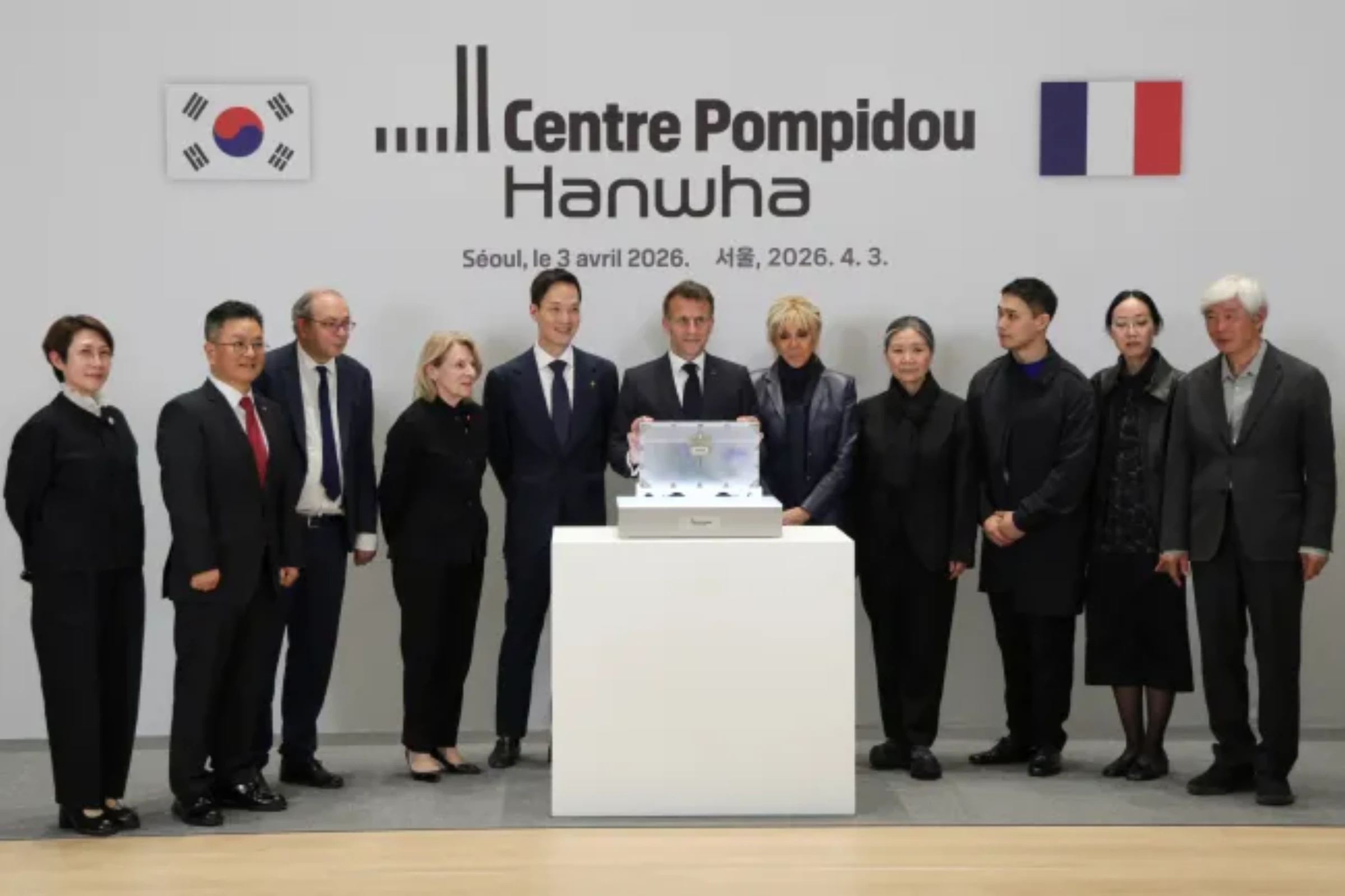
French Artists Denounce Pompidou-Hanwha Pact
Over 100 French artists call for the termination of the Centre Pompidou's partnership with South Korean conglomerate Hanwha Group over arms industry ties.
The Centre Pompidou, one of the world's most influential modern art institutions, finds itself at the center of a fierce ethical debate as more than 100 prominent French artists have signed an open letter demanding the immediate termination of its partnership with the South Korean business conglomerate Hanwha Group. The protest comes just as the new 'Centre Pompidou Hanwha' museum in Seoul is preparing to open its doors to the public, marking a contentious expansion of the French institution's global brand.
The core of the controversy lies in Hanwha Group's extensive ties to the defense industry, specifically its relationship with the Israel Defense Forces (IDF). Reports indicate that Hanwha Systems, an affiliate of the parent group, established partnership deals in 2021 with Israeli firms Elbit Systems and Elta Systems. These companies are subsidiaries of Israel Aerospace Industries, the state-owned entity responsible for much of Israel's military and civilian aerospace manufacturing. For the signatory artists, this connection transforms the museum's expansion into a moral liability.
The Charge of 'Art-Washing' and Corporate Complicity
In the open letter, the artists explicitly describe the imminent opening of the Seoul venue as an "art-washing" operation. The term refers to the practice of using cultural prestige and the arts to mask or distract from unethical corporate behavior or political atrocities. The signatories argue that the partnership serves to scrub the image of a 'notorious arms dealer' whose stock value allegedly surged following the events of October 7, 2023, thereby profiting from armed conflict in Gaza.
The collective's grievances were further detailed in a sprawling op-ed published in Libération, where they criticized the commodification of culture. They argue that the international expansion of museums through alliances with multinational corporations creates a dangerous precedent where the institutional legitimacy of the arts is traded for corporate capital, regardless of the source of that wealth. This process, they suggest, strips the museum of its critical distance, turning it into a marketing tool for entities whose activities are fundamentally opposed to the humanistic values that art should uphold.
The critique extends to the very nature of the 'franchise' model now being adopted by major Western museums. By exporting their brand to Seoul, the Pompidou is not merely sharing art but is actively participating in a global network of soft power that often obscures the hard power of the military-industrial complex. When a museum' la physical presence in a new city is funded by a company linked to the manufacture of weapons, the building itself becomes a monument to that complicity, regardless of the artworks it contains.
This trend toward institutional franchising reflects a broader shift in the museum's operational model, where the goal is no longer solely the preservation and study of art, but the expansion of a global brand. Critics argue that when the Pompidou signs these deals, it is effectively outsourcing its curation to the highest bidder. The result is a curated experience that is sanitized for corporate consumption, where the radical edges of modernism are smoothed over to avoid offending the financial partners who make the expansion possible. The 'Pompidou brand' becomes a seal of approval that provides a veneer of respectability to corporate entities, regardless of their involvement in global conflict.
Prominent Voices in the Protest
The list of signatories reflects a cross-section of the contemporary art world, ensuring the protest cannot be dismissed as a la marginal movement. Among the voices are Ali Cherri, who won the Silver Lion at the 2022 Venice Biennale, and Lili Reynaud-Dewar, winner of the 2021 Marcel Duchamp Prize. Their participation signals a deep rift between the administrative leadership of the Centre Pompidou and the creative practitioners who provide the institution with its cultural value.
The protest is also supported by intellectual heavyweights such as Soyoon Ryu, a professor and art historian at the University of Chicago, and Ariella Aïsha Azoulay, a renowned Palestinian Jewish photography theorist. This coalition of artists, historians, and theorists suggests that the critique is not merely political, but rooted in a theoretical opposition to the neoliberal scaling of museums. They argue that the Pompidou is sacrificing its intellectual autonomy for the sake of geographical expansion.
For these artists, the signing of the letter is an act of professional solidarity. They are asserting that the art world cannot be separated from the world at large, and that the financial structures supporting the display of art are as important as the art itself. By naming the specific corporate entities involved, such as Hanwha Systems and its Israeli partners, the protesters are forcing a public accounting of the museum's financial ties.
The scale of this protest is particularly significant given the historically complex relationship between French artists and the state. The Pompidou has always been a site of tension between the avant-garde and the government, but the current dispute represents a shift toward a more globalized form of resistance. The artists are not merely protesting a la local policy but are challenging the entire logic of corporate-funded cultural diplomacy. They are demanding that the institution recognize the contradiction of displaying art that celebrates human rights in a building funded by the business of war.
Institutional Expansion vs. Ethical Integrity
The four-year agreement, initially signed in 2023, represents a broader trend of 'franchising' Western museums to Asian markets. However, while the Centre Pompidou may view the Seoul project as a way to disseminate modernism globally, the protesters see it as a surrender to the highest bidder. The tension was palpable last week when Chanel staged a Métiers d'Art show at the museum, further intertwining high fashion, corporate luxury, and institutional art in a way that critics argue erases the critical distance necessary for a museum to function as a public trust.
This synergy between the museum and luxury brands like Chanel only exacerbates the perception that the Pompidou has transitioned from a public institution to a corporate hub. When the boundary between a public museum and a private brand becomes porous, the museum's ability to critique power is compromised. The artists argue that the 'Centre Pompidou Hanwha' is not a bridge to a new audience, but a billboard for a corporate empire.
The broader implications for the art world are severe. If the Pompidou successfully navigates this crisis without terminating the partnership, it may signal that the era of ethical curation is over, replaced by a la model where the financial viability of a project overrides any moral concern. This would embolden other institutions to seek similar partnerships with entities involved in controversial industries, further eroding the role of the museum as a critical social space.
The paradox of the Pompidou's position is that it was founded as a radical break from the traditional museum model—a 'machine for art' that was open, transparent, and democratically oriented. To see it now enter into a partnership with an arms conglomerate is, for the protesting artists, the ultimate betrayal of its founding ethos. The institution is no longer challenging the structures of power; it is being absorbed by them. This transformation marks the end of the Pompidou as a site of institutional critique and its birth as a corporate asset.
As the Centre Pompidou Hanwha prepares for its official public launch, the institution faces a critical question: can a museum maintain its role as a site of social critique while being funded by entities implicated in the machinery of global warfare? For the signatory artists, the answer is a resounding no, and the call for termination is an attempt to force the museum to choose between its financial partnerships and its ethical foundations. The success or failure of this protest will likely set a precedent for how other global institutions manage their corporate associations in a time of heightened political awareness.