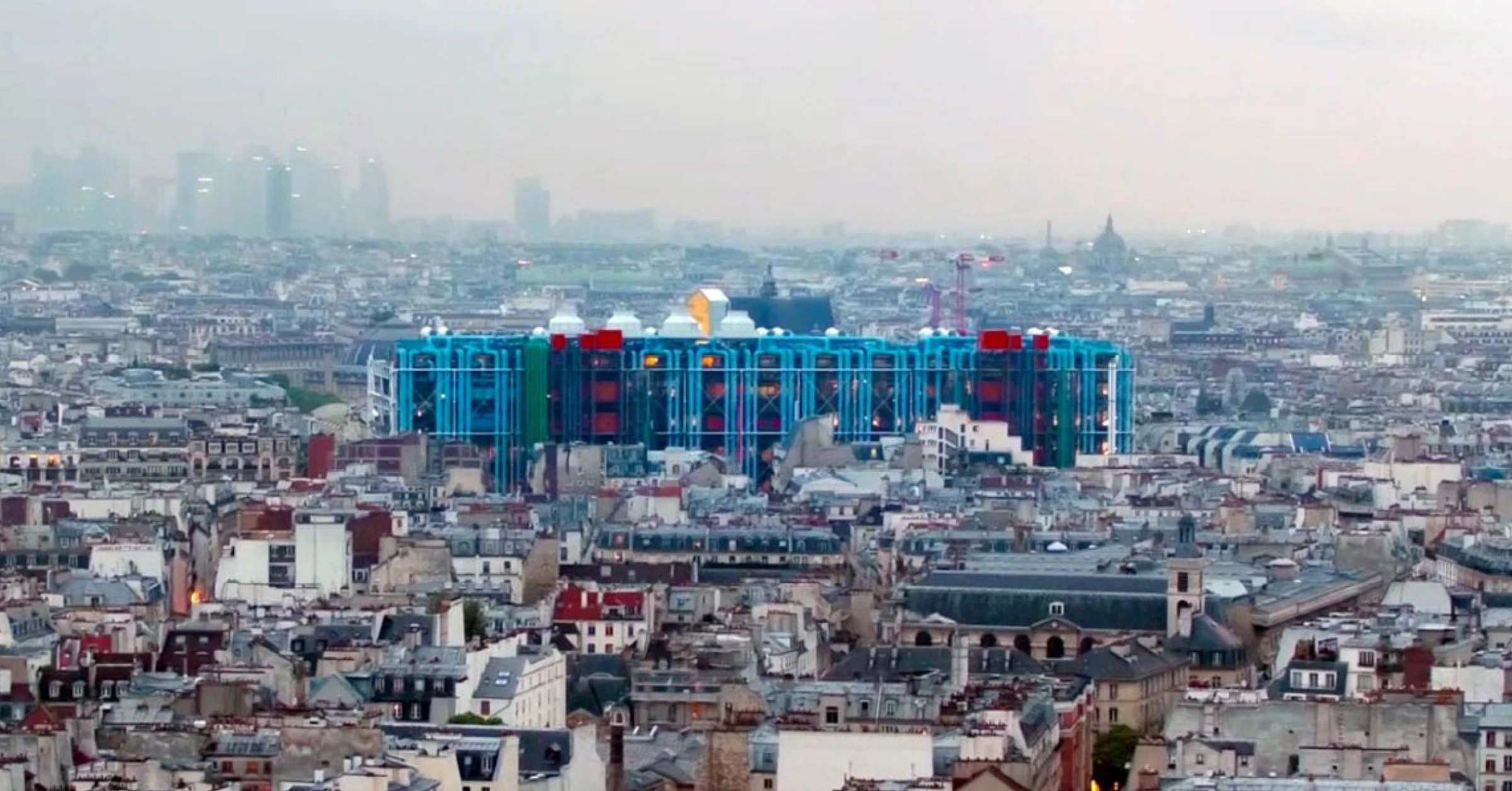
Chanel Backs Pompidou Renovation Through 2030
Chanel and Centre Pompidou have expanded their relationship into a five year pact that will shape the museum through its 2030 reopening
Chanel and Centre Pompidou Turn Renovation Funding Into Cultural Strategy
Centre Pompidou has spent the week making one thing clear: the years before its 2030 reopening will not be a period of graceful dormancy. After announcing a new strategic tie with Hong Kong's M+, the Paris museum has now committed to a five year partnership with Chanel, as Artforum reported. On paper, the arrangement supports the institution during its renovation phase. In practice, it gives Pompidou a luxury backer willing to fund continuity at the very moment when a museum without a fully functioning home risks becoming symbolic rather than active. That matters because a renovation can easily become a pause in public imagination. Collections go quiet, institutional attention migrates elsewhere, and the museum's authority starts to depend on memory. Chanel is helping Pompidou fight that drift.
The official Centre Pompidou site frames the museum as Europe's leading collection of modern and contemporary art and a civic machine for exhibitions, research, debate, and education. Renovation threatens none of that in theory, but it complicates all of it in operations. A major museum that cannot simply rely on its building has to prove that the institution still exists as a producer of cultural meaning rather than as a temporarily inaccessible address. Chanel's money and prestige help Pompidou sustain that argument.
Why This Deal Is Bigger Than Naming Rights During Construction
The partnership language is revealing. Artforum notes that Chanel and Pompidou have already worked together on initiatives tied to representation in the collection and the acquisition of Chinese art. That means the new agreement is not a first date staged for press release effect. It is an extension of an existing pattern in which corporate support is directed not only toward events but toward the shape of the collection itself. Chanel's arts leadership can therefore present this as stewardship rather than opportunistic sponsorship, and Pompidou can present it as a continuation of programmatic alignment rather than a stopgap response to building works.
Yet the asymmetry remains important. Chanel buys what all luxury brands want from museums: seriousness, historical depth, and insulation from the speed of commercial fashion cycles. Pompidou buys resilience. During a renovation, resilience is more valuable than glamour. It keeps staff programs legible, maintains the institution's visibility to younger audiences, and reassures lenders, scholars, and donors that the museum's international role is not being mothballed. Readers who treat such partnerships as simple philanthropy miss how transactional they are. Each side acquires legitimacy from the other, but the museum's need is sharper because it is entering a period where physical closure could otherwise turn it into a story about future plans instead of present activity.
This is also why the timeline matters. A five year term running to the 2030 reopening is long enough to bridge the awkward middle of the renovation, when announcements have faded and the reopening remains distant. Short sponsorships can buy publicity. Multi year support can buy institutional stamina.
Pompidou Is Building a Networked Future, Not Just Fixing a Building
Seen alongside the museum's recent partnership with M+, the Chanel pact looks less like isolated fundraising and more like a larger operating model. Pompidou is preparing for a post reopening future in which the institution's authority is distributed through alliances, research programs, exhibitions, and shared platforms rather than concentrated only in Paris. artworld.today looked at that logic earlier this week in its analysis of the M+ alliance. The point is not that Pompidou is becoming placeless. It is that a flagship museum under renovation has strong incentives to prove it can act as a network while the home site is under strain.
Corporate funding is especially useful in that context because it is flexible in ways public funding often is not. A brand partner can underwrite fellowships, commissions, education projects, off site programming, and collection initiatives that keep the institution visible across multiple publics. Artforum also notes Chanel's broader arts portfolio, including a new fellowship with the Guggenheim, a women's residency with the Pinacoteca de São Paulo, and support for an artificial intelligence focused arts center at CalArts. Chanel is not merely buying placement in one museum. It is assembling a map of institutional alliances that lets it speak the language of long horizon cultural investment.
For Pompidou, that map is useful so long as it does not flatten the museum's own mission into brand compatible vagueness. A museum in metamorphosis can easily start sounding like a platform rather than a collection with historical responsibilities. The harder work is to use new money without letting the donor's strategic coherence become the institution's worldview.
What Renovation Partnerships Change Inside the Museum
External readers tend to see renovation partnerships as public facing public relations devices. Inside a museum, they change planning rhythms. Acquisitions can be timed differently. Education and publishing can be protected when ordinary visitor revenue is disrupted. International partnerships become easier to stage because a sponsor can help absorb the friction costs of travel, programming, and communications. The official Pompidou messaging stresses continuity of resources for future generations of culture makers, which is polished language for a real operational challenge: how to keep a museum from shrinking intellectually while its building is being transformed.
That challenge is especially sharp at a place whose collection has long been central to arguments about twentieth and twenty first century art. If Pompidou disappears from the conversation for even a few years, other institutions do not politely wait. They fill the gap with their own narratives, their own loan networks, and their own claims to public centrality. The current deal is therefore partly defensive. It protects Pompidou's rank in the global museum hierarchy while construction proceeds.
There is another less comfortable question here. When luxury fashion funding becomes this woven into the museum's continuity plan, what kinds of programming become easier to imagine and what kinds become harder? Support is never neutral. It comes with an ecosystem of expectations, sensibilities, and preferred publics, even when no one writes those limits down. Pompidou's independence will be measured not by the existence of the deal but by whether future programming under the partnership still contains friction, risk, and work that does not flatter its patrons.
What the Field Should Watch Before 2030
The cleanest way to judge the Chanel Pompidou arrangement is not to argue abstractly about corporate patronage. It is to watch outputs. Does the partnership produce acquisitions and programs with real intellectual consequence? Does it widen the museum's reach during closure, or mainly help preserve elite visibility? Does Pompidou emerge in 2030 with stronger scholarly infrastructure, broader public trust, and sharper international relationships, or simply with a smoother donor story? Those are measurable differences.
There is also a broader European implication. More museums are entering long capital projects at exactly the moment public funding looks brittle and international competition for attention is intensifying. That makes luxury capital look less like an optional supplement and more like a structural ingredient. The danger is not only dependence. It is that institutions start planning their public futures around the expectations of the patrons most capable of carrying them through disruption. Pompidou is influential enough that its choices become examples for others. If it can use corporate support while keeping curatorial friction alive, the model will look persuasive. If it cannot, the sector will learn a harsher lesson about what museum survival now costs.
The reopening year may be 2030, but the credibility test starts now. Watch whether Pompidou uses the partnership to support hard scholarship, risky commissions, and public facing experiments that would still matter without Chanel's halo. Watch whether younger audiences can still encounter the museum as a place of argument instead of a floating prestige brand. And watch whether the institution is willing to disclose enough about the partnership to let the public judge it on more than tone. Those are the signs that tell you whether this is careful stewardship or simply elegant dependence.
There is already a relevant benchmark on this site. artworld.today's guide to reading museum expansion announcements argues that the real story is usually in the operating model, not the rhetoric. That applies here too. The renovation is only one layer. The deeper story is how a major European museum is using partnerships to survive a capital project without surrendering cultural momentum.
Pompidou and Chanel are betting that a long renovation does not have to look like institutional retreat. They may be right. But the success case is not a sequence of elegant events and soft focus statements about vitality. The success case is a museum that reaches reopening with its collection arguments intact, its public role expanded, and its dependence on luxury capital visible enough to be debated honestly. If that debate remains possible, then the partnership may prove more useful than cynical. If it disappears under polished language, the museum will have bought continuity at the price of candor.
Another thing worth watching is how the partnership shapes the museum's public language during closure. Institutions often become strangely generic when they are between buildings, speaking in abstractions about the future because the present feels provisional. If Chanel's support merely helps Pompidou maintain a smooth communications rhythm, that will not be enough. The museum needs to keep making concrete claims about art, scholarship, and audiences while construction continues. Otherwise the partnership will have protected visibility without protecting substance, which is a much thinner form of survival than the press release implies.