Legal Threat Targets CMHR Nakba Exhibition
A legal threat against the Canadian Museum for Human Rights' Nakba exhibition is testing museum independence, public funding, and curatorial authority
The Canadian Museum for Human Rights Has Entered a High-Stakes Fight Over Historical Narrative
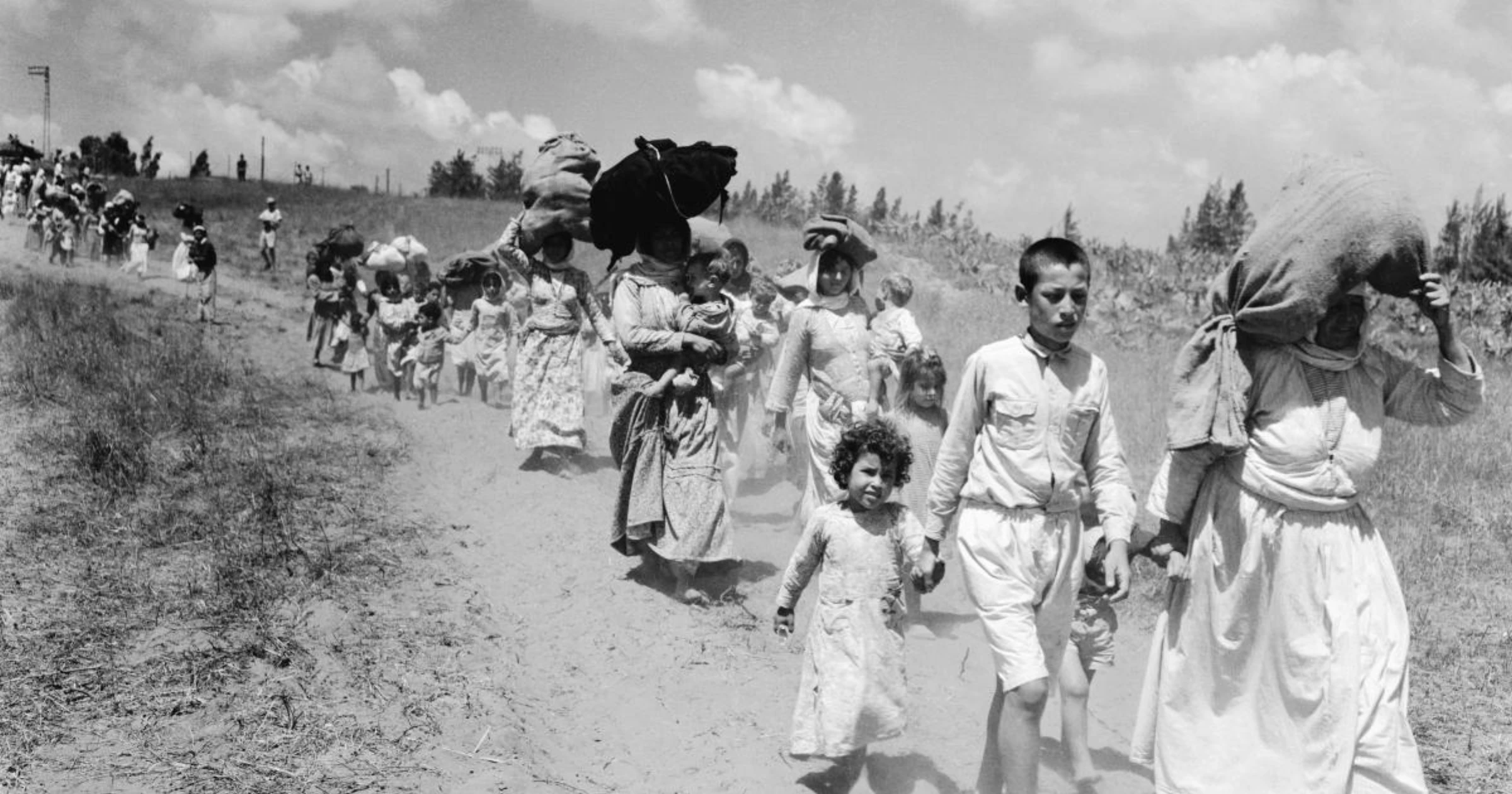
With more than a month to go before opening, the Canadian Museum for Human Rights in Winnipeg has been pushed into a political and legal confrontation over Palestine Uprooted: Nakba Past and Present, an exhibition devoted to the mass displacement and dispossession of Palestinians in 1948 and its continuing legacy. As The Art Newspaper reported, the Tel Aviv based organisation Shurat Hadin has sent a legal letter urging the museum to pause the show and submit it to an independent legal and scholarly review. In one sense this is a familiar dispute over representation and public funding. In another, it is a direct test of whether a national museum can stage a difficult historical account without being forced to treat the very act of naming that history as suspect.
The exhibition is scheduled to open on 27 June and, according to the museum's own description, will explore the human rights violations linked to the ongoing forced displacement and dispossession of Palestinians. It will include video testimonies, personal items, art, photography, and text. That framing is central. The museum is not presenting a general geopolitical survey of the Middle East. It is presenting a rights based exhibition centred on Palestinian Canadian survivors and descendants. Opposition to that decision therefore cuts to the museum's mandate. If a human rights museum cannot foreground the perspective of people describing loss, displacement, and inherited instability, then its commitment to victim testimony begins to look selective.
The timing matters as much as the content. The exhibition concerns a history that remains politically alive, not safely archived. Museums are often more comfortable narrating closed chapters than presenting conflict whose consequences remain immediate, litigated, and emotionally raw. By moving forward with a show that speaks plainly about forced displacement, the CMHR is refusing the comfort of abstraction. That choice alone explains why the dispute has escalated before the doors even open.
Why the Legal Threat Matters Beyond One Exhibition in Winnipeg
Shurat Hadin argues that publicly funded institutions must approach contested historical questions with fairness and balance and says the exhibition risks presenting a one sided narrative. Supporters of the show answer that museums are not obliged to flatten every history into symmetrical dispute, especially when the institution's purpose is to examine abuses from the perspective of those who experienced them. That distinction is crucial. A demand for balance can become a demand for dilution, particularly when the subject is one that has long been denied institutional space. The issue is not whether museums should be careful. They should. The issue is whether care becomes a pretext for chilling a project before the public sees it.
Canada has no shortage of debates over how public institutions present difficult histories, but this case is notable because it involves a museum built around the language of rights, memory, and recognition. The CMHR has previously faced scrutiny over how it narrates colonial violence, antisemitism, and genocide, precisely because national institutions are expected to convert broad ideals into concrete acts of public storytelling. That pressure is part of their job. What makes the current conflict sharper is that the exhibition arrives amid intense international polarization around Palestine and Israel, meaning that curatorial choices that would once have been debated after opening are now being contested in advance. The threat lands before the galleries are open, before public response exists, and before the museum has had the chance to let the work speak in its own register.
This is also a precedent question for other museums. If a legal letter can force pre-emptive review of a human rights exhibition focused on the Nakba, directors elsewhere will notice. Institutions already navigate donor sensitivities, board politics, social media campaigns, and activist pressure from multiple directions. Add legal intimidation to that mix and the result may be more defensive, more bureaucratic, and less willing to stage urgent material. Museums do not need formal censorship to become cautious. They only need enough examples showing that controversy itself carries operational cost.
The comparison point is not whether museums should host debate. They should. The comparison point is whether debate occurs around an exhibition that opens, or whether the threat of debate becomes grounds to stop an exhibition before the public has access to it. That difference matters for institutional independence. A museum that only addresses politically contested history after everyone affected by it agrees on the framing will end up addressing almost nothing of real consequence.
The Curatorial Stakes: Testimony, Public Mandate, and the Politics of Legibility
The little publicly available detail about the exhibition is enough to explain why it matters. The museum says it will examine how people displaced in 1948 and their descendants continue to live with insecurity and the inability to return home. That turns the exhibition away from abstraction and toward lived consequence. It also places Palestinian testimony inside a national museum rather than on the margins of activist or community spaces. For supporters, that move is overdue. For critics, it risks ratifying a political narrative through institutional authority. But those two readings are not equal in cultural consequence. One expands public memory; the other seeks to condition that expansion on prior approval.
Museums make this kind of choice constantly, even when the stakes seem lower. They decide whose documents count, whose voices are foregrounded, and whether an exhibition's ethical centre sits with power or with people affected by power. At the CMHR, the exhibition has reportedly been in development for nearly four years and has involved a Palestinian Content Advisory Network, even while final authority remains with the museum. That process suggests curatorial seriousness rather than haste. It also undercuts the idea that the show is a sudden political intervention improvised to follow the news cycle. The exhibition appears instead to be the result of long institutional work finally reaching the gallery.
There is no neutral route through this material. To exclude the Nakba from a museum devoted to human rights would also be a political choice, one that implies some forms of dispossession are museum worthy and others remain too contentious for public treatment. In that sense the legal threat clarifies rather than obscures the issue. It reveals how much symbolic value is attached to museum recognition. Opponents understand that placement inside a national institution matters, because it signals that a history deserves public attention, interpretation, and care. That is exactly why the fight is so fierce.
The exhibition also belongs to a wider museum argument about who gets narratorial authority. Communities asking institutions to hold testimony on their own terms are no longer content with token inclusion. That has changed the expectations around advisory groups, language, and interpretive framing. One reason the CMHR case resonates is that it shows how quickly institutional inclusion can be recast by critics as political bias when the community being centred is Palestinian. That asymmetry will not be lost on curators elsewhere.
What the CMHR Does Next Will Signal How Far Public Museums Can Hold Their Ground
The museum has said only that it is reviewing the letter. That caution is understandable, but the substantive decision ahead is bigger than legal response. The CMHR will need to show whether its leadership treats its mandate as a shield for difficult exhibitions or as a balancing formula that can be invoked to postpone them. One can imagine a spectrum of responses, from modest contextual additions to broader review mechanisms. The most damaging outcome would be to imply that exhibitions addressing Palestinian displacement require a special threshold of pre-clearance not routinely imposed on other histories of loss and state violence.
For the wider museum field, the lesson will be immediate. Directors, curators, and boards are watching whether the institution stands by its process, explains its rationale clearly, and opens the show on time. If it does, the case may strengthen the principle that rights based museums are permitted to present disputed history from the standpoint of affected communities. If it wavers, the result will travel just as far. Future challengers will have a model. The exhibition itself may still open, but the surrounding message will matter almost as much as the content on the walls. Public museums often insist that they are forums for difficult conversation. Winnipeg now has the chance to prove that claim under pressure rather than in mission statement prose.
There is already a lesson for readers and visitors. When institutions say they tell stories of abuse from the perspective of those who lived through it, that principle means very little until it is tested by a subject powerful constituencies would prefer to reframe or postpone. This exhibition has become that test. Whether one agrees with every curatorial choice is not the point. The point is whether a public museum can preserve the right to make those choices openly, defend them responsibly, and let audiences encounter the work rather than encounter only the pressure campaign around it. For Canadian museums, that answer will echo well beyond Winnipeg. Recent disputes over memory, monument, and public language, including our coverage of the Billie Holiday monument finalists in New York, show how quickly cultural institutions become battlegrounds once historical interpretation moves from abstraction into public space.
Readers who want to judge the case fairly should also compare the museum's own exhibition description with the language used by its critics, rather than relying on summaries alone. The institutional page, the museum's wider mandate statement, and the arguments being made in public all reveal how much of the conflict turns on what a human rights museum is supposed to do when testimony itself becomes politically contested. That is a harder and more important question than whether museums should avoid controversy. Serious museums cannot.