Bergen Assembly Bets on Ecology and Mysticism
Lucia Pietroiusti and Filipa Ramos give Bergen Assembly 2028 an ecological and spiritual frame that could sharpen the triennial
Bergen Assembly has chosen a curatorial pair fluent in art's ecological and spiritual turn
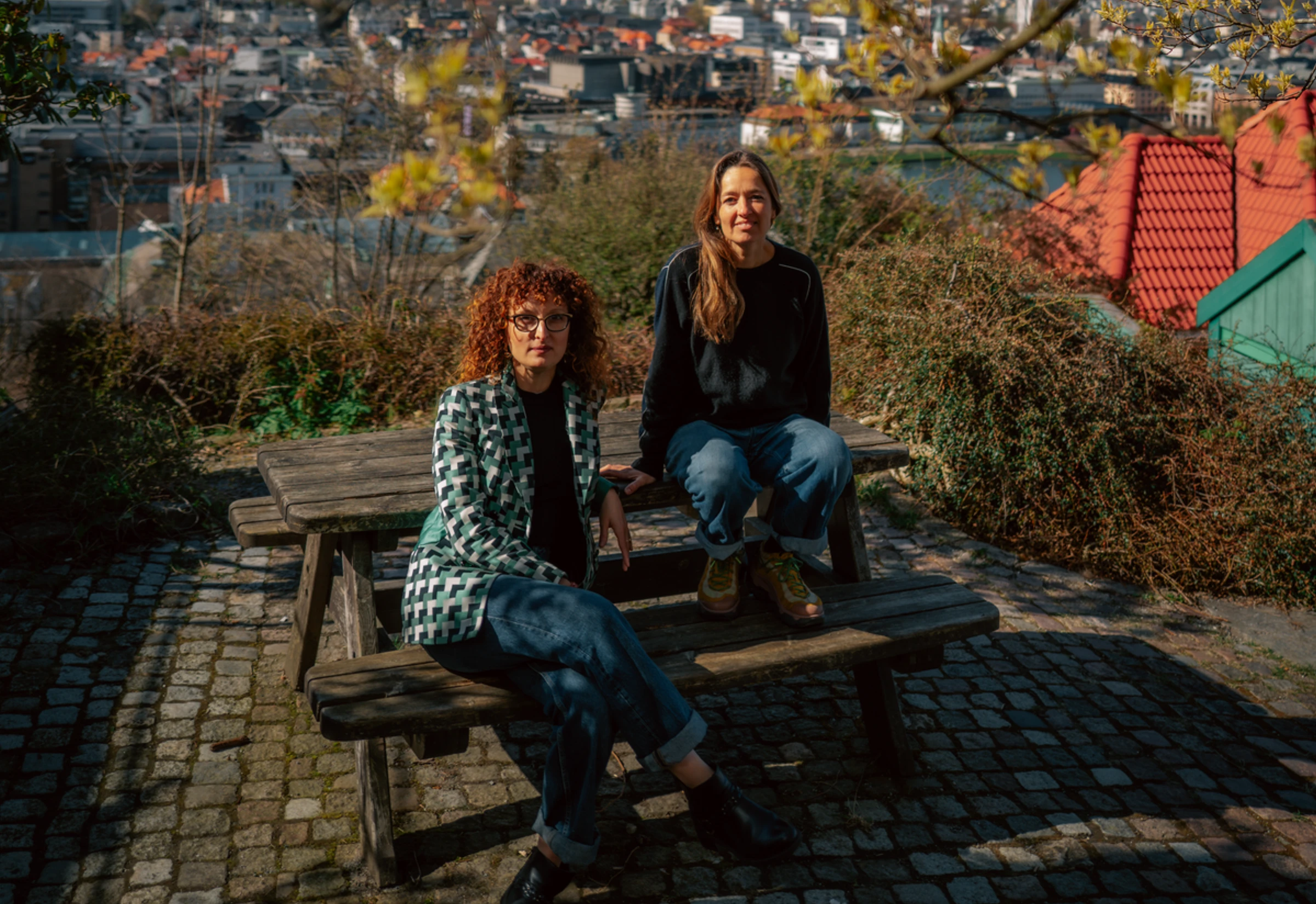
Bergen Assembly's appointment of Lucia Pietroiusti and Filipa Ramos as convenors for the 2028 edition is more than a staffing update. It is a statement about which kinds of discourse the institution believes can still feel urgent within a biennial-scale format that often collapses into administrative spectacle. As Artforum noted, both curators bring overlapping interests in ecology, consciousness, science, spirituality, and forms of more-than-human relation. Bergen Assembly is effectively betting that those threads can produce an edition that feels less like a survey machine and more like a live proposition.
The official Bergen Assembly 2028 page is unusually candid about the symbolic atmosphere the pair is meant to generate. The announcement speaks in a language of gardens, winds, whispers, spirits, animals, clouds, and bird-made maps. That may sound airy, and in a weaker institutional context it would. Here it also signals continuity with Bergen Assembly's long-standing refusal of the standard biennial voice. Since its founding, the platform has tried to distinguish itself from the global exhibition circuit by favoring experiments in form, theory, and social relation over the clean legibility demanded by sponsors and fair-adjacent tourism.
The appointment is credible because Pietroiusti and Ramos have built real bodies of work
The risk with announcements like this is that institutions increasingly recruit curators on the basis of vibes. Pietroiusti and Ramos are stronger than that. Pietroiusti has shaped the Serpentine's General Ecology program and is currently curating the next Autostrada Biennale in Kosovo. Ramos has built a serious track record as a curator, writer, and teacher, and her 2025 book The Artist as Ecologist helps explain why ecological discourse in art now often moves through exhibition making as much as through criticism. Their collaboration is not a random pairing. It consolidates a conversation already under way across multiple institutions about how art can address planetary anxiety without reducing itself to issue branding.
That said, credibility is not immunity. Ecology has become one of the art world's most overused seriousness signals. Every institution now wants to sound relational, attentive, regenerative, and more-than-human. Much of that language is sincere. Much of it also functions as moral atmosphere that papers over the carbon-heavy, donor-dependent, logistics-intensive nature of large exhibitions. Bergen Assembly's choice will matter only if Pietroiusti and Ramos can turn those shared concerns into selection, structure, and public encounter rather than another fluent cloud of terminology.
The announcement's mention of a Prelude gathering in Bergen this September, focused on technology and ecstasy, is a useful clue. It suggests the pair understands that their edition cannot simply oppose digital culture with pastoral retreat. The interesting terrain is where technological systems, altered states, extractive infrastructures, environmental politics, and ritual imagination now overlap. That could produce an edition far stranger and more intellectually alive than the average climate-themed biennial, which too often settles for visualized crisis and dutiful public programming.
Bergen Assembly remains one of the few recurring platforms still willing to risk opacity
One reason this appointment matters is that Bergen Assembly occupies a rare position in the exhibition ecosystem. It is recurring enough to attract global attention but still structurally idiosyncratic enough to resist total standardization. Past editions have built themselves around abstract propositions, fictional figures, and difficult questions about neighboring, alliance, and the nonliving. That history gives the institution room to be ambitious in ways a museum survey or commercial fair cannot. It also means audiences may forgive complexity, provided the eventual exhibition rewards the effort.
The danger, of course, is that opacity becomes self-protection. When curatorial language grows too poetic, it can become hard to tell whether an exhibition has real conceptual tension or simply good incense. Bergen Assembly has sometimes flirted with that edge before. The pair now being appointed should know that the field has less patience than it once did for mystification without stakes. If they want to speak of spirits, animals, and ecstasy, they need to show how those terms reorganize institutional form, political reading, and artistic choice rather than merely lending the platform an enchanted accent.
Readers who followed our recent analysis of the Sobey shortlist will recognize a connected issue. Art institutions increasingly understand that the old managerial tone sounds dead on arrival, yet many still struggle to replace it with language that is both alive and accountable. Bergen Assembly may be better positioned than most to attempt that replacement because the institution's identity has long depended on resisting neat cultural packaging. But resistance has to produce form. If it remains rhetorical, it curdles fast.
The ecological and spiritual frame could sharpen the triennial if it avoids sanctimony
The best version of this appointment would yield a Bergen Assembly that treats ecology neither as subject matter nor as ethical branding, but as a problem of relation, scale, and dependency. That could mean artists who address infrastructure, extraction, animal life, weather systems, technological fantasy, and ritual practice without flattening them into one ideological script. It could also mean formats that decenter the blockbuster exhibition as the only serious way to produce public meaning. Bergen Assembly's structure gives the convenors some freedom here. They should use it.
There is a wider field condition at play too. After years in which biennials raced to prove relevance through explicit social themes, many now face a crisis of sameness. One survey on repair starts to look like the next survey on care, resilience, or community. A focus on mysticism, ecology, and sensation could refresh that exhausted grammar, but only if it survives contact with actual works rather than curatorial mood boards. The real challenge is selection discipline. Can Pietroiusti and Ramos identify artists for whom those concerns are structurally embedded rather than cosmetically topical?
They will also need to avoid the trap of sanctimony. The art world often approaches nonhuman life, indigeneity, ritual, and spirituality with a hunger for borrowed depth that can become embarrassing fast. Good curating here requires precision about context, authorship, and the difference between serious engagement and atmospheric appropriation. If Bergen Assembly turns these themes into a floating spiritual commons, it will look shallow. If it uses them to expose how modern institutions separate reason from feeling, science from myth, and nature from administration, then the edition could become genuinely sharp.
What to watch before 2028 arrives
The Prelude this September will be the first real test. Watch not only the artist list and public language, but the kinds of conversations the platform stages around technology and ecstasy. Is the event a teaser trailer, or does it already show a method of thinking? Do the convenors ask audiences to admire a sensibility, or do they begin to build an argument about contemporary life that can hold conflict as well as wonder? That distinction matters because successful long-horizon exhibition making usually declares its method early, even if it withholds many final details.
Also watch whether Bergen Assembly uses the next two years to deepen local relation rather than simply international anticipation. The institution's legitimacy depends in part on how Bergen itself functions as more than a picturesque host city. Can the convenors connect their themes to the city's weather, labor histories, coastlines, infrastructures, and publics without provincializing the project? That local-global balance is hard, but it is one of the few places where a recurring platform can still distinguish itself from the biennial template.
For now, the appointment looks promising because it pairs two curators whose interests are serious, legible, and already in motion. But promise is the easy part. By 2028, nobody will care that the announcement sounded poetic if the exhibition itself feels vague. Bergen Assembly has chosen a pair capable of building something stranger than the current biennial norm. The field should hope they also build something tougher.
The funding and governance dimension should not be ignored either. Any platform that wants to speak about interdependence, ecology, and expanded forms of life eventually runs into budgets, shipping choices, venue politics, and the ordinary bureaucracies that make exhibitions possible. That is not a cynical footnote. It is where rhetoric becomes structure. If Pietroiusti and Ramos can align their language with concrete operational decisions, the 2028 edition may feel unusually coherent. If not, the appointment will join the long list of art-world announcements that sounded visionary until reality asked for line items.
That is why the convenors should be judged not only on artist names but on exhibition metabolism. How much travel does the edition require? How are local partnerships built? Does public programming extend the inquiry or merely decorate it? Can the platform stage intellectual difficulty without drifting into private language for insiders alone? These are practical questions, but they are also curatorial ones. An exhibition about interdependence that ignores the material systems sustaining it would contradict itself at the level of form.
Bergen Assembly still has time to prove that its difference from the biennial mainstream is substantive rather than stylistic. This appointment gives it strong material to work with. The next challenge is discipline: turning atmosphere into sequence, sequence into encounter, and encounter into a public argument that can survive after the press release glow fades.