Sobey Prize Shortlist Reshapes the Canadian Field
The 2026 Sobey shortlist makes regional and Indigenous practice central to the story of where Canadian contemporary art is heading
The Sobey shortlist is making a claim about Canadian art geography
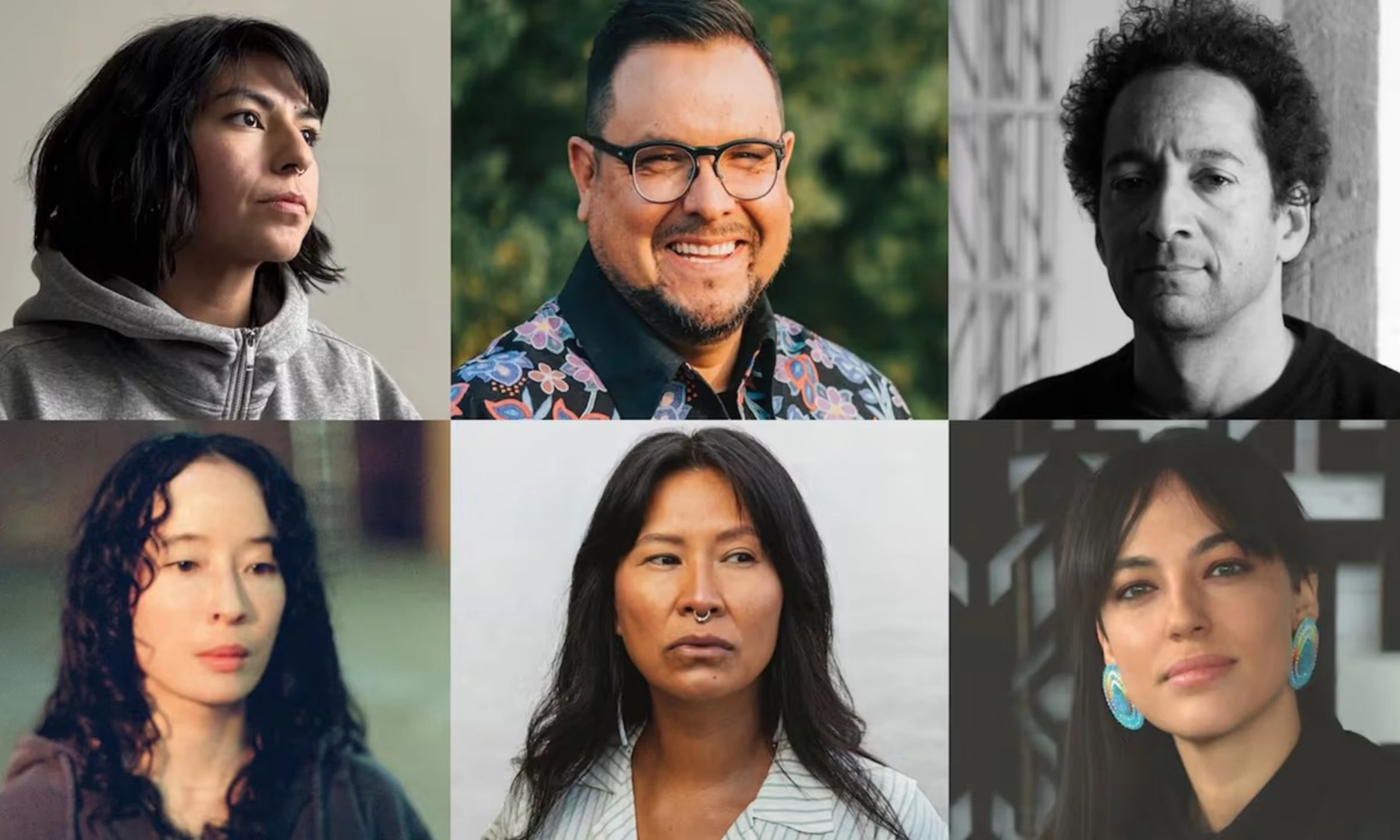
The 2026 Sobey Art Award shortlist does more than identify six strong artists. It also insists that Canadian contemporary art cannot be credibly narrated through a Toronto-Montreal corridor alone. As The Art Newspaper reported, this year's finalists are Melaw Nakehk'o, Samuel Roy-Bois, Audie Murray, Lotus L. Kang, Caroline Monnet and Shane Perley-Dutcher, each representing a distinct region. That regional structure is not decorative bureaucracy. It is the mechanism through which the prize tries to redistribute visibility in a country where infrastructure, patronage and press attention still cluster unevenly.
The immediate headline is that four of the six finalists are of First Nations ancestry and several of the shortlisted practices are explicitly rooted in community knowledge, material histories and forms of making that resist easy separation between contemporary art and inherited craft. That matters because prizes often flatten difference into a rhetoric of excellence abstracted from context. The Sobey shortlist this year does almost the opposite. It signals that context is the work's pressure system, not its explanatory footnote.
The award's structure still matters because money and exposure travel together
The Sobey remains one of Canada's most consequential art prizes because it combines validation with real financial distribution. Each finalist receives C$25,000, the winner receives C$100,000, and the longlisted artists who do not make the final six still receive C$10,000. Those figures are not life-changing in every case, but they are serious enough to alter production timelines, studio stability and institutional attention. Prizes never only distribute money; they distribute future invitations, acquisition interest, curatorial research and a changed baseline of seriousness.
The exhibition at the National Gallery of Canada later this year will magnify that effect. Group prize exhibitions are often the point at which a shortlist stops being a press item and becomes a public argument. Viewers can compare scale, medium, ambition and installation intelligence across practices that would not normally be seen under one framing device. The risk, of course, is that prizes encourage horse-race spectatorship. But when the shortlist is this materially and regionally varied, the comparison can be illuminating rather than merely competitive.
There is also a quieter institutional point here. The Sobey Art Foundation and National Gallery are effectively co-authoring a narrative about the national field. Which practices are imagined as urgent? Which regions are treated as producing central voices rather than supplemental ones? Which forms of labor count as contemporary seriousness? Those questions sit underneath every shortlist, whether juries acknowledge them or not.
Indigenous and material practices are not the side note this time
What gives the 2026 shortlist much of its force is that Indigenous and materially grounded practices are not included as representational obligation around a more conventional core. They are the core. Melaw Nakehk'o's work spans textile practice, film and land-based pedagogy. Audie Murray moves through beadwork, drawing and installation with a sharp sense of memory and contemporary Indigenous life. Shane Perley-Dutcher transforms Wabanaki ash basketry through metal and organic materials. Caroline Monnet's work engages Anishinaabe and French inheritance through forms that are at once formal and historically charged. This is not a prize pretending that medium innovation only happens through digital spectacle or market-scalable painting.
That emphasis feels right for the moment. Across North American institutions, some of the most compelling work is being made by artists who treat material process as political intelligence rather than artisanal backdrop. The language of innovation often remains trapped in technological metaphor, but many of the field's strongest artists are innovating by reworking lineage, technique, memory and spatial relation. The Sobey shortlist looks more credible because it seems to understand that.
Lotus L. Kang and Samuel Roy-Bois complicate the field in another direction. Kang's site-responsive installations and photographic-sculptural language operate through impermanence, exposure and unstable form. Roy-Bois has long explored exhibition architecture and the social conditions of space-making. Together they widen the shortlist beyond a single reading of identity or craft while still preserving the sense that this year's jury values practices that reshape how viewers move through physical and historical space. That is a coherent curatorial instinct, not an accidental grouping.
The politics of regional prizes are real, but this lineup mostly earns its case
Regional prize structures can easily become bureaucratic alibis. They can spread attention thinly, overprotect representational balance and produce shortlists that feel administratively correct rather than critically alive. The Sobey has flirted with that danger before, as most national prizes do. This year's list, though, appears stronger than the structure that contains it. The artists do not read like placeholders for geographic fairness. They read like artists whose practices are already exerting pressure on how institutions think about medium, ancestry, environment and public address.
That does not mean the prize escapes criticism. Any national award still risks compressing very different artistic conditions into a single annual scoreboard. Viewers should resist reading the shortlist as a clean census of Canadian excellence. Plenty of strong practices will remain outside it. But criticism of the format should not obscure the seriousness of the selected work. One can question the machinery of prizes while still recognizing when a jury has assembled a lineup that deserves sustained attention.
Readers who want to approach the list intelligently should avoid asking only who will win. A better question is what kind of institutional future this shortlist is pointing toward. If museums and collectors actually follow the jury's lead, they would invest more deeply in artists whose practices are regionally grounded, materially specific and historically accountable. That would be healthier than treating the shortlist as one more symbolic diversity success story that leaves acquisition and programming habits unchanged.
What to watch before the winner is announced
The most revealing stage will be the exhibition and the discourse around it. Watch how the National Gallery frames the artists: as separate regional ambassadors, as a loose national survey or as makers whose concerns intersect around land, memory, material and form. That framing will influence how the public reads the shortlist and how future institutions package the work. Also watch whether market language begins to overtake curatorial language, especially around artists with stronger international visibility such as Lotus L. Kang and Caroline Monnet.
There is also a broader reading strategy here, one we take up in our guide to reading artworld claims in real time: do not confuse announcement rhetoric with the deeper structure it is trying to normalize. The Sobey announcement normalizes a field in which regional and Indigenous practices are central to the story of contemporary Canada. If institutions follow through materially, that will matter. If they do not, the shortlist will still have exposed the gap between public language and actual commitment.
For now, the shortlist deserves credit for being more than a polite roll call. It is a compact argument about who gets to define the current tense of Canadian art. That is exactly what a serious prize should do.
There is an international context here too. National prizes increasingly matter not because they define a canon once and for all, but because they offer museums, curators and collectors a compressed map of where serious institutional attention may be heading next. When a shortlist emphasizes artists working through land-based pedagogy, basketry, beadwork, unstable installation, architecture and hybrid ancestry, it implicitly pushes back against the narrower export model in which contemporary art from Canada becomes legible abroad only through a handful of metropolitan gatekeepers. The Sobey jury is effectively saying that the country's strongest practices are distributed, materially alert and historically situated. That claim will travel if institutions let it.
Watch, too, how the finalists are written about over the next few months. If coverage reduces the field to personality and odds-making, the prize will have been turned into content. If criticism takes the work seriously on its own terms, the shortlist could become a useful educational device for audiences who do not yet know how much contemporary art in Canada is being built through relations between community, material and place. That educational function matters. A prize can either flatten discourse into winner talk or widen it into deeper looking. The 2026 Sobey list gives critics and institutions enough substance to choose the second path if they want to.
The strongest outcome would be a ripple effect rather than a coronation. Museums beyond Ottawa should use the shortlist to revisit acquisition priorities, group-show framing and who gets invited into larger narratives about the nation's present. Collectors should read it as a signal that some of the most durable work right now may emerge from practices the market once treated as peripheral. And readers should treat the shortlist not as a verdict but as a diagnostic. It reveals which practices now feel impossible for a serious jury to ignore. That is already a meaningful cultural fact before any winner is announced.
There is a practical criticism challenge here as well. If writers meet this shortlist with lazy consensus language about diversity, resilience and representation, they will miss what is structurally interesting about it. The stronger critical task is to describe how these artists are using form, material and installation to reorganize public attention. That requires looking closely, not just praising the jury's optics. The shortlist is good enough to demand that effort. In a prize ecosystem often flattened by ceremony and branding, that is one of the best compliments available.