Yemen's Heritage Workers Fight War, Looting and Silence
Yemeni heritage professionals are trying to protect museums, shrines and historic cities from war, looting and climate damage with almost no support.
Yemen's heritage emergency is no longer only about damage, but about who is still able to act
Stories about Yemen usually arrive in the outside world through the language of humanitarian catastrophe, military escalation and diplomatic stalemate. That framing is not wrong, but it is incomplete. The Art Newspaper\ reports that cultural heritage workers in Yemen are trying to rebuild a system of care under conditions that would overwhelm most national institutions: looted sites, unguarded collections, bomb damage, climate stress, limited international access and a budget so thin that the museums department in the culture ministry reportedly operates on less than $1,000 a month. That number alone should end any fantasy that preservation here is a technical problem waiting for better management. It is a question of political survival.
The newly appointed culture minister Mutte Ahmed Qasem Dammaj is trying to negotiate repatriation agreements with Germany, the United States, Switzerland and France, even though the state apparatus that would receive returned artefacts remains weak. At the same time, local professionals are documenting damage, trying to stabilize buildings and attempting to keep heritage legible to younger Yemenis who have grown up inside war. The most striking detail in the report is not simply that so much has been damaged. It is that the people trying to respond are being asked to rebuild memory, public meaning and institutional trust almost without infrastructure.
Conflict, looting and climate have combined into one pressure system
Yemen's heritage crisis is unusually severe because its threats do not arrive one at a time. Missile strikes and ground conflict have damaged museums, libraries, shrines and urban fabric. Looting thrives where ancient sites cannot be properly guarded. Climate change is eroding mud-brick architecture through both desertification and intense rain. That combination is why film-maker Brent E. Huffman describes Yemen as a perfect storm for cultural heritage. Sites are being hit by war, opportunism, neglect and environmental decay at once. Once you understand that, the usual restoration vocabulary of projects, timelines and best practice begins to sound almost absurdly optimistic.
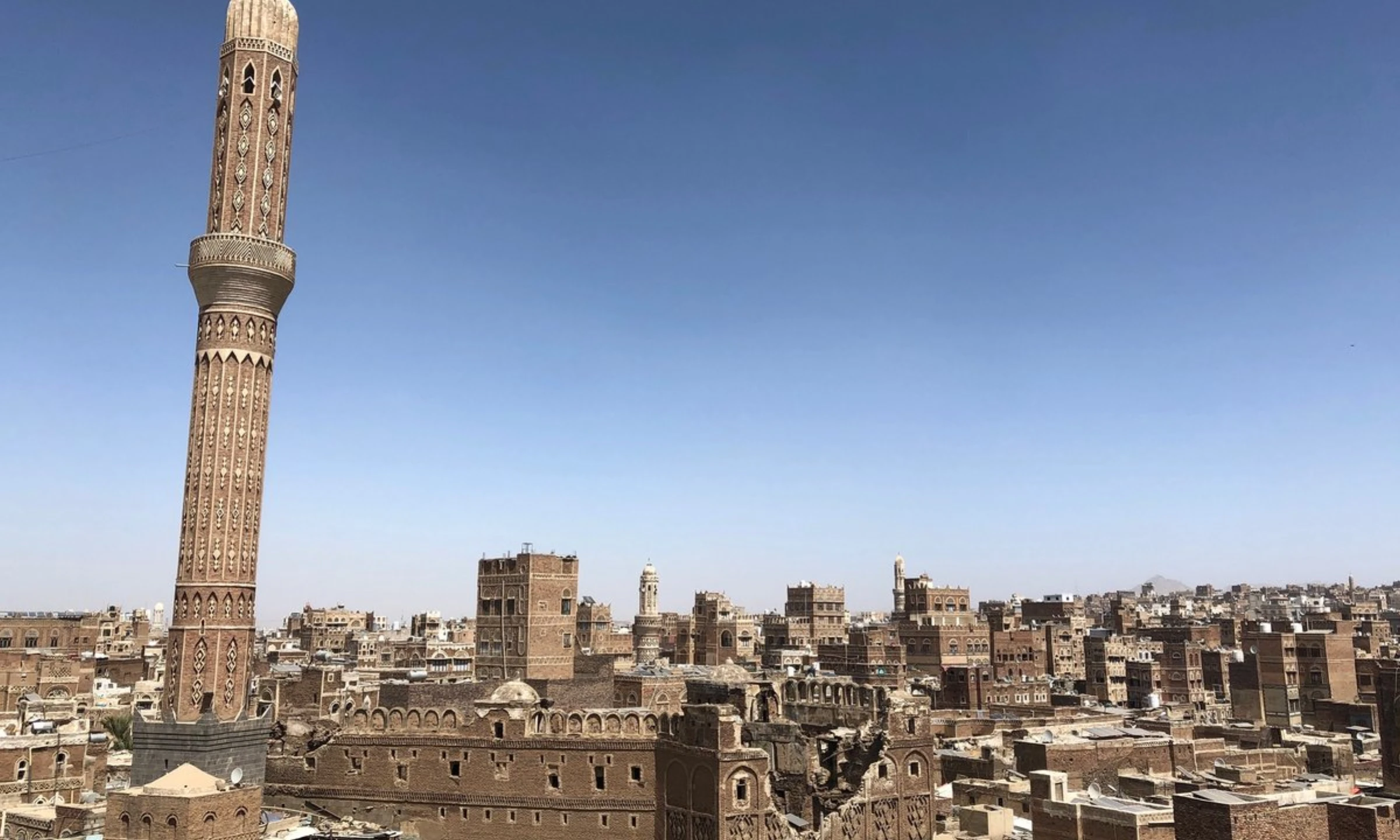
The article's examples are specific and brutal. In Taiz, Saudi coalition airstrikes badly damaged Al Qahira Castle in 2015. The National Library burned. The shrine of Sheikh Abdulhadi al-Sudi was destroyed. In Sana'a, further strikes in 2025 reportedly damaged the National Museum and the seventh-century mosque in the Salah ad-Din neighbourhood, creating structural weakness that still threatens the building. Meanwhile sites associated with the ancient Sabaean kingdom in Marib sit behind chain-link fences visibly breached by holes. That image matters because it captures the difference between nominal protection and actual security. A fence is not preservation when the system behind it has collapsed.
Anyone who wants the larger institutional context should look at UNESCO's listing for the Old City of Sana'a and the agency's wider Yemen country work. Those resources make clear that this is not a niche issue for specialists. Yemen contains urban, archaeological and intangible heritage of regional and global consequence. What is at stake is not a picturesque past, but the continuity of one of the world's oldest cultural landscapes.
Women have become some of the field's most important operators
One of the most important developments in the report is the prominence of women in the preservation effort. Archaeologist Samira Abdel Mawla Qaed Al-Qabati, cultural heritage specialist Noha Awn and other participants at the Taiz conference are doing far more than administrative support. They are planning, supervising restoration, documenting losses and carrying technical knowledge into communities where educational and institutional pipelines have been badly disrupted. That matters in any context. In Yemen it is transformational because it alters who gets to act as a steward of national culture during crisis.
Huffman links this shift partly to UNESCO-backed workforce programmes in the early 2020s and partly to necessity. When formal support systems shrink, women often end up carrying intergenerational transmission, local trust and practical continuity. In the article, Awn describes her work on the marna'a, a traditional water-access structure once common in Yemeni neighbourhoods. That detail is more revealing than it may first appear. Heritage here is not only about monumental landmarks. It is also about ordinary systems of living that encode environmental knowledge, neighbourhood memory and shared identity. Protecting them means defending a way of inhabiting place, not just keeping ruins upright.
Readers of our guide to political pressure on museums will recognize the broader lesson. In stressed environments, cultural institutions rarely fail all at once. They thin out, lose training capacity, stop being able to transmit know-how and gradually become vulnerable to replacement by improvised fixes. Yemen shows that process in extreme form. Cement used in the wrong repair campaign is not just an aesthetic mistake. It can accelerate structural failure and erase the logic of vernacular building traditions.
The international system still talks about protection more easily than it funds it
There is no shortage of high-level language around safeguarding heritage in conflict zones. The problem is operational follow-through. Yemen's workers need site security, conservation training, archival support, building materials suited to local architecture, reliable salaries and channels for lawful restitution. Instead they are confronting donor fatigue, reduced NGO presence and a collapsing environment for multilateral work. The report notes that USAID sent $620 million to Yemen in 2024, mostly for humanitarian assistance, before the agency was dismantled in 2025. UNESCO remains formally active, yet conditions in north Yemen have become much harder after the detention of UN personnel by the Houthis.
This matters because heritage professionals cannot preserve credibility on moral appeals alone. They need institutions that can hold returned objects, document provenance, pay staff and maintain long projects over time. Dammaj may be right to push repatriation agreements, but repatriation without receiving capacity can become symbolic diplomacy rather than durable repair. The same is true for conferences and declarations. They matter, especially when they help local practitioners share information, but they cannot substitute for a functioning preservation ecology.
There is also a media problem. The article notes that some 2025 damage in Sana'a appears not to have been reported in English-language press. That silence is itself part of the heritage crisis. Sites become easier to lose when they vanish from international attention and from the news habits of the institutions that might intervene. Preserving heritage requires narrative bandwidth as much as masonry. Yemen's workers are trying to recover both.
What makes the Yemeni case especially instructive for the wider field is that it strips away the luxury assumptions that often shape international heritage discourse. Elsewhere, preservation debates can revolve around interpretation strategies, digital engagement or the visitor economy. In Yemen, the baseline questions are harsher: who can reach the site, who can secure the archive, who knows the right materials and who will still be in the country next year to continue the work. Those questions expose preservation for what it really is, even in wealthier contexts: a chain of labor, training and social trust that becomes visible only when it begins to fail. Yemen is not outside the global heritage conversation. It is showing its core conditions in stripped-down form.
That is also why restitution cannot be treated as a triumphal endpoint. Returning trafficked artefacts to a devastated museum ecology without sustained support risks turning justice into theatre. The more serious model would join repatriation to storage upgrades, conservation training, salaries, documentation systems and local authority over interpretation. Yemen deserves the objects that were taken from it, but it also deserves the material means to receive them on terms that strengthen public culture rather than burden exhausted institutions with another symbolic obligation. Anything less mistakes moral symbolism for reconstruction.
That makes Yemen a measure of international seriousness. If governments, museums and multilateral agencies truly believe cultural heritage matters in times of conflict, Yemen is where that belief has to become concrete. The country does not need another round of admiring rhetoric about resilience detached from budgets and logistics. It needs durable partnerships that assume local experts are the center of the work, not the picturesque evidence of catastrophe. Anything less leaves preservation workers to carry a global responsibility with almost none of the global resources.
What comes next depends on whether care can be made infrastructural again
The best way to read this story is not as a heroic exception, though there is a lot of heroism in it. It is as a test of whether culture can still be treated as infrastructure in a country where so much else has broken down. If the answer is yes, it will not be because outside observers briefly notice Yemen and then move on. It will be because local expertise is backed with real training pipelines, legal agreements, conservation resources and enough public attention to make heritage protection politically costly to ignore.
For now, the most credible source of hope lies with the people already doing the work: archivists, archaeologists, engineers, museum staff and community stewards who are refusing the idea that war should have the final word on memory. Their task is immense and deeply unfair. It is also essential. A nation whose monuments, shrines, libraries and urban textures become unreadable is easier to loot materially and narratively. Yemen's heritage workers understand that. The question is whether the rest of the world is prepared to treat their work as central rather than ornamental.