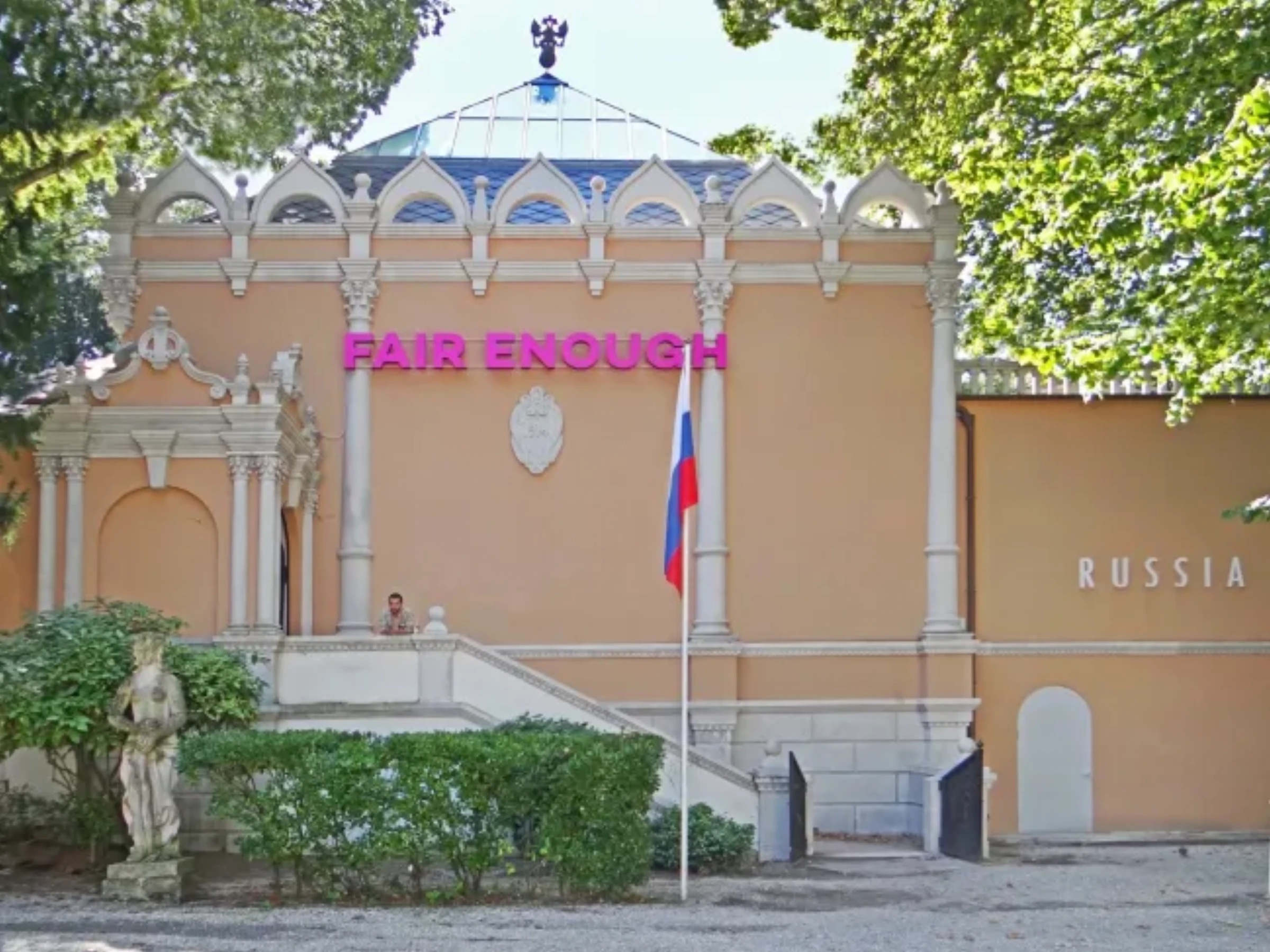
Russian Pavilion to Stay Closed to the Public During Venice Biennale Run
Reports indicate Russia’s pavilion will open only for the preview period and remain closed to general visitors for the remainder of the 2026 Biennale.
The 2026 Venice Biennale is moving into a new phase of institutional stress after reports that Russia’s pavilion presentation will be accessible only to accredited visitors during preview days and closed to the general public throughout the exhibition period. If implemented as described, the arrangement creates an unusual category of participation: present within the event structure, but structurally withheld from broad public encounter.
The shift follows escalating pressure around eligibility and governance. According to reporting, countries whose leaders are currently charged with crimes against humanity by the International Criminal Court have been excluded from award consideration in the Biennale’s juried competition. The Russian case has become the most visible flashpoint because it combines symbolic architecture, diplomatic visibility, and unresolved questions about how far cultural institutions can, or should, separate artistic platforms from state violence.
European political pressure is also becoming material. The European Union has reportedly cut funding for a future Biennale cycle, citing sanctions concerns and moral inconsistency. That is not a rhetorical side-note. When funders begin translating political objections into budget decisions, curatorial and administrative options narrow quickly, and host institutions are forced into legalistic defense postures rather than programmatic leadership.
For curators and museum directors, the Russian pavilion episode matters beyond Venice. It previews a governance model likely to recur: selective access, altered prize frameworks, and legal compliance language as the primary mechanism for handling geopolitically compromised participation. That model may preserve formal neutrality on paper while producing practical exclusions in public experience.
The immediate consequence is a Biennale where the public map and the professional map diverge. Press and insiders can enter one space, ticket-holding visitors cannot. In a city where pavilions function as diplomatic stages and tourist infrastructure simultaneously, that split is not technical, it is interpretive. It changes what the exhibition is for, and whom it is willing to address.