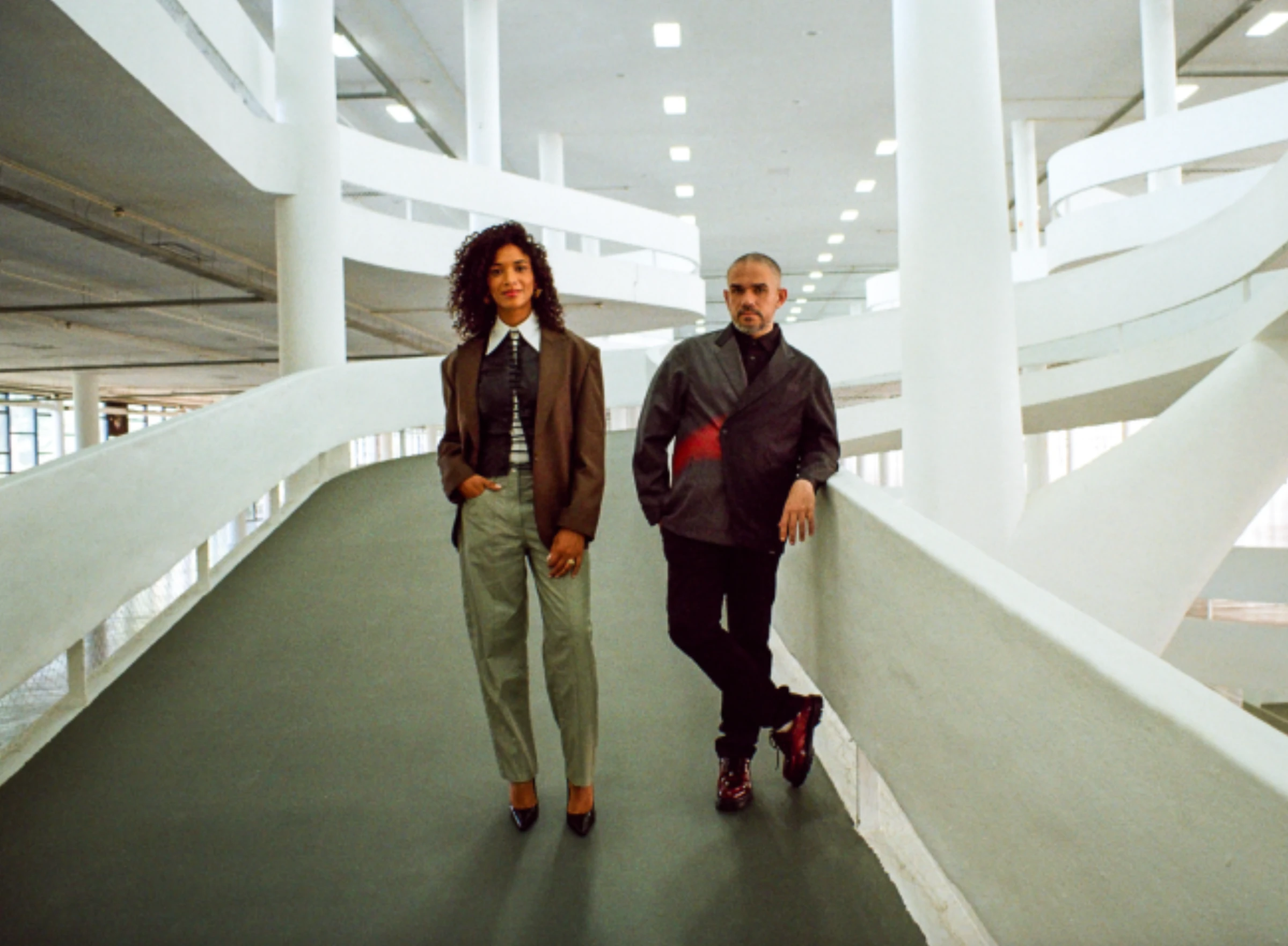
Amanda Carneiro and Raphael Fonseca to Lead the 2027 São Paulo Bienal
The Fundação Bienal de São Paulo has appointed Amanda Carneiro and Raphael Fonseca as co-chief curators for the 37th edition, signaling a generational handoff in Brazilian curatorial leadership.
The Fundação Bienal de São Paulo has named Amanda Carneiro and Raphael Fonseca chief curators of the 37th São Paulo Bienal, scheduled for 2027. The announcement lands as one of the most consequential appointments in Latin American exhibition-making, not only because the Bienal remains the region’s largest recurring international platform, but because the choice places two mid-career Brazilian curators at the center of a global event that often sets curatorial tone across the hemisphere.
Carneiro, based in São Paulo, has built her profile through institutional work at Museu de Arte de São Paulo Assis Chateaubriand (MASP), where she has combined canonical revision with contemporary programming. Fonseca, from Rio de Janeiro, has worked across museum and biennial contexts, including the Denver Art Museum and multiple international projects. Together, they bring complementary portfolios: Carneiro’s museum-centered scholarship and Fonseca’s transnational biennial fluency.
The institutional language around the appointment emphasized process and generational confidence. Andrea Pinheiro, president of the Fundação Bienal, framed the decision as both collective and strategic, arguing that Brazil now has a curatorial cohort with enough depth to lead a flagship event without imported authority. In practical terms, that framing matters. It tells artists, lenders, and partner institutions that the 2027 edition intends to be authored from within Brazilian debates, not merely staged in Brazil for an international audience.
For collectors and curators outside the country, the appointment is a signal to track how the Bienal positions Latin American narratives amid intensifying geopolitical pressure on institutions. Over the next year, the curators’ theme and artist list will show whether the exhibition leans toward historiographic repair, present-tense political analysis, or formal experimentation in public address. The choice of framework will influence acquisition logic and institutional collaborations well beyond São Paulo.
The setting itself remains part of the story. The Bienal is held at the Pavilhão Ciccillo Matarazzo in Ibirapuera Park, a site that has historically carried the contradictions of national branding, avant-garde ambition, and civic spectacle. Any curatorial team working there inherits that charge. Carneiro and Fonseca now have to translate an appointment moment into an exhibition argument that can hold local urgency and global scrutiny at once.