Smithsonian Women's Museum Bill Collapses in Congress
Congress sank the Smithsonian women's museum bill after GOP edits turned a bipartisan plan into a culture-war fight over inclusion and control.
A Museum Decades in the Making Was Defeated by a Late Political Rewrite
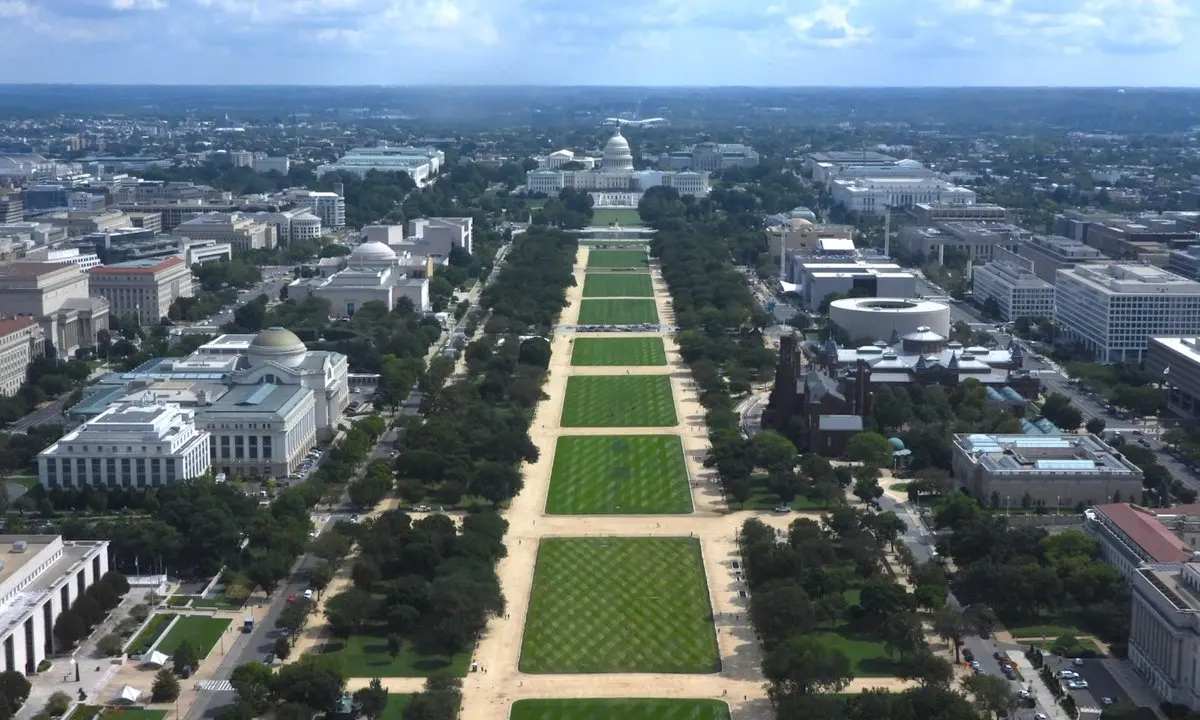
The vote that sank the proposed Smithsonian American Women's History Museum was not a rejection of the idea in any broad historical sense. It was the destruction of a once-bipartisan project through deliberate partisan editing. As The Art Newspaper reported, the House rejected the bill 216 to 204 after Republican lawmakers added language directing the museum to include only "biological women", banning "diversity" and allowing President Donald Trump to override the museum's planned location on the National Mall. That combination transformed a museum authorization fight into a loyalty test inside the culture war, and the project did not survive the conversion.
That matters because the museum had already crossed the hardest threshold in American cultural politics: it had secured broad legitimacy. Congress approved the creation of the museum in 2020, alongside the National Museum of the American Latino, after years of advocacy. The question now should have been how to house the institution and build it properly. Instead the vote became a referendum on whether museum-making itself can still proceed on civic terms, or whether every commemorative institution must now be remade in the image of current partisan grievance.
The official Smithsonian women's history initiative already has programming, research and public materials online, which is a reminder that the museum is not an abstract slogan. It exists as an intellectual and curatorial project before it exists as a building. The failed vote therefore does more than delay construction. It weakens the federal commitment behind the institution and tells curators, historians and donors that the state can still pull the rug from under women's history if the right ideological trigger is activated at the right moment.
The New Language Did Not Clarify the Bill. It Reframed Its Purpose
Supporters of the revised language tried to present the dispute as a simple fight over definitions, but the edits did something much larger. By insisting on "biological women" as a museum principle, Republicans imported a policing mechanism into the institution before it has even opened. By banning "diversity", they inserted a familiar right-wing shorthand whose practical effect is to chill curatorial judgment. By granting the president special authority over the museum's location, they moved the debate from content to command. Each provision narrows institutional autonomy. Together they announce that the museum would be acceptable only if it entered public life already disciplined by executive and ideological oversight.
That is why the Democratic Women's Caucus reacted so sharply. Their statement that a museum about women should not be controlled by one man was not rhetorical excess. It named the structural issue. Museums are not neutral containers that can absorb any political clause without changing character. The rules embedded in their founding documents shape what can be shown, who feels addressed and how the institution understands its own mandate. Once lawmakers start pre-writing exclusions into the museum's logic, the project stops being a museum of women's history and starts becoming an instrument for regulating which women count.
House Speaker Mike Johnson's comments before the vote made the strategy explicit. The line was not that the museum required better governance or stronger scholarship. The line was that Democrats were allegedly obsessed with trans inclusion and that Republicans would not participate. Bill sponsor Nicole Malliotakis used similar language. This is the tell. When legislators accuse their opponents of obsession while centering the same grievance at every stage of the debate, the museum is being used as a stage prop for another argument. The object under discussion is no longer history. It is symbolic domination.
The Real Damage Is to the Idea of Federal Cultural Stewardship
There is a tendency to treat fights like this as noisy but temporary, as if a cleaner version of the bill can simply be reintroduced later. Maybe it can. But the damage here is institutional. The Smithsonian depends on an aura of federal seriousness even when Congress is dysfunctional. Its museums carry the promise that public memory can still be housed in institutions larger than any single administration. When Congress takes a popular museum proposal and turns it into a venue for ideological sorting, that promise looks much thinner.
The episode also throws the future of the Latino museum into sharper relief. The two museums were authorized together, and neither yet has a permanent building on the Mall. If the women's museum can be stalled by politically loading the authorization language, then any museum dealing with identity, migration, race or gender is vulnerable to the same method. This is not merely about one failed vote. It is about a legislative template for disciplining future museums before they become architecturally irreversible.
That vulnerability will shape decisions long before Congress votes again. Donors, architects, curators and outside partners all read legislative instability as risk. If they conclude that a future museum can be ideologically rewritten at any stage, they become more cautious about committing time, money and intellectual capital. The damage then spreads outward from Washington into the very ecosystem that makes a federal museum possible. The institution loses momentum before it loses the next vote, because everyone involved is forced to price political sabotage into the planning process.
Readers should also connect this vote to the broader politicisation of interpretation inside US cultural institutions. The struggle is no longer confined to labels, programming notes or retrospective complaints about representation. It has moved upstream, into authorship, scope and location. If critics spend the next year arguing only about future exhibitions while ignoring the legal architecture that governs what an institution may become, they will be reacting too late. The most consequential culture-war interventions now arrive before a museum opens its doors, when they can still be disguised as drafting choices instead of censorship.
Why This Failure Matters Beyond Washington
The collapse of the bill is also a warning to every museum leader who thinks culture-war politics only become dangerous at the level of protests, donor complaints or social media campaigns. The real power move happens earlier, when lawmakers and trustees write constraints into the institution's foundation. At that stage the public still hears the language of technical amendment, reasonable clarification or accountability. In practice the institution is being told that its legitimacy depends on agreeing in advance to limits that would have been intolerable if proposed after opening day.
This is why the story belongs beside other 2026 fights over governance and legitimacy, including the uproar over MOCAK's leadership dismissal and our guide to reading museum funding crises. The details differ, but the pattern is familiar. Institutions are increasingly told to prove their public worth under conditions defined by political actors who do not trust their autonomy. Sometimes the pressure arrives through money. Sometimes through leadership. Sometimes, as here, through the founding language itself.
What happens next will depend on whether backers treat this as a scheduling setback or as a fight over first principles. A stripped-down bill could return. So could a more confrontational advocacy campaign that forces lawmakers to say openly whether they want a museum of women's history or only a museum of sanctioned womanhood. The latter is the more honest framing. If supporters accept the idea that the institution must earn its life by adopting exclusionary language, they may win a building one day and lose the museum in the process.
There is still a path forward, but it requires refusing the trap that produced this defeat. The museum's supporters have to insist that institutional autonomy is part of the project, not a negotiable extra. They also need to make clear that federal museums cannot function as commemorative shells whose interpretive life is dictated by whichever faction last amended a bill. If that argument can be made successfully, this failed vote may eventually look like a forcing event. If it cannot, Congress will have demonstrated that it can authorise a museum in principle while hollowing it out in practice.
For now the result is blunt. A country that spent two decades saying it wanted a national museum devoted to women's history could not carry that commitment through the House once the bill was redesigned as a culture-war weapon. That is not a paperwork problem. It is a measure of how fragile federal cultural consensus has become. Museums are supposed to widen the field of memory. This vote narrowed it on purpose.
The most revealing part of the vote may be how little it had to do with museum craft itself. No one defeated the bill by proving the scholarship was weak or the public case for the museum had collapsed. The project was beaten by procedural capture. That distinction matters because it shows future museum advocates where the real risk sits. The danger is not that the public has lost interest in commemorative institutions. The danger is that legislators can still weaponize the approval process to force institutions into ideological submission before they exist in permanent form.
It is also worth noticing who now bears the burden of rescue. Not the lawmakers who poisoned the bill, but the historians, advocates and museum professionals who must attempt to rebuild a consensus that previously existed. That asymmetry is part of the tactic. A sabotage vote costs very little politically when supporters are then expected to do all the patient reconstruction. Recognizing that pattern is essential if backers want to defend the museum on terms stronger than procedural optimism the next time it reaches the floor.