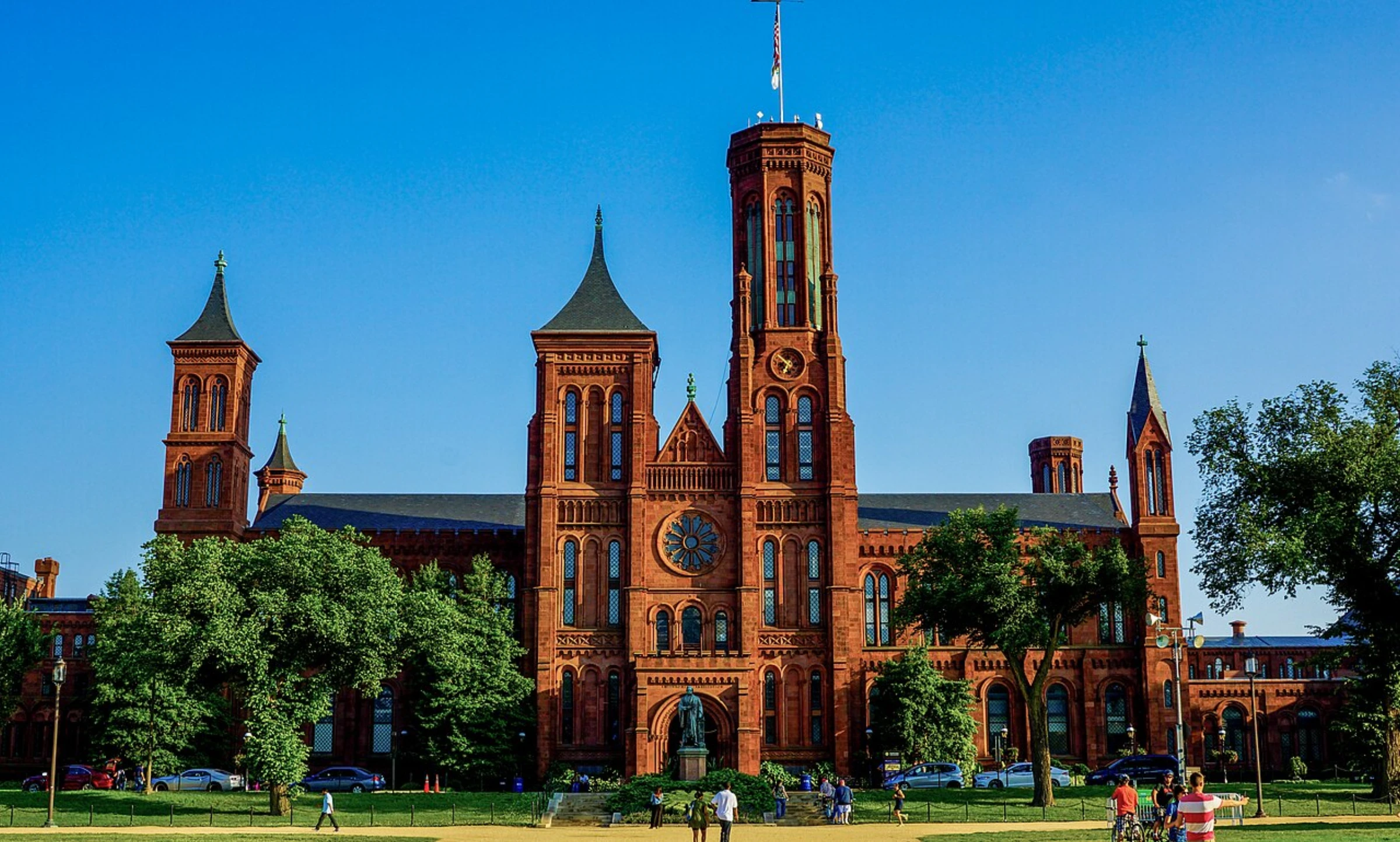
Smithsonian Shuts 7 Museums as Cooling System Fails in DC Heat
A 90-year-old power plant failure shuttered seven Smithsonian museums on the National Mall during a Washington heat wave, stranding visitors
Seven Museums, One Failed System
On August 6, seven Smithsonian museums in Washington, DC, were forced to close without notice when the shared temperature-control system that serves them suffered a mechanical failure. The affected institutions are the Smithsonian Castle, the Arts and Industries Building, the National Museum of the American Indian, the Hirshhorn Museum and Sculpture Garden, the National Museum of Asian Art, the National Museum of African Art, and the S. Dillon Ripley Center. All seven occupy the south side of the National Mall, one of the most visited cultural corridors in the world.
The sudden closures came as temperatures reached into the nineties in the US capital, with excess humidity prompting a heat alert for the city. The combination of a heat wave and closed museums created immediate discomfort for visitors, many of whom had traveled significant distances. The closure was reported by Artforum, which noted the particular frustration of visitors who had checked the museums' websites and found them listed as open, only to arrive and discover locked doors.
A 90-Year-Old Power Plant and Its Consequences
The root cause of the closure was traced to a mechanical failure at a ninety-year-old power plant operated by the US General Services Administration. The GSA confirmed in a statement that an operational interruption had taken place and that crews were working to rectify the problem. The system that controls temperature and humidity in the affected museums depends on chilled water supplied from this plant, and without that supply, the museums could no longer maintain the environmental conditions required to protect their collections and ensure visitor comfort.
The age of the power plant is not a minor detail. Ninety years of continuous operation means the infrastructure predates modern HVAC standards, and its failure raises serious questions about deferred maintenance and capital investment in the institutions that house some of the most important cultural artifacts in the United States. The Smithsonian's collections include irreplaceable objects from American history, Indigenous cultures, Asian art, and modern and contemporary works, all of which require precise environmental controls to prevent deterioration.
This is not the first time that aging infrastructure has threatened major museum collections. Institutions across the world face similar challenges as their buildings age and budgets for capital improvements fail to keep pace. The Uffizi Gallery's $58 million transformation project in Florence represents a proactive approach to this problem, investing in modernization before catastrophic failures occur. The Smithsonian's situation demonstrates what happens when that investment is deferred.
Visitor Impact and Public Communication Failures
Beyond the collections, the closure had an immediate human cost. Washington, DC, in August is not a city where people want to be standing outside. The heat index during the closure period pushed well into the dangerous range, and many visitors had walked considerable distances to reach the National Mall, expecting to spend their day indoors in air-conditioned galleries.
The communication breakdown compounded the problem. Visitors reported checking the Smithsonian's website before traveling and finding no closure notices. By the time they arrived at the museums, the doors were shut and the information had not yet been updated online. One frustrated attendee told DCNewsNow: We walked all the way here. It is so hot. We want to go inside. Another visitor who had traveled from Kansas with his family said he was hoping the Air and Space Museum was still open so they could at least get some air conditioning.
The Smithsonian Institution operates as a public trust, funded largely by federal appropriations and private donations. When seven of its museums close simultaneously without warning, the institution's ability to fulfill its public mission comes into question. The Smithsonian Institution has not yet publicly detailed the timeline for repairs or the measures being taken to prevent similar failures in the future.
Infrastructure as Collection Care
For museum professionals, the Smithsonian closure is a stark reminder that collection care extends beyond conservation labs and climate-controlled display cases. The infrastructure that supports museums, from power plants to plumbing, is part of the preservation system. When that infrastructure fails, the collections it protects are placed at risk.
Museum environmental standards are not arbitrary. Temperature and humidity fluctuations can cause paint to crack, wood to warp, textiles to degrade, and metal to corrode. The American Institute for Conservation recommends specific ranges for different material types, and museums are designed to maintain those ranges within tight tolerances. When a cooling system fails during a heat wave, the rate of temperature and humidity change can be rapid and severe, potentially causing irreversible damage to sensitive objects.
The Smithsonian's decision to close rather than risk exposing collections to uncontrolled conditions was the correct one. The alternative, keeping museums open while environmental systems are down, would have put both visitors and objects at risk. But the closure also highlights the fragility of the system: a single point of failure at one power plant took out seven museums simultaneously because they all depend on the same infrastructure.
The Broader Pattern of Infrastructure Failures
The Smithsonian closure is not an isolated incident. Federal cultural institutions across the United States face maintenance backlogs that run into the billions of dollars. The National Park Service, which maintains historic sites and monuments, has a deferred maintenance backlog estimated at over $20 billion. The Library of Congress, the National Archives, and the Smithsonian all face similar challenges, with aging buildings that require extensive capital investment to bring up to modern standards.
The specific failure at the Smithsonian involved a chilled water system, which is essential for maintaining the temperature and humidity levels that museum collections require. Without chilled water, the museums' HVAC systems cannot function, and the environmental conditions inside the buildings become unsuitable for both artworks and visitors. The fact that all seven affected museums depend on a single power plant for their chilled water supply means that the failure of one component can take out a significant portion of the Smithsonian's campus.
The Smithsonian Institution has faced infrastructure challenges before, but the scale of this closure is unprecedented in recent memory. Seven museums closing simultaneously means that thousands of visitors are affected, and the economic impact on surrounding businesses, from food trucks to souvenir shops, can be significant. The National Mall is one of the most visited tourist destinations in the United States, drawing over 24 million visitors annually, and the Smithsonian museums are a primary attraction. When they close without warning, the ripple effects extend throughout the local tourism economy. Redundancy is a basic principle of critical infrastructure design, and the lack of backup systems for the Smithsonian's cooling infrastructure suggests that the institution's capital planning has not kept pace with its operational needs. Whether this is a consequence of budget constraints, bureaucratic inertia, or simply the difficulty of maintaining a 90-year-old system, the result is the same: a single point of failure that can close seven museums simultaneously.
What This Means for Federal Cultural Infrastructure
The Smithsonian closure arrives at a moment when federal support for cultural infrastructure is already under scrutiny. Congress appropriates funding for the Smithsonian, but capital projects often face delays and budget pressures. The GSA, which operates the power plant that failed, is responsible for federal buildings across the country, and its maintenance backlog is well documented.
The GSA, which operates the power plant, has its own maintenance challenges. The agency oversees thousands of federal buildings across the country, and its maintenance backlog is measured in the billions of dollars. The Smithsonian's reliance on GSA infrastructure means that its ability to maintain environmental conditions for its collections depends on an agency whose priorities extend far beyond cultural institutions. This structural dependency is a known risk, but addressing it would require either a major capital investment in redundant systems or a rethinking of how the Smithsonian's buildings are serviced. The question now is whether this failure will prompt a serious investment in the infrastructure that supports the Smithsonian's museums, or whether it will be treated as an isolated incident. The ongoing debate over federal building projects in Washington suggests that infrastructure decisions in the capital are rarely straightforward, and that the political will to invest in maintenance is often weaker than the will to invest in new construction.
For the visitors who were turned away on August 6, and for the collections that were placed at risk, the answer matters. The Smithsonian's museums are not just buildings. They are repositories of national memory, and the infrastructure that protects them is part of the public trust that the institution is sworn to uphold. When that infrastructure fails, the public loses access to its own cultural heritage, and the collections that the institution is charged with protecting are placed at risk of irreversible damage. The August 6 closure may have been temporary, but it revealed a structural weakness that, if left unaddressed, will recur with greater frequency as the systems age and the climate warms. The Smithsonian's museums are not just buildings. They are repositories of national memory, and the infrastructure that protects them is part of the public trust that the institution is sworn to uphold.