Uffizi Launches $58 Million Restoration Across Florence Sites
Florence's Uffizi Galleries launches a two-year, 50 million euro renovation spanning all three sites with new spaces, climate systems and visitor upgrades
The Scope of the Renovation
Florence's Uffizi Galleries has announced a 50 million euro ($58 million) restoration plan that will reshape all three of its sites over the next two years. The project encompasses the Uffizi Gallery itself, the Palazzo Pitti across the Arno river, and the sprawling Boboli Gardens that connect the city's Renaissance past to its present. Work has already begun on several fronts, staggered carefully to avoid closing the museums entirely, according to Artforum's report on the August 5 press conference.
Uffizi director Simone Verde described the undertaking as one of the most ambitious in the institution's modern history. The renovation touches nearly every aspect of the visitor experience, from climate control and lighting to wall labels and gallery layouts. For an institution that welcomed over four million visitors in 2025, the logistics of renovating while open are formidable. The strategy relies on rotating closures of individual rooms and wings rather than shuttering entire buildings, a approach that keeps revenue flowing but demands precision from staff.
The funding breakdown reflects a mix of public and private investment. Italy's Ministry of Culture provided the bulk of the 50 million euro budget, with additional contributions from private donors. American philanthropist Veronika Atkin contributed 5 million euros ($5.8 million) toward the project, making her one of the largest individual backers. The model mirrors what the Parthenon restoration project achieved with mixed funding sources, though at a larger scale.
What Changes at Each Site
At the Uffizi Gallery proper, the second floor of the Gallery of Statues and Paintings will receive a curatorial redesign, with a new reception area planned to improve visitor flow. The gallery's famous corridor, designed by Vasari in the 16th century, will benefit from upgraded lighting and environmental controls. New wall labels and redesigned informational displays aim to make the collection more accessible to visitors who arrive without specialized knowledge of Renaissance art.
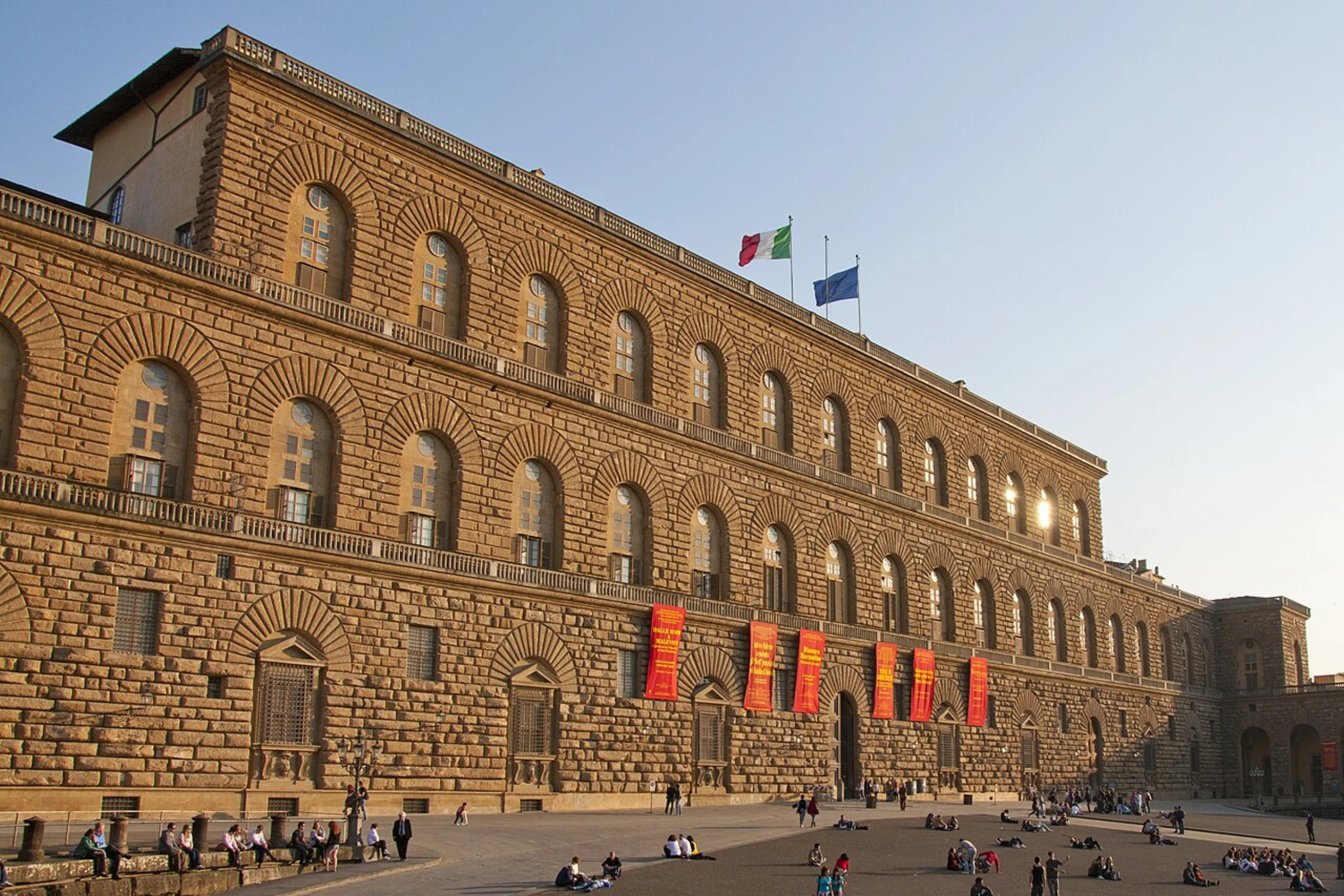
Palazzo Pitti's top floor, rarely seen by the public, will be restored and converted into a new exhibition space. This addition could significantly expand the Uffizi's capacity for temporary shows and contemporary programming. The palazzo's decorative apartments, which house the Palatine Gallery's Renaissance masterpieces, will also see conservation work. The Sala Bianca, already fitted with new lighting as shown in press materials, demonstrates the visual upgrade the rest of the complex will receive. This continues work that began with the Uffizi's Botticelli Rooms renovation completed earlier in 2026.
The Boboli Gardens, the 111-acre park behind Palazzo Pitti, will see perhaps the most visible changes. Some 3,600 plants have already been added to the grounds. The Fountain of Neptune and the Fountain of the Island are undergoing restoration, and the Amphitheater, an architectural feature carved into the hillside, will again host public performances after years of limited use. The gardens serve as both a historical landscape and a public park for Florentines, making this aspect of the renovation particularly significant for the city.
Climate Systems and Conservation Upgrades
Beyond the visible improvements, the renovation addresses the less glamorous but critical infrastructure that protects the collection. Two new cooling towers will be installed as part of a climate-control overhaul affecting all three sites. The existing systems, some dating back decades, have struggled to maintain stable temperature and humidity levels during Florence's increasingly hot summers. The Smithsonian's cooling system failure that closed seven museums in Washington DC earlier this week underscores how vulnerable cultural institutions are to infrastructure breakdowns.
Conservation and security schemes will also be upgraded, though specific details remain limited. The Uffizi houses works by Botticelli, Caravaggio, Raphael, and Titian among thousands of others, making the quality of its environmental systems directly responsible for preserving some of the most significant paintings in Western art history. The new systems are designed to meet contemporary museum standards for particulate filtration, UV protection, and humidity regulation.
The renovation also addresses accessibility. Expanded accessibility features are planned across all three sites, though the press materials did not specify exact modifications. For the Uffizi Gallery, which occupies a 16th-century building with inherent structural limitations, accessibility improvements require creative architectural solutions rather than simple retrofitting.
What This Means for Florence and Italian Culture
The scale of the Uffizi renovation places it among the most significant museum infrastructure projects in Europe this decade. It signals confidence in the continued relevance of Renaissance art as a draw for global tourism while acknowledging that the institutions housing these collections cannot remain frozen in time. Director Verde framed the project as essential to the Uffizi's identity as what he called one of Italy's fundamental cultural icons.
The timing is notable. The Italian Ministry of Culture has increased its investment in major museum infrastructure over the past several years, supporting projects at the Colosseum, Pompeii, and now the Uffizi. The strategy reflects a broader recognition that Italy's cultural heritage requires sustained capital investment, not just conservation work. Private donors like Veronika Atkin demonstrate that American philanthropy remains engaged with Italian cultural institutions, a relationship with deep historical roots.
For visitors, the renovation means some galleries may be temporarily closed during their visits over the next two years. The staggered approach minimizes disruption, but travelers planning Uffizi trips should check ahead for specific room closures. The promise of new exhibition spaces at Palazzo Pitti and restored fountains in the Boboli Gardens gives repeat visitors something new to anticipate.
The Uffizi renovation also positions Florence more competitively against other major museum capitals investing in infrastructure. The Smithsonian cooling system failure that shuttered seven museums in Washington DC this week demonstrates what happens when infrastructure is neglected. Florence has no intention of letting its most valuable cultural assets suffer the same fate.
The project also speaks to a tension at the heart of museum management: how to modernize without losing character. The Uffizi occupies buildings that are themselves historical artifacts. Installing climate-control systems in 16th-century architecture requires engineering solutions that respect the fabric of the structures. New wall labels must not damage frescoed walls. New lighting must illuminate paintings without exposing them to damaging wavelengths. Every modernization decision in a building this old involves compromises between contemporary standards and historical integrity.
Simone Verde's vision for the Uffizi has been expansive since he took over the directorship. Under his leadership, the gallery has pursued digital innovation, expanded its exhibition program, and now committed to this comprehensive renovation. The 50 million euro investment is not just about fixing what is broken but about reimagining what the Uffizi can be for a generation of visitors who expect more from museum experiences than passive observation. Interactive elements, improved accessibility, and better storytelling through redesigned gallery layouts all reflect an understanding that museums compete for attention in a crowded cultural marketplace.
If the project stays on schedule, the Uffizi that emerges in 2028 will be larger, more accessible, and better equipped to protect its collection for the next century of visitors. The ambition is not merely to maintain but to set a new standard for what a Renaissance museum can be in the 21st century.
The renovation's emphasis on visitor experience reflects a shift in how major museums think about their public role. Traditional museum design prioritized the collection: visitors were expected to navigate around the art, accommodating themselves to the building's logic. The Uffizi's approach inverts this hierarchy. The redesigned layouts, new wall labels, and improved wayfinding systems start from the visitor's perspective and work backward to the collection. This user-centered design philosophy, borrowed from retail and digital experience design, treats museum visits as experiences to be engineered rather than passive encounters with art.
The investment in the Boboli Gardens is particularly significant. Historic gardens receive less attention and funding than museum buildings, yet they are often more vulnerable to neglect. The 3,600 new plantings represent not just aesthetic improvements but ecological management of a historic landscape. The restoration of the Fountain of Neptune and the Fountain of the Island requires specialized conservation expertise that bridges sculpture restoration and hydraulic engineering. The Amphitheater's return to public performance use reconnects the gardens to their original Renaissance purpose as spaces for spectacle and social gathering, not just contemplation.
The international context for the Uffizi renovation extends beyond Italy's borders. Museums across Europe are grappling with the same infrastructure challenges: aging buildings, inadequate climate systems, and the need to serve growing visitor numbers without compromising conservation standards. The Louvre in Paris announced its own renovation plans in 2024. The British Museum has faced criticism for its outdated facilities. What distinguishes the Uffizi project is its comprehensiveness: rather than addressing one building or one system at a time, the plan treats the gallery, the palazzo, and the gardens as a single integrated complex. If the approach succeeds, it could become a model for other multi-site museum systems in Europe and beyond.
The project also raises questions about accessibility and pricing. The Uffizi has already adjusted its ticketing structure in recent years, introducing dynamic pricing that charges more during peak periods. A renovated museum with improved facilities may justify further price adjustments, but Italian cultural institutions face political pressure to keep admission affordable for citizens. Balancing the need for revenue to maintain world-class facilities against the principle that cultural heritage belongs to everyone is a tension that Verde and his team will need to navigate throughout the renovation and beyond.